
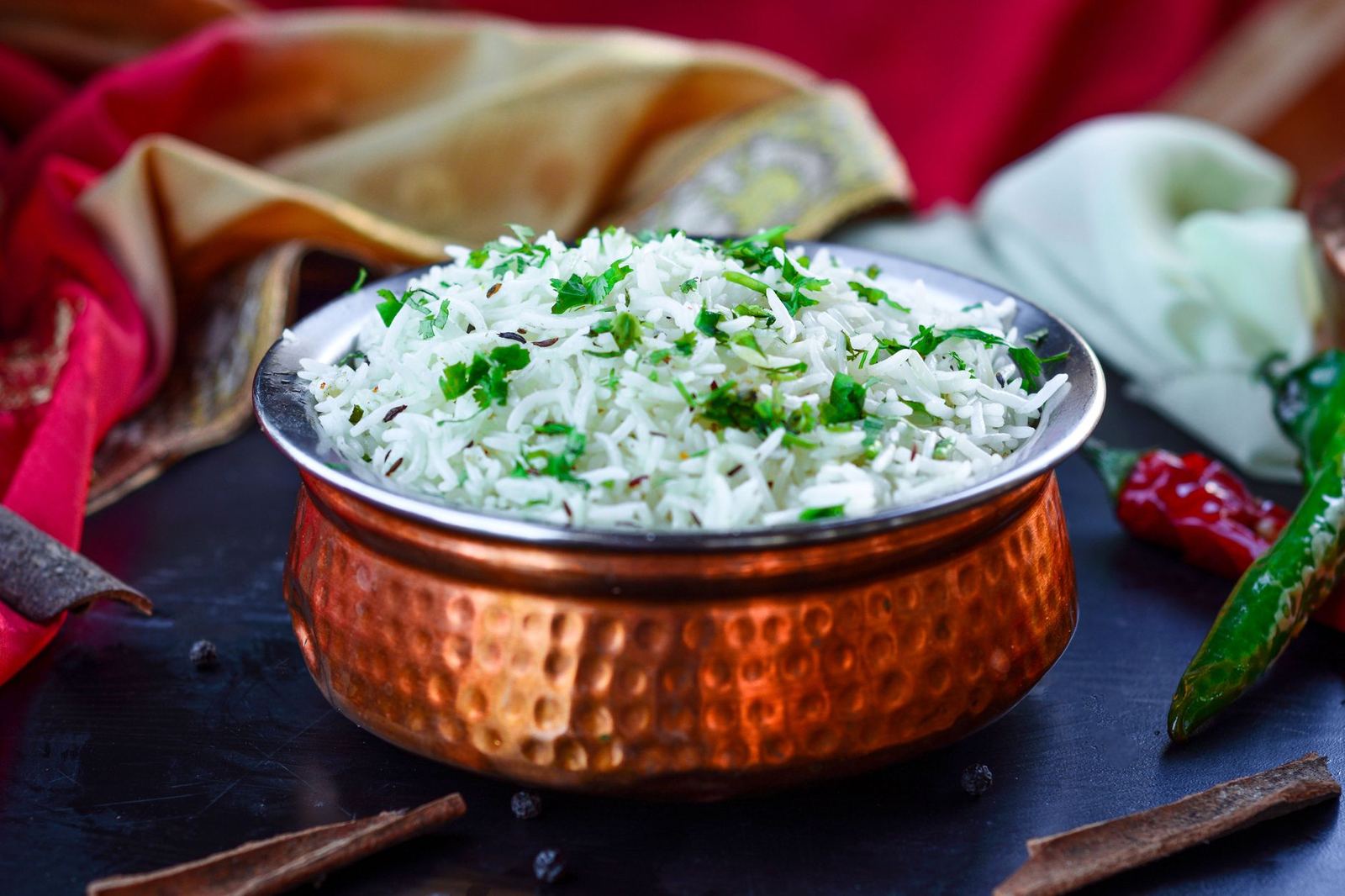
Basmati rice cooks into separate, fragrant grains when it is rinsed, soaked for about 30 minutes and then steamed gently in a covered pot. The method is simple, but each step has a reason.
Plain rice is the base of countless meals in vegetarian cooking, and basmati is among the most aromatic choices.
What makes basmati different
According to Wikipedia’s basmati entry, basmati is a variety of long, slender-grained aromatic rice which originates from the Indian subcontinent. It is believed to have been cultivated there for centuries, and it is prized for its fragrance.
The aroma has a specific source. The same entry explains that basmati has a typical pandan-like flavor caused by the aroma compound 2-acetyl-1-pyrroline. That compound is also the reason cooking technique matters more than usual: the entry notes that during cooking, the level of 2-acetyl-1-pyrroline decreases, so a method that protects it keeps more of the character that makes basmati worth buying.
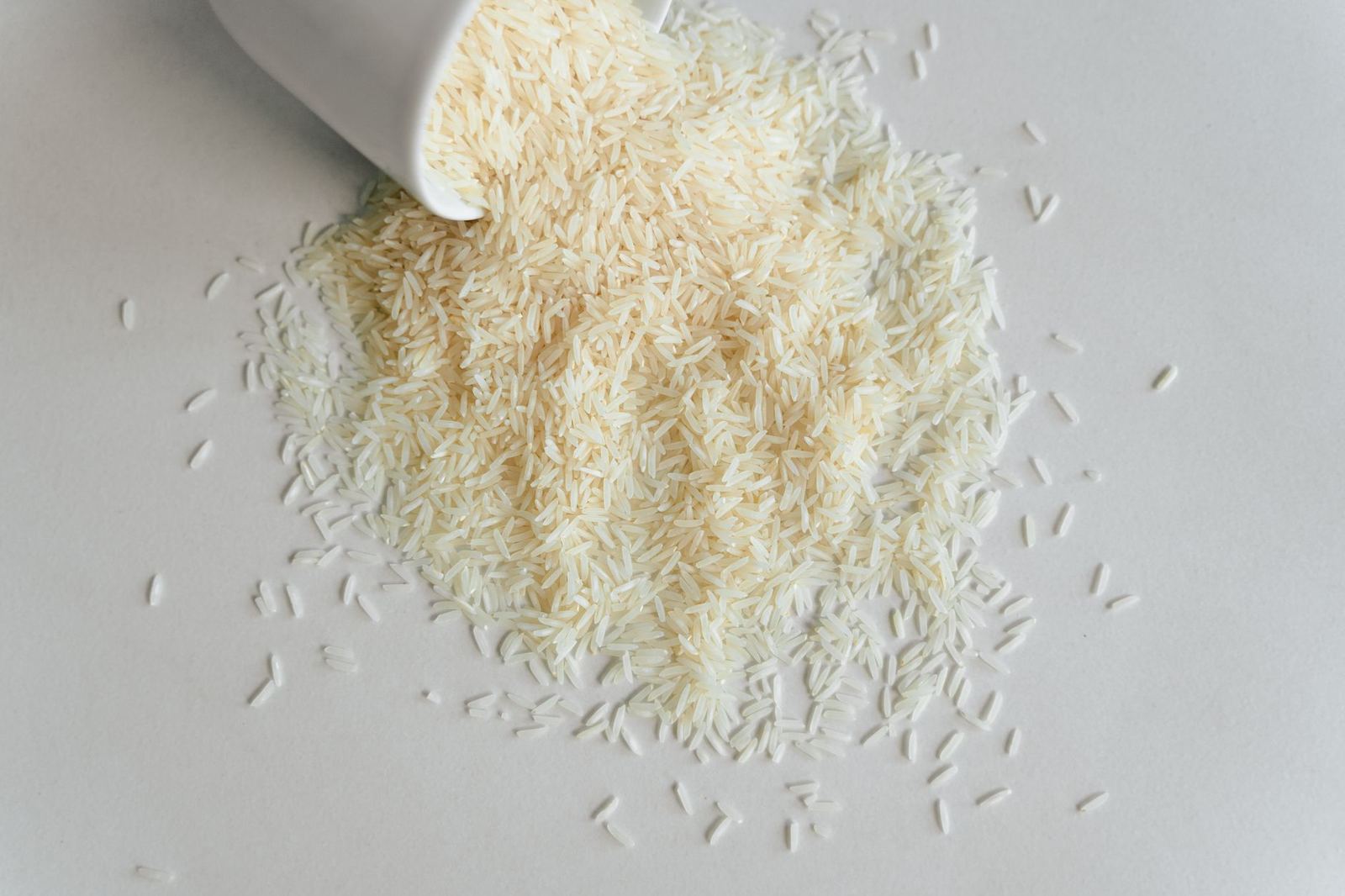
The shape of the grain is the other half of the story. Harvard’s Nutrition Source describes long grains as having a slender kernel over four times as long as they are wide, and says that when cooked, long grain rice stays separate and fluffy, naming Jasmine and Basmati as examples. Separate, fluffy grains are exactly what this method aims for.
Rinsing and soaking basmati rice
Rinsing comes first. Put the rice in a bowl, cover it with cool water, swirl it with the fingers and pour off the cloudy liquid. Repeat until the water runs mostly clear. The aim is to wash off loose surface starch so the grains do not glue together in the pot.
Soaking comes next, and there is a figure behind it. The Wikipedia entry states that soaking the rice for 30 minutes before cooking permits 20% shorter cooking times and preserves more of the 2-acetyl-1-pyrroline. In practice, that means the rice is covered with fresh water, left to rest, then drained well in a sieve before it goes into the pot. Soaked grains are also less likely to snap during cooking, which keeps them long and elegant.
Draining well matters. Standing water carried into the pot changes the balance of rice to liquid and can leave the pot wetter than intended.
Cooking basmati rice on the stove
The steps below describe the common absorption method, in which the rice cooks in a measured amount of water that it takes up completely. Packages often give a ratio of water to rice, and it is sensible to follow that guidance for the brand in hand, since milling and age change how much water the grains need.
- Rinse the rice until the water runs mostly clear, then soak it and drain it well.
- Combine the rice and measured water in a heavy pot with a tight lid. A pinch of salt and a small spoon of ghee or oil can go in at this point.
- Bring the water to a boil over high heat, uncovered.
- When bubbles break across the entire surface and little water remains above the rice, reduce the heat to the lowest setting and cover the pot.
- Leave the lid on and let the rice steam without stirring. Lifting the lid lets out steam and slows cooking.
- Turn off the heat and let the covered pot stand undisturbed for several minutes so the moisture spreads evenly through the grains.
- Uncover and fluff gently with a fork, lifting the rice from the bottom rather than stirring it.
Whole spices can go into the pot with the rice for a pilaf-style result: a stick of cinnamon, a few cardamom pods or some cumin seeds bloomed in the fat first. The fragrance of the basmati remains the lead, so the spices work best used lightly.
Fluffing, resting and troubleshooting
Most problems with basmati trace back to a handful of causes. Sticky or clumped grains usually mean too little rinsing or too much water. Mushy rice means the lid was lifted or the heat stayed too high. Hard, chalky centers mean the pot ran dry before the grains finished steaming, and a splash of hot water added with the lid back on can rescue them.
Gentle handling at the end protects the long grains. A fork lifts and separates them, while a spoon pressed against the rice breaks the grains and releases starch, which brings back the stickiness that rinsing removed. Serve the rice while it is still warm and steaming, directly from the pot or from a wide dish so that extra steam can escape.
Resting is a quiet but useful step. Taking the pot off the heat and leaving it covered gives the moisture time to distribute, so the top and bottom of the pot end up at the same texture.
Rice safety: cooling and reheating
Cooked rice needs a little care. The Bacillus cereus entry on Wikipedia explains that the emetic form of illness commonly results from rice which is cooked at a time and temperature insufficient to kill any spores present, then improperly refrigerated. It adds that the remaining spores can produce a toxin, cereulide, which is not inactivated by later reheating.
The NHS starchy foods page turns this into clear rules. It says: “If you are not going to eat cooked rice immediately, refrigerate it within 1 hour and eat it within 24 hours.” Reheating is limited too: “Rice should not be reheated more than once”, and it “should be reheated thoroughly, reaching a core temperature of 70C for 2 minutes (or equivalent) so it’s steaming hot throughout.” The NHS adds: “It’s important to throw away any rice and grains that have been left at room temperature overnight.”
The practical lesson is to cool leftover rice promptly and refrigerate it rather than leaving the pot out on the counter. The NHS also notes that “Reheating food will not get rid of these toxins”, so speed in the first hours matters more than the reheating step.
Brown basmati, arsenic and balance
The Harvard rice page notes that arsenic is a naturally occurring heavy metal found in soil, rock, and water, and discusses it in the context of rice. For brown rice, it suggests a method: wash the rice well, cook in extra water (example: 6-10 cups of water per 1 cup rice as suggested by the FDA), drain the excess water after the grain is cooked, and then rinse one more time. The page says this removes about 50% of arsenic, though some water-soluble B vitamins are lost too.
On the broader picture, the NHS says starchy foods should make up just over a third of the food you eat, as shown by the Eatwell Guide, and advises choosing wholegrain varieties where you can. White basmati is a fine part of a varied diet, and brown or wholegrain varieties can offer more fibre.
Ayurveda is a traditional system: the NCCIH describes the ancient Indian medical system, also known as Ayurveda, as being based on ancient writings. This page is about cooking technique only. People with a health condition, who are pregnant or who take medication should talk to a clinician before changing their diet.
What to serve with basmati rice
Basmati suits saucy dishes because the grains stay separate and take up gravy without collapsing. A creamy dish made with homemade paneer is a classic match, and a spiced pot built from chickpea recipes turns the rice into a complete plate.
Leftover plain basmati can be cooled quickly, refrigerated within an hour and eaten within 24 hours, or turned into a simple pilaf with sautéed onions and whole spices.
Frequently asked questions
Do you have to soak basmati rice?
It is not required, but the Wikipedia entry says soaking for 30 minutes permits 20% shorter cooking times and preserves more of the aroma compound.
Why is my basmati rice sticky?
Sticky grains usually come from too little rinsing, too much water or stirring during cooking. Rinse until the water is mostly clear and keep the lid on while it steams.
Can cooked basmati rice be reheated?
Yes, but only once. The NHS says to refrigerate cooked rice within 1 hour, eat it within 24 hours, reheat it only once, and make sure it is steaming hot throughout. Rice left at room temperature overnight should be thrown away, because a toxin produced by Bacillus cereus spores is not inactivated by later reheating.
Is brown basmati better than white?
Brown rice keeps its bran and can offer more fibre, while white basmati cooks faster and is milder. Both can fit in a varied diet, and a clinician or dietitian can advise anyone with specific needs.