
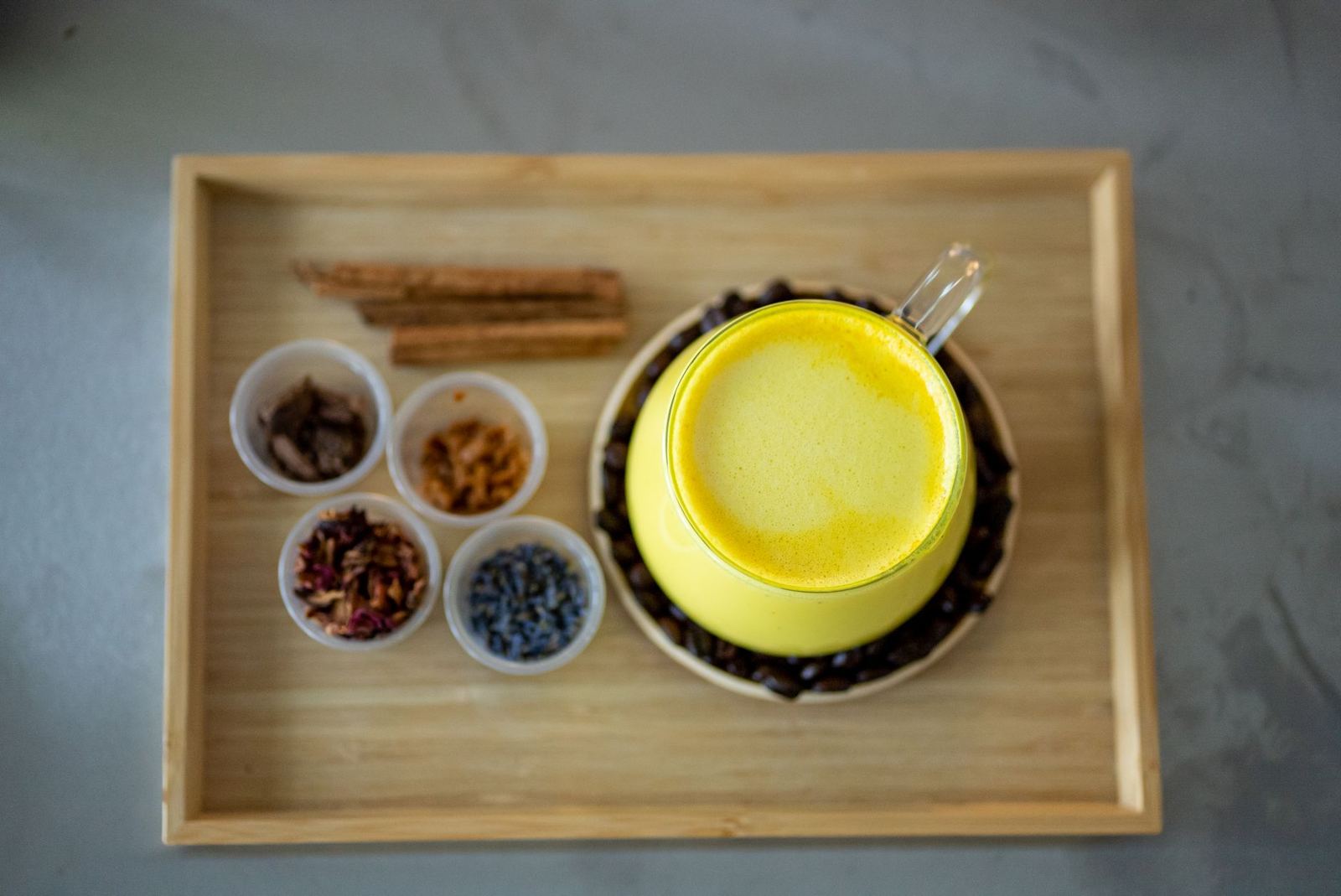
A turmeric milk recipe is simple: warm milk is simmered gently with ground turmeric, a little fresh ginger and a pinch of black pepper, then sweetened lightly and sipped hot. The method takes only a small saucepan and a few minutes.
It is one of the best-loved warm drinks among the ayurvedic recipes collected on this site, and this page explains how to make it, how to adapt it and what to keep in mind about it.
What turmeric milk is and where it comes from
Turmeric milk is a warm, golden drink made by heating milk with turmeric and a few supporting spices. Turmeric is the rhizome (underground stem) of a plant in the ginger family, and it is grown commercially in Southeast Asia and India. Curcumin, a major component of the rhizome, gives the spice its deep yellow color.
The drink sits within the broader tradition of Ayurveda, the ancient Indian medical system that is based on ancient writings and takes a holistic approach to physical and mental health. In that tradition, food, daily routine and lifestyle are treated as parts of one picture, and warm spiced milk is a familiar evening drink in many households. This page treats it as a recipe and a cultural tradition, not as a remedy.

Ingredients for a mug of turmeric milk
The list below makes a single generous mug. Quantities are given in plain words because the right amount depends on the strength of the turmeric and on personal taste. Start with less spice and add more on the next batch.
- A mug of milk: whole cow’s milk gives the creamiest result, and oat, almond or coconut milk work as alternatives.
- A level half spoonful of ground turmeric, or a small piece of fresh turmeric root, grated.
- A thin coin of fresh ginger, peeled, or a small pinch of dried ginger.
- A very small pinch of freshly ground black pepper.
- A small cinnamon stick or a pinch of ground cinnamon (optional).
- A little honey, jaggery or maple syrup to finish (optional).
- A small spoonful of ghee or coconut oil (optional) for a richer, rounder drink.
How to make turmeric milk, step by step
- Pour the milk into a small saucepan and set it over low to medium heat. Keep it moving with a spoon so a skin does not form on top.
- Add the turmeric, ginger and cinnamon while the milk is still cool. Starting the spices in cool milk helps them disperse without clumping.
- Warm the milk slowly until steam rises and tiny bubbles appear around the edge. Do not let it boil hard, because a rolling boil can scorch the bottom of the pan and make the milk taste flat.
- Lower the heat and let the milk barely simmer for a few minutes, stirring now and then, until it turns a clear golden yellow and smells warm and spicy.
- Stir in the black pepper and the optional ghee or coconut oil.
- Strain the milk through a small sieve into a mug if the ginger or cinnamon pieces bother you. Skip this step for a fully rustic drink.
- Sweeten while the drink is hot, taste, and adjust. Serve right away.
Ground turmeric settles quickly, so give the mug a stir halfway through drinking. Turmeric also stains easily, so wipe up drips from the counter and spoons soon after.
Why black pepper and ginger often appear in the pan
Black pepper is a classic partner for turmeric. NCCIH notes that oral curcumin products often contain substances from other plants, such as piperine from black pepper, and that combining curcumin with piperine is one way to improve the bioavailability of curcumin. In a mug of milk the pepper is there for flavor and tradition, so a tiny pinch is plenty.
Ginger, a close relative of turmeric, brings a peppery warmth that balances the earthy, slightly bitter turmeric. Fresh ginger gives a bright, clean heat, while dried ginger gives a deeper, more mellow warmth. Either works well.
Variations and dairy-free versions
The base method adapts easily. These are the changes cooks most often make:
- Dairy-free: swap the milk for a plant milk. Unsweetened oat and coconut milks hold up well to gentle heat, while almond milk should be warmed more carefully because it can separate.
- Cardamom: crush a pod or two and add it with the other spices for a floral, perfumed note.
- Nutmeg: a tiny grating at the end gives a soft, sweet finish.
- Cacao or vanilla: a drop of vanilla extract rounds out a plant-milk version.
- Cold version: chill the strained milk and pour it over ice for a golden iced drink.
Another warm spiced drink worth trying alongside it is homemade yogi tea, which uses whole spices simmered in water and milk. For a savory dish to serve in the same meal, a bowl of ayurvedic dal shares the same turmeric-and-ginger backbone.
What research says about turmeric
Turmeric has a long history in traditional medicine. NCCIH reports that it has been used in Chinese, Indian (including Ayurvedic), Islamic and Thai traditional medicine systems for conditions such as indigestion, the common cold, skin infections, arthritis, abdominal pain and liver disease.
The modern evidence is much more cautious. NCCIH states that there is not enough knowledge to conclude definitively whether turmeric or curcumin is beneficial for any health purposes. Most of the research looks at concentrated curcumin products, which are very different from the small amount of ground spice in a mug of milk, so those findings do not translate directly to the drink.
The same page lists possible side effects of oral turmeric: nausea and vomiting, acid reflux, stomach upset, diarrhea or constipation. It also states that the use of turmeric supplements during pregnancy may be unsafe. Anyone with a health condition, who is pregnant or who takes medicine should talk with a clinician before changing their diet or using herbs and supplements.
Choosing and keeping the spices
Because the drink has so few ingredients, the quality of the spices shows. Ground turmeric should look a vivid, deep orange-yellow and smell earthy and slightly sharp. A dull, pale or musty powder has usually sat in the cupboard too long and will give a flat-tasting drink.
Keep ground spices in a tightly closed jar away from heat, light and steam, which means not directly above the stove. Fresh turmeric and ginger roots keep well wrapped in paper in the refrigerator. Buying small quantities of spices and replacing them when the color and aroma fade gives a better-tasting mug every time.
Serving ideas and storage
Turmeric milk is traditionally a warm drink for the end of the day, sipped slowly in a quiet moment. It is also pleasant in the morning on a cool day, or after a meal as a gentle dessert-style drink with no added sugar.
The drink is best made fresh, but a larger batch can be cooled quickly, covered and kept in the refrigerator for a short time. Reheat gently over low heat and whisk well, because the spices settle to the bottom. Discard it if it smells sour, as with any dairy product.
Frequently asked questions
Can turmeric milk be made without dairy?
Yes. Oat, coconut and almond milks all work. Warm them gently and stir often, as plant milks can separate if heated too fast.
Is it better to use fresh or ground turmeric?
Both work. Ground turmeric is convenient and dissolves into the milk evenly, while fresh root gives a brighter, more peppery flavor but needs grating and straining.
Why does the drink need a pinch of pepper?
Pepper is a traditional partner for turmeric, and piperine from black pepper is a plant substance sometimes combined with curcumin. In the mug it also adds a gentle warmth, so only a tiny pinch is needed.
Is turmeric milk a medicine?
No. It is a traditional warm drink. Research on turmeric has not shown definitive benefits for health conditions, so it is best enjoyed as a recipe, not as a treatment.