
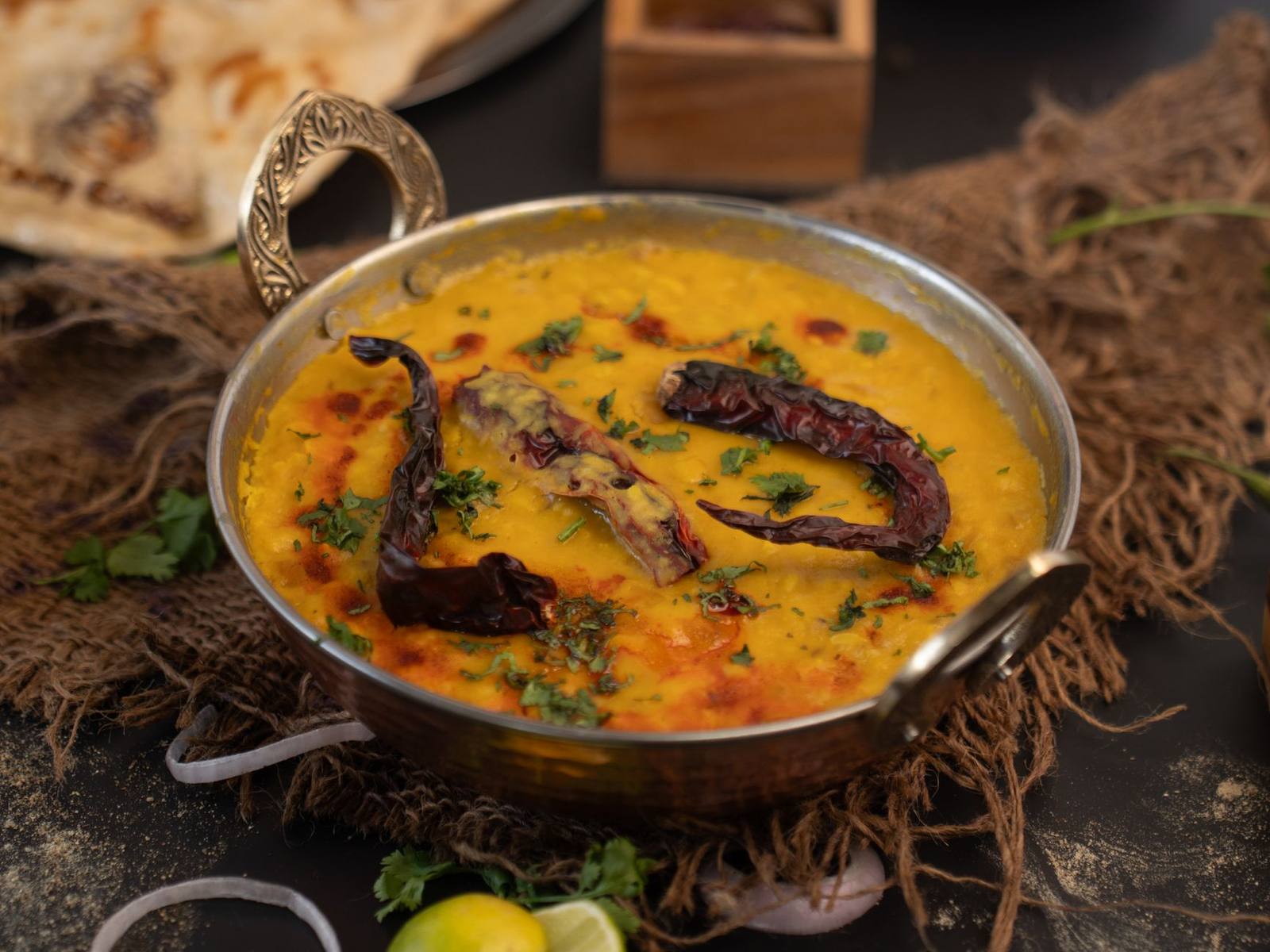
An ayurvedic dal is a soup-like pot of split lentils simmered until soft, then finished with a sizzling tempering of ginger, cumin and turmeric in ghee. This original method makes a simple, warming dal for rice.
It is part of the collection of ayurvedic recipes on this site, which gathers soups, one-pot meals, drinks and sweets with full methods.
What dal is and how it fits an Ayurvedic table
Dal is the Hindi word for split pulses and, by extension, for the stew made from them. Red lentils, split yellow mung beans, yellow split peas and pigeon peas are all cooked this way, and each gives a slightly different texture and flavor. Across India the dish appears at nearly every home meal, ladled over rice or scooped up with flatbread.
Ayurveda is a traditional medical and food system from India. The National Center for Complementary and Integrative Health describes it as one of “the world’s oldest medical systems” that “remains one of India’s traditional health care systems.” In the kitchen, that tradition favors freshly cooked, warm and moderately spiced food. A dal with ginger, cumin and turmeric fits that pattern, and it is valued for its comfort and balance as a meal rather than as a treatment.
Pulses are also a recognized part of a balanced plant-rich diet. Harvard’s Nutrition Source calls legumes “an inexpensive source of protein, vitamins, complex carbohydrates, and fiber.” Dal is one of the easiest ways to bring them to the table regularly. The Nutrition Source page on legumes and pulses goes into more detail on how pulses fit a healthy diet.
Choosing lentils and gathering ingredients
The method below works with several kinds of split pulse. Red lentils and split yellow mung beans collapse quickly into a smooth soup and do not need soaking. Yellow split peas and pigeon peas hold their shape longer, are more robust in flavor and benefit from a soak and a longer simmer. For a first attempt, red lentils are the most forgiving.
- Split red lentils or split yellow mung beans, rinsed until the water runs mostly clear
- Water, enough to keep the pot loose and soupy as the pulses swell
- Ground turmeric, added to the simmering pot
- Fresh ginger, grated, with a little extra cut into thin strips for the tempering
- Ghee, or a neutral oil for a dairy-free dal
- Whole cumin seeds, plus a few mustard seeds if available
- One or two dried red chilies or a pinch of chili powder, optional
- Ripe tomato, chopped, optional for a tangier pot
- Salt and a squeeze of lemon, added at the end
- Fresh cilantro, chopped, to finish
Soaking is not required for red lentils, but it is worth doing for firmer pulses. Harvard’s guidance on legumes says that “Soaking dried beans for at least three hours and cooking them may help decrease this side effect,” meaning the gas and bloating some people experience from the fermentable carbohydrates in pulses. The same logic applies to split peas and whole beans cooked in a dal.
Method: simmer, then temper
A good dal has two stages. The pulses are cooked plain with turmeric and ginger until soft, and then a separate hot-fat tempering is poured over the top to add aroma. Keeping the stages separate lets the pot cook gently and the spices stay fresh and bright.
- Rinse the lentils in several changes of cool water, swirling and draining until the water is nearly clear. Soak firmer pulses first and drain them.
- Place the lentils in a pot with generous water, the turmeric and a little of the grated ginger. Bring to a boil over medium-high heat.
- Skim off the foam that rises, then reduce the heat to low and partly cover the pot. Simmer, stirring occasionally, until the lentils are completely soft and starting to fall apart.
- If the dal looks too thick, stir in hot water. Mash lightly with the back of a spoon or whisk for a smoother texture, or leave it rustic.
- Add the tomato, if using, in the final stretch of simmering so it softens into the pot, then stir in salt.
- For the tempering, heat the ghee in a small pan over medium heat until it shimmers. Add the cumin seeds, and the mustard seeds if using, and wait for them to crackle and smell nutty.
- Add the ginger strips and the dried chilies and stir for a few moments. Lift the pan off the heat if anything darkens too fast, since scorched spices taste bitter.
- Pour the sizzling mixture over the dal and stir it through, or leave it on top for serving at the table.
- Finish with lemon juice and chopped cilantro, then serve hot with rice or flatbread.
A pressure cooker cuts the simmering time and suits denser pulses well, and an electric multicooker handles the same two stages. The tempering is always done in a small pan, since that is where the aroma comes from.
Serving ideas and pairings
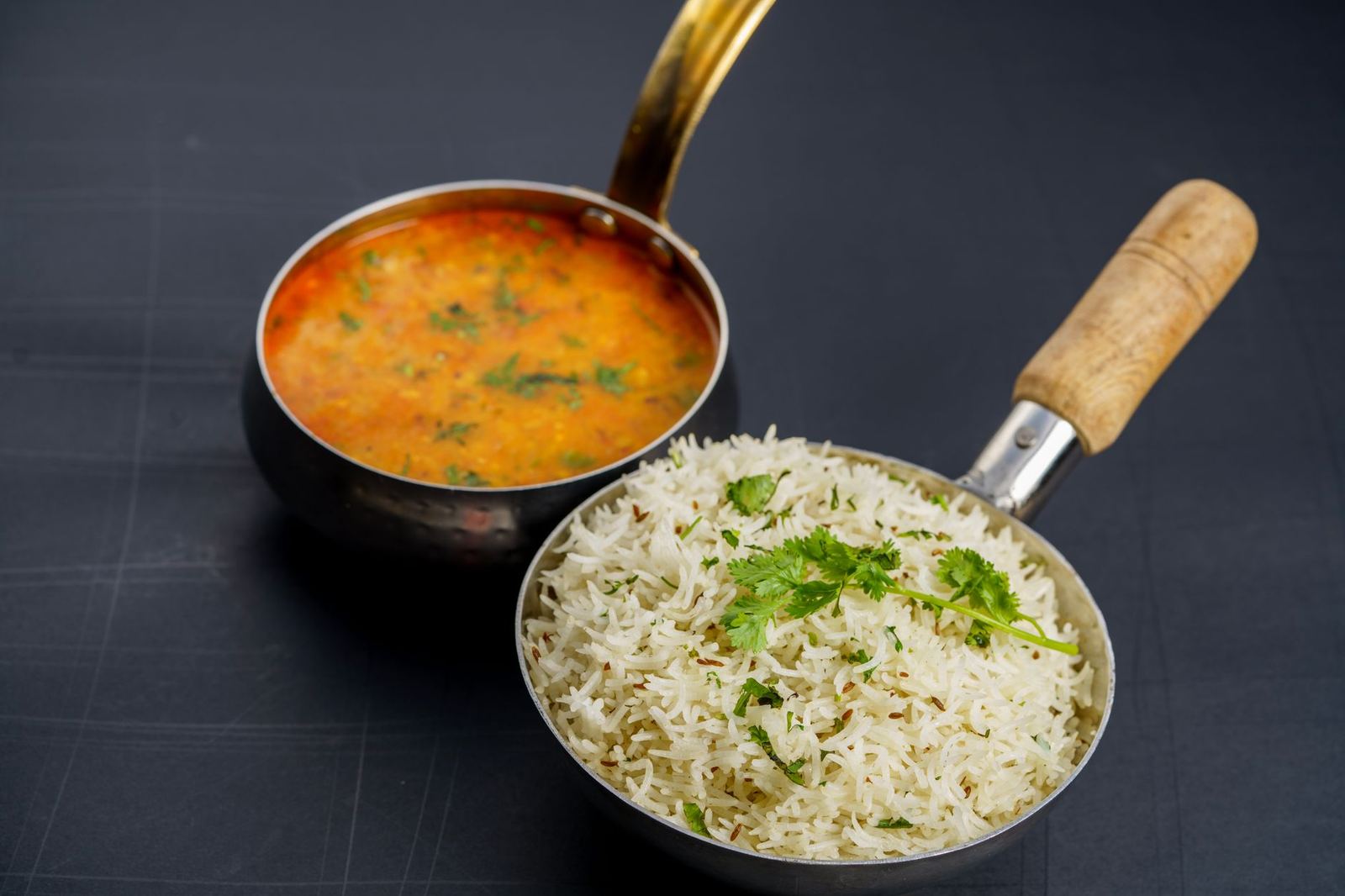
Dal is most often spooned over plain steamed rice. A one-pot partner is the rice and bean stew in the kichari recipe, which cooks the grain and pulse together, and the two dishes appear side by side on many tables. Dal also goes well with a simple vegetable sauté, a cooling bowl of yogurt and a pickle.
Warm drinks sit well beside a savory meal. After dinner, a cup of golden milk is a popular close, and the full method for the turmeric milk recipe shows how that spiced drink is made.
The dal itself is flexible. A handful of spinach added in the last few minutes brings color and minerals. Grated carrot or diced pumpkin simmered with the lentils adds sweetness. A spoonful of coconut milk makes the pot richer, and extra lemon makes it brighter. Leftovers thicken overnight, so a splash of water loosens them when reheating.
Turmeric, ginger and what to keep in mind
Turmeric and ginger give the dal its color and its warmth. The NCCIH notes that “Historically, turmeric has been used in Chinese, Indian (e.g., Ayurvedic), Islamic, and Thai traditional medicine systems.” Its research summary adds a caution: “We don’t know enough to definitively conclude if turmeric or curcumin is beneficial for any health purposes.” Sprinkling turmeric into a pot of lentils is a matter of flavor, and the research on the NCCIH turmeric page concerns supplements and concentrated products rather than culinary use.
The agency says of the root that “Ginger has been used in folk medicine since ancient times,” and warns that ginger “can have side effects such as abdominal discomfort, heartburn, diarrhea, and mouth and throat irritation when taken orally.” Ordinary cooking amounts are food use, and the NCCIH ginger page explains where supplement research stands.
The NCCIH is clear about caution: “If you have a health condition, talk with your conventional health care provider before using Ayurvedic products.” Anyone who is pregnant, takes medication or has a health condition should speak with a clinician before making significant changes to diet or adding herbs and supplements. A dal is an ordinary meal, but that general advice holds for any new regimen.
This site is an independent informational resource and is not affiliated with or endorsed by any cookbook author, publisher, Ayurvedic school, clinic, practitioner or product brand.
Storing and reheating dal
Dal keeps well, and many cooks make a large pot for several meals. Cool it promptly, cover it and refrigerate it rather than leaving it on the counter, and follow local food-safety guidance for storage times. When reheating, warm the dal slowly with a splash of water, stirring until it is steaming hot throughout. Refresh it with a new tempering of ghee and cumin, or a squeeze of lemon and fresh cilantro, to bring the aroma back.
Frequently asked questions
Do lentils need to be soaked for dal?
Red lentils and split mung beans do not need soaking. Firmer pulses such as split peas cook more evenly and gently after a soak.
How can the dal be made vegan?
Use a neutral or coconut oil for the tempering instead of ghee. The rest of the recipe is already plant-based.
Why is the tempering added at the end?
Hot fat releases the aroma of whole spices quickly, and adding it after simmering keeps the flavors sharp instead of letting them cook away.
Does a dal treat any health condition?
No. It is a traditional everyday meal, and for medical concerns the right step is to speak with a clinician.