
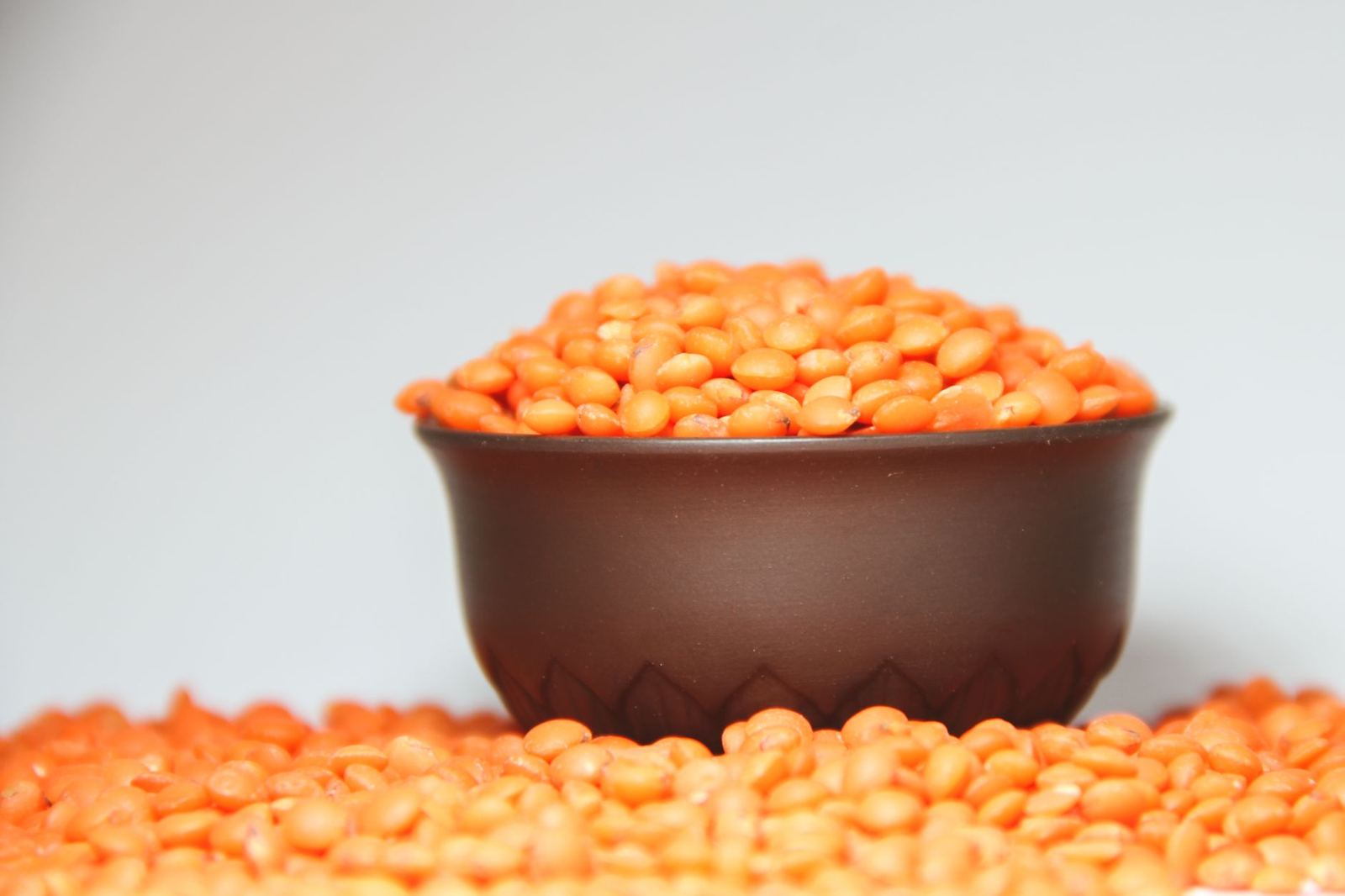
How to cook lentils depends on the type: red lentils turn soft in a short simmer, while green, brown and black lentils take longer and keep their shape. This page covers each type, a basic method and ways to use them.
Lentils are a pantry staple in vegetarian cooking, and a pot cooked at the start of the week can feed several meals.
Meet the lentils: red, green, brown and black
Lentils are sold in several forms, and the differences decide how long they cook and how they behave in the pot. According to Wikipedia’s lentil entry, lentils may be classified according to whether they are hulled (seed coat removed) or unhulled, and if hulled, whether the cotyledon inside is split or left whole. That split between hulled and unhulled, and between split and whole, explains most of the cooking differences below.
- Red lentils are usually sold split and hulled. They cook quickly and collapse into a soft purée, which makes them the usual choice for dal and smooth soups.
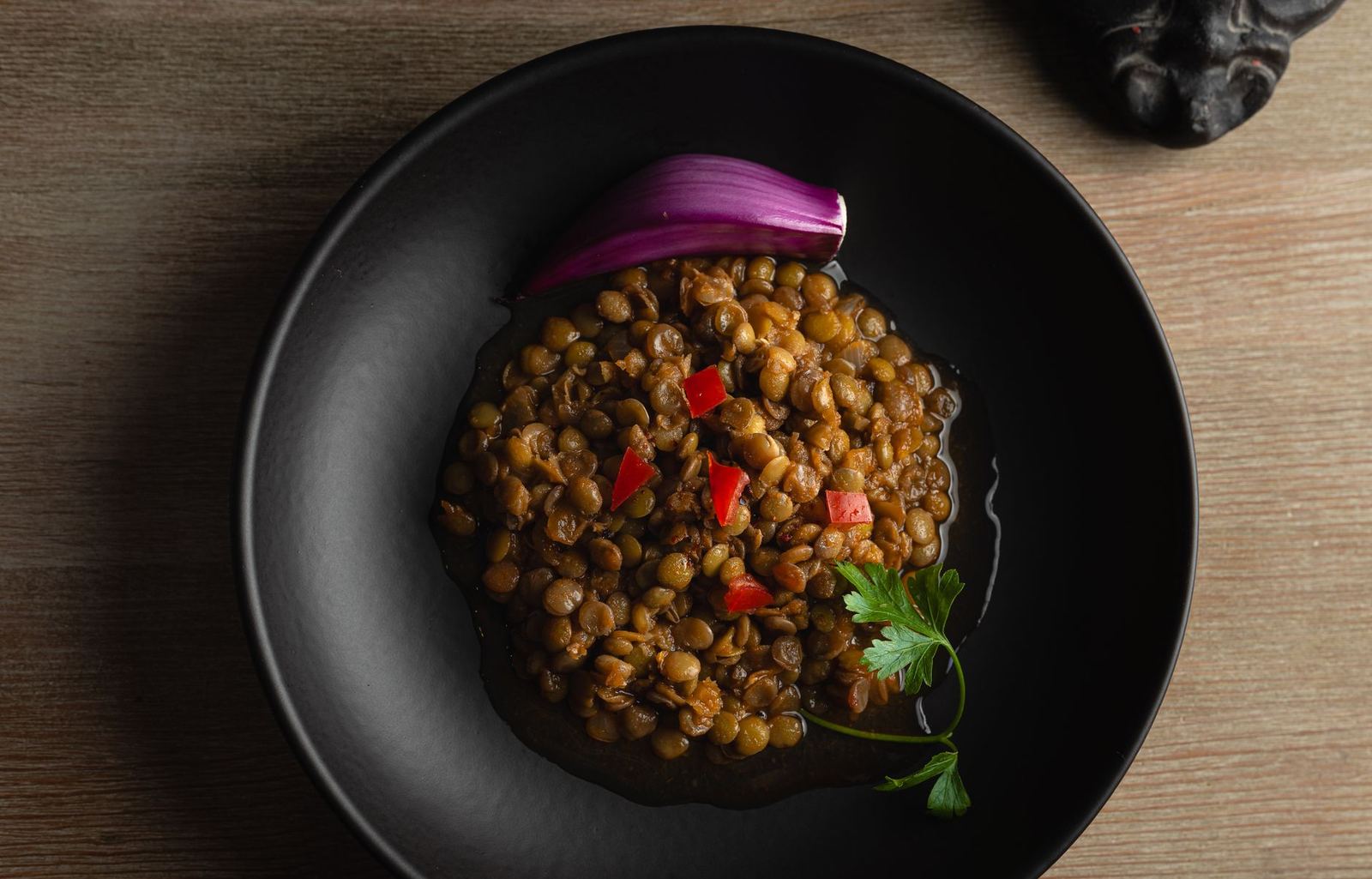
- Green lentils are sold whole and take longer to soften. They tend to hold their shape better, so they suit salads and side dishes.
- Brown lentils are the common supermarket type. They are mild, cook to a tender texture and sit between red and green in how much they break down.
- Black lentils are small and glossy. The Beluga type was given the name it is now known by for its resemblance to beluga caviar, and it keeps its shape well.
- Puy lentils are a regional variety: a small blue-green lentil with mottling, originating from France with a Protected Designation of Origin name.
Lentils are also an old food. Harvard’s Nutrition Source notes that lentils are one of the earliest domesticated crops, seen in the diets of ancient Rome and Egypt, and they remain a daily staple across many cuisines.
A basic method for cooking lentils
Whatever the type, the method is the same: sort, rinse, simmer in plenty of water, drain or use the cooking liquid. Small changes in timing handle the rest.
- Spread the lentils on a plate and pick out any small stones or shriveled pieces.
- Rinse in a fine sieve under cool running water, stirring with your hand, until the water runs mostly clear.
- Put the lentils in a pot and cover with water by a generous margin, since they absorb liquid as they cook.
- Bring to a boil, skim off any foam, then reduce to a gentle simmer. A rolling boil breaks the skins and turns whole lentils to mush.
- Simmer partly covered, tasting from time to time, until the lentils are tender all the way through but still hold together if you want them whole.
- Add salt once the lentils are nearly tender, then drain if you are using them for salads, or keep the liquid if you are making soup or dal.
Timing varies by variety. Wikipedia reports that lentil seeds require a cooking time of 10 to 40 minutes, depending on the variety, and that small varieties with the husk removed, such as the common red lentil, require shorter cooking times. Because the range is wide, the surest guide is the texture of the lentil itself rather than the clock.
Soaking, salt and digestibility
Most lentils do not need a long soak. The same source notes that, unlike most legumes, small hulled lentils such as red lentils do not require soaking. Whole lentils sometimes benefit from a short soak because it evens out the cooking.
Soaking has a second use. Lentils also have antinutrient factors, such as trypsin inhibitors and a relatively high phytate content, and the Wikipedia entry notes that the phytates can be reduced by prolonged soaking and fermentation or sprouting. Cooking itself is the main preparation step, and lentils are not eaten raw.
Some people find that pulses cause gas. Harvard’s Nutrition Source explains that bacteria in the colon ferment resistant starches and oligosaccharides, creating gas that causes bloating and abdominal cramping in some people. It adds that soaking dried beans for at least three hours and cooking them may help decrease this side effect. Starting with small portions and cooking lentils until completely soft are sensible habits if pulses are new to your diet.
Flavoring and using cooked lentils
Plain lentils are mild and take on whatever surrounds them. The simplest flavor is a base of softened onion, garlic and ginger, a pinch of turmeric and a squeeze of lemon at the end. A tempering of whole spices in hot fat, poured over the top, gives a dal its characteristic aroma.
Wikipedia notes that in the cuisines of the Indian subcontinent, split lentils known as dal are often cooked into a thick curry that is usually eaten with rice or roti. The same source says lentils can be eaten soaked, germinated, fried, baked or boiled, with boiling the most common preparation.
- Stir red lentils into soup or dal and let them dissolve into a thick base.
- Toss cooled green or black lentils with chopped vegetables, herbs, olive oil and lemon juice for a salad.
- Spoon warm brown lentils over rice with sautéed greens for a simple supper.
- Mash cooked lentils with spices and use as a filling for flatbreads or stuffed vegetables.
- Serve alongside fresh cheese; the homemade paneer method on this site makes a good partner for a spiced lentil dish.
Protein, nutrition and meal planning
Lentils are valued as an affordable protein food. Harvard’s Nutrition Source reports that a cup of cooked lentils provides about 18 grams of protein and 15 grams of fiber. MedlinePlus lists half a cup (65 grams) of cooked beans or lentils among its portions equal to one ounce of a protein-rich food, with about 7 grams of protein, and the MedlinePlus entry adds that you do not need to eat animal products to get all the protein you need.
For a wider look at pairing lentils with grains, nuts and soy foods, see the guide to vegetarian protein sources.
Lentils and rice are also a classic of Ayurvedic cooking. The National Center for Complementary and Integrative Health describes Ayurvedic medicine as one of the world’s oldest medical systems, and one of India’s traditional health care systems. On this site that tradition is treated as a food culture, not as medical advice. The NCCIH recommends that if you have a health condition, you talk with your conventional health care provider before using Ayurvedic products. Anyone who is pregnant, takes medication or has a medical diet should check with a clinician before making major changes.
Storing and batch cooking
Cooked lentils keep best when cooled promptly and stored in a covered container in the refrigerator. Cooking a large batch of plain lentils and portioning them lets them go into soups, salads and bowls across the week. If you plan to freeze them, drain them well, cool them, and pack them in portions that can be thawed and reheated in one go. Adding a small splash of water on reheating restores a loose texture. Season only after reheating so the flavor stays fresh.
Frequently asked questions
Do lentils need to be soaked?
Most do not. Small hulled varieties such as red lentils do not require soaking, while whole lentils may benefit from a short soak to cook evenly.
Why do my lentils turn mushy?
Fast boiling, long cooking and splitting all break lentils down. For whole lentils, keep the heat low, start tasting early and take them off the heat as soon as they are tender.
Which lentils are best for soup?
Red lentils dissolve into a thick, smooth soup. Brown or green lentils give a heartier texture with distinct whole lentils.
Can lentils replace meat in a meal?
They can supply a good share of protein. Harvard reports that a cup of cooked lentils provides about 18 grams of protein, and pairing them with grains and other foods across the day keeps the diet varied.