
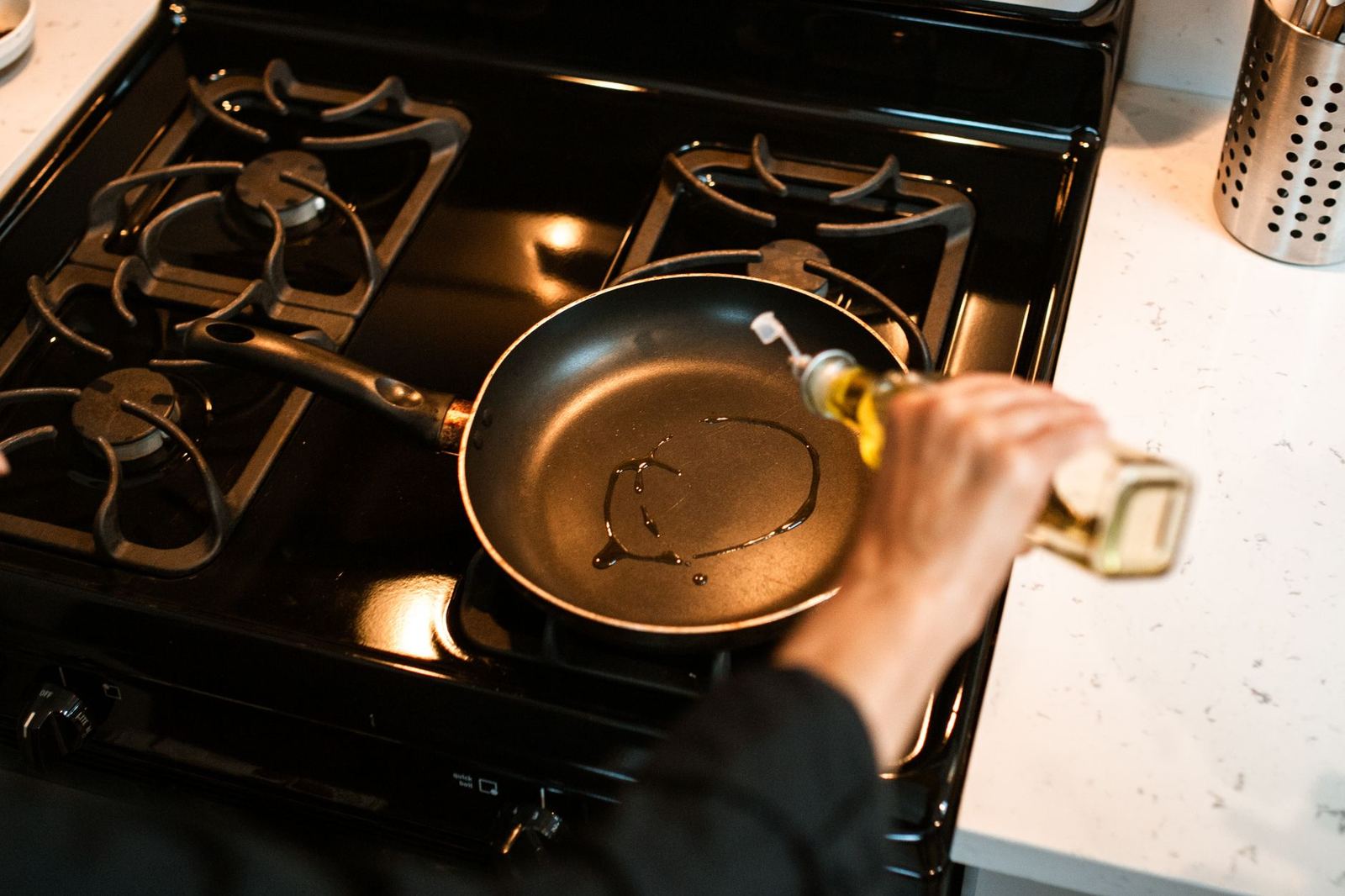
For cooking oils ayurveda practice leans on plant fats used alongside ghee, mainly sesame, coconut and mustard oil, each tied to a region, a flavor and a traditional use in the home kitchen.
They are one part of the wider practice of ayurvedic cooking, where fat carries spices and shapes the character of a dish.
The role of fat in the Ayurvedic kitchen
Ayurveda is a traditional system of health and daily living from India. The National Center for Complementary and Integrative Health describes Ayurvedic medicine as one of the world’s oldest medical systems and one of India’s traditional health care systems, and notes that it combines products with diet, exercise and lifestyle. In that tradition, fat is not an afterthought. It is the medium in which spices are bloomed, vegetables are softened and grains are finished.
Ghee gets most of the attention, but regional cooking uses plant oils every day. Sesame oil is common in the south and west, coconut oil along the southwestern coast, and mustard oil in the east and north. Each has a distinctive taste, and cooks choose among them by flavor as much as by any other quality. Readers looking for the traditional framework behind these choices will find it in the guide to the three doshas, where foods are sometimes described as warming or cooling.
This page describes the traditional uses and then looks at what mainstream nutrition sources say about the same oils, so readers can compare the two views. It is not medical advice and makes no claim that any oil treats a condition.
Sesame oil
Sesame oil is the oil most often named in Ayurvedic writing. In the kitchen it brings a rich, nutty flavor and is used for sautéing, for tempering spices and for finishing dishes. Toasted sesame oil has a stronger taste and is better suited to a drizzle than to long cooking.
A University of Connecticut Extension guide to cooking oils places sesame in its medium smoke point group and notes its rich nutty flavor and that it should be kept refrigerated. The same guide explains that walnut oil and sesame oil are delicate and inclined to turn rancid, and recommends buying smaller bottles of oil if it is not used often. That is practical advice for anyone who cooks occasionally: a small bottle used up within a reasonable time will taste better than a large one left in the cupboard.
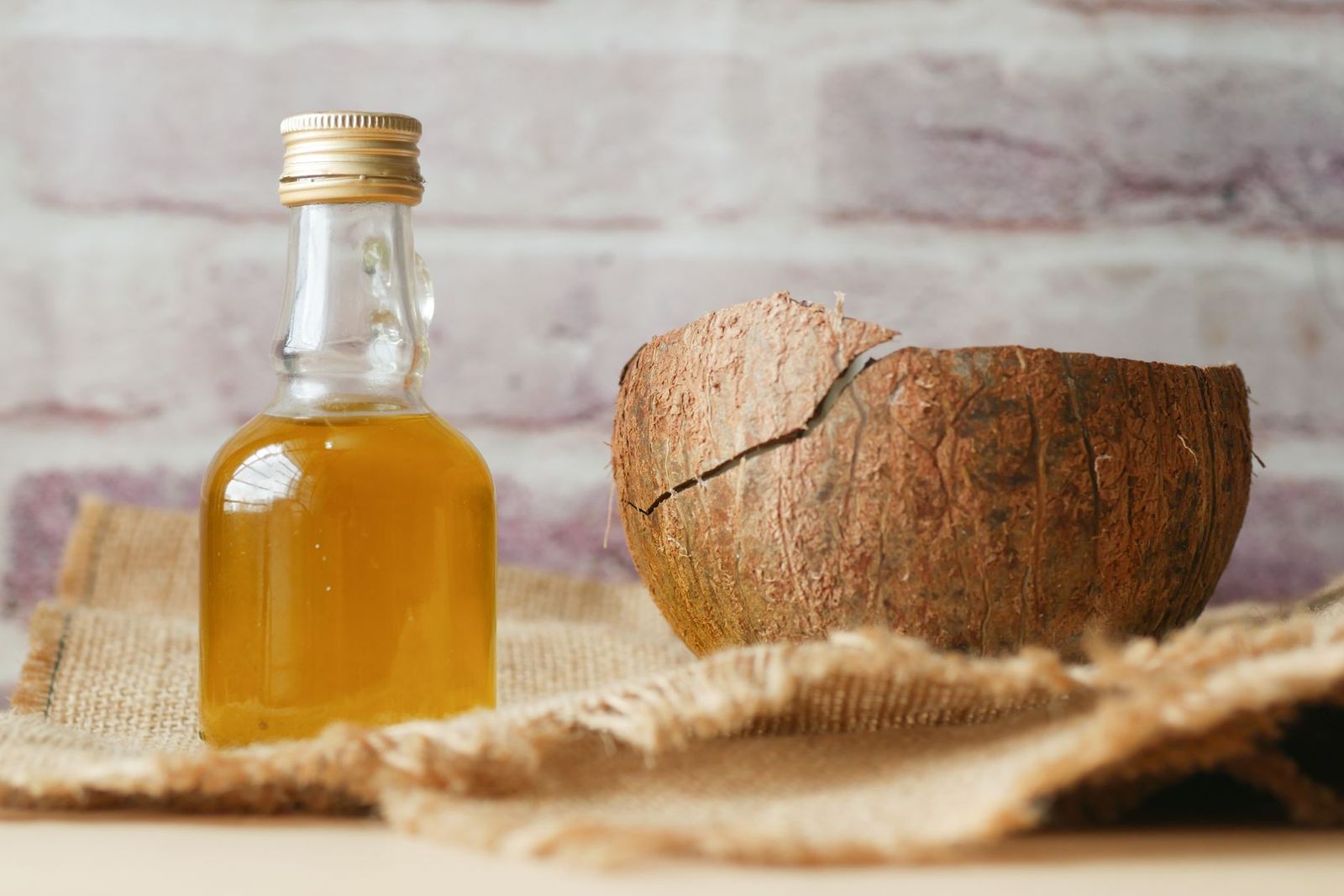
Traditionally sesame oil is also used outside the kitchen, for example in massage. That use is separate from cooking and is not covered here, and the oil sold for food should be the one used in food.
Coconut oil
Coconut oil is the staple of coastal kitchens in the southwest of India and in Sri Lanka. It gives a sweet, mild coconut aroma to vegetable dishes, curries and fried snacks, and it is solid in cool rooms and liquid in warm ones.
Nutrition sources are careful about coconut oil. The UConn Extension guide explains that some oils with saturated fat, such as coconut oil, palm oil and palm kernel oil, are solid at room temperature, and it lists saturated fat as found in animal and dairy products as well as the tropical oils, coconut, palm and palm kernel. In its table of oils, the guide’s note for coconut oil reads: high in saturated fat; use in moderation. The same page reports that the National Heart, Lung and Blood Institute and the World Heart Foundation have recommended that saturated fats be replaced with polyunsaturated and monounsaturated fats.
That does not mean coconut oil has no place in a kitchen. It means that, like ghee, it is best treated as one fat among several and used in modest amounts where its flavor matters. Readers with heart conditions or high cholesterol should ask their clinician or dietitian which fats suit them.
Mustard oil and other regional oils
Mustard oil has a sharp, pungent flavor and is typically heated until it smells strongly before food is added, a step many cooks in eastern and northern India follow to mellow the taste. It is used for fish and vegetable dishes and in pickles.
The UConn guide lists mustard oil among the high smoke point oils best for searing, browning and deep frying, and describes it as palatable, with the comment that the more refined the oil, the higher its smoke point. Smoke point matters because, as the guide explains, it is the point at which an oil begins to break down structurally, producing unhealthful by-products such as free radicals. Heating any oil past that point is worth avoiding, whether the oil is traditional or modern.
Other oils appear in Ayurvedic and wider Indian cooking as well, including peanut oil in the west, and sunflower and rice bran oil in households that prefer a neutral taste. The same guide notes that olive and canola oils are good sources of monounsaturated fats while soybean and sunflower oils are rich in polyunsaturated fat, a useful reference for anyone choosing a neutral everyday oil to sit beside the traditional ones.
Choosing, heating and storing oils
A few habits cover most of the practical ground:
- Match the oil to the method: gentle sautéing and finishing for delicate oils, higher heat for oils the smoke point list places higher
- Buy small bottles of delicate oils such as sesame, and use them up
- Store oils in a cool, dark place, with a tight cap
- Smell the oil before using it: a sharp, paint-like or stale smell means it has turned rancid
- Do not pour used oil down the sink; seal it in a container and put it in the trash
The UConn guide adds that refrigeration benefits most oils, and states plainly that cooking oil should never be dumped in the kitchen sink or in the toilet bowl. For further reading, see the UConn Extension guide to heart healthy cooking oils.
The oil on the stove is one piece of the meal. How much to serve and how to eat it are covered in the guide to ayurvedic eating habits.
Safety and good sense
Ayurveda also describes medicated oils and herbal preparations. Those are a different category from cooking oils. The NCCIH warns that some Ayurvedic preparations may contain lead, mercury or arsenic in amounts that can be toxic, and advises people with a health condition to talk with their health care provider before using Ayurvedic products. Anyone who is pregnant, takes medication or has a heart or digestive condition should ask a clinician before changing the fats in their diet in a significant way.
It also helps to keep the role of oil in perspective. A little fat makes vegetables and pulses more satisfying and carries the flavor of spices, but oil is calorie-dense, and a spoonful is usually enough for a pot of lentils or a pan of vegetables. Cooks who use several oils tend to pick one for each job: a mild one for everyday sautéing, a flavorful one for tempering and finishing, and a neutral one for higher heat.
For everyday cooking, plain food-grade oils bought from a normal grocer are the sensible choice, used in moderate amounts and stored well.
Frequently asked questions
Which oil is the most traditional in Ayurveda?
Sesame oil is the one most often named, though practice varies by region. Coconut oil is traditional on the southwest coast, and mustard oil in the east and north.
Is coconut oil healthy?
It is high in saturated fat, so mainstream guidance suggests using it in moderation and favoring oils rich in unsaturated fats for everyday cooking.
Can I swap one oil for another in a recipe?
Usually yes, if the cooking temperature suits the oil. Expect a change in flavor, since sesame, coconut and mustard oils each taste distinct.
How do I know an oil has gone rancid?
A stale, sharp or paint-like smell and a bitter taste are the usual signs. Delicate oils like sesame turn rancid more easily, so buy small bottles.