
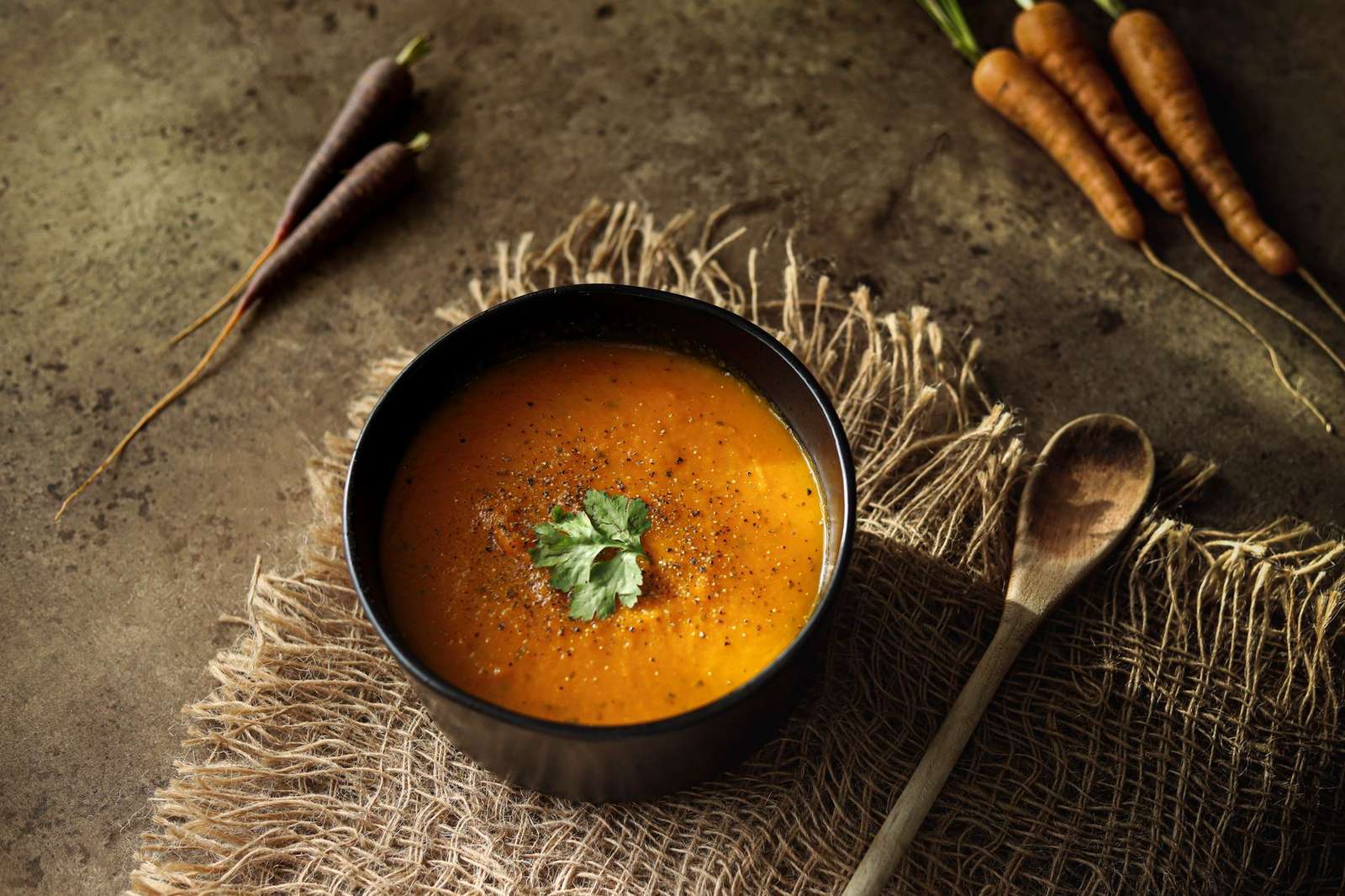
Carrot ginger soup is a smooth, orange puree of carrots simmered with fresh ginger, softened onion and coconut milk, then blended until silky. This page gives the method, flavor options, and notes on ginger and coconut.
It is one of the simpler dishes among the ayurvedic recipes collected on this site, and it needs only one pot and a blender.
Ingredients for the soup
The soup works because a few plain ingredients are cooked until sweet and soft. Carrots supply the body and color, ginger supplies warmth, and coconut milk rounds the edges and gives a creamy finish without cream or butter.
- Carrots, scrubbed or peeled and cut into even slices so they cook at the same pace
- A knob of fresh ginger, peeled and grated or finely chopped
- An onion, chopped, and a couple of garlic cloves if you like them
- A neutral oil or a little ghee for softening the onion
- Vegetable stock or water, enough to cover the carrots
- Coconut milk, stirred in near the end
- Salt, black pepper, and lime or lemon juice to brighten
- Optional spices such as ground cumin, coriander or turmeric
Fresh ginger matters here. According to the National Center for Complementary and Integrative Health, ginger is native to the warm parts of Asia and is now grown in parts of South America, Africa, and the Middle East, and its rhizome (underground stem) is used in food and for health purposes. In a soup it is the rhizome that goes into the pot, and grated fresh ginger gives a livelier flavor than the dried powder.
Step-by-step method
The method has three stages: softening the aromatics, simmering the carrots, and blending. None of them need close attention, but each is worth doing carefully.
- Warm the oil or ghee in a large pot over medium-low heat. Add the chopped onion with a pinch of salt and cook gently until it is soft and translucent but not browned.
- Stir in the ginger and garlic and cook for a minute or two, just until fragrant. Add any ground spices now and stir for a few seconds so they warm in the fat.
- Add the sliced carrots and stir to coat them. Pour in enough stock or water to just cover the carrots.
- Bring to a boil, then lower the heat, cover partly and simmer until the carrots are completely soft and break apart when pressed with a spoon.
- Take the pot off the heat. Stir in most of the coconut milk, keeping a little back for serving.
- Blend until smooth, using an immersion blender in the pot or working in batches in a countertop blender. If using a countertop blender, leave the lid vent open and cover it with a cloth so the steam can escape.
- Return the soup to the pot, thin it with a splash of hot water if it is too thick, and season with salt, pepper and a squeeze of lime or lemon juice. Reheat gently without letting it boil hard.
- Ladle into bowls and drizzle with the reserved coconut milk.
The soup is ready when it pours from a spoon in a thick ribbon. Season at the end, since flavor concentrates as it simmers.
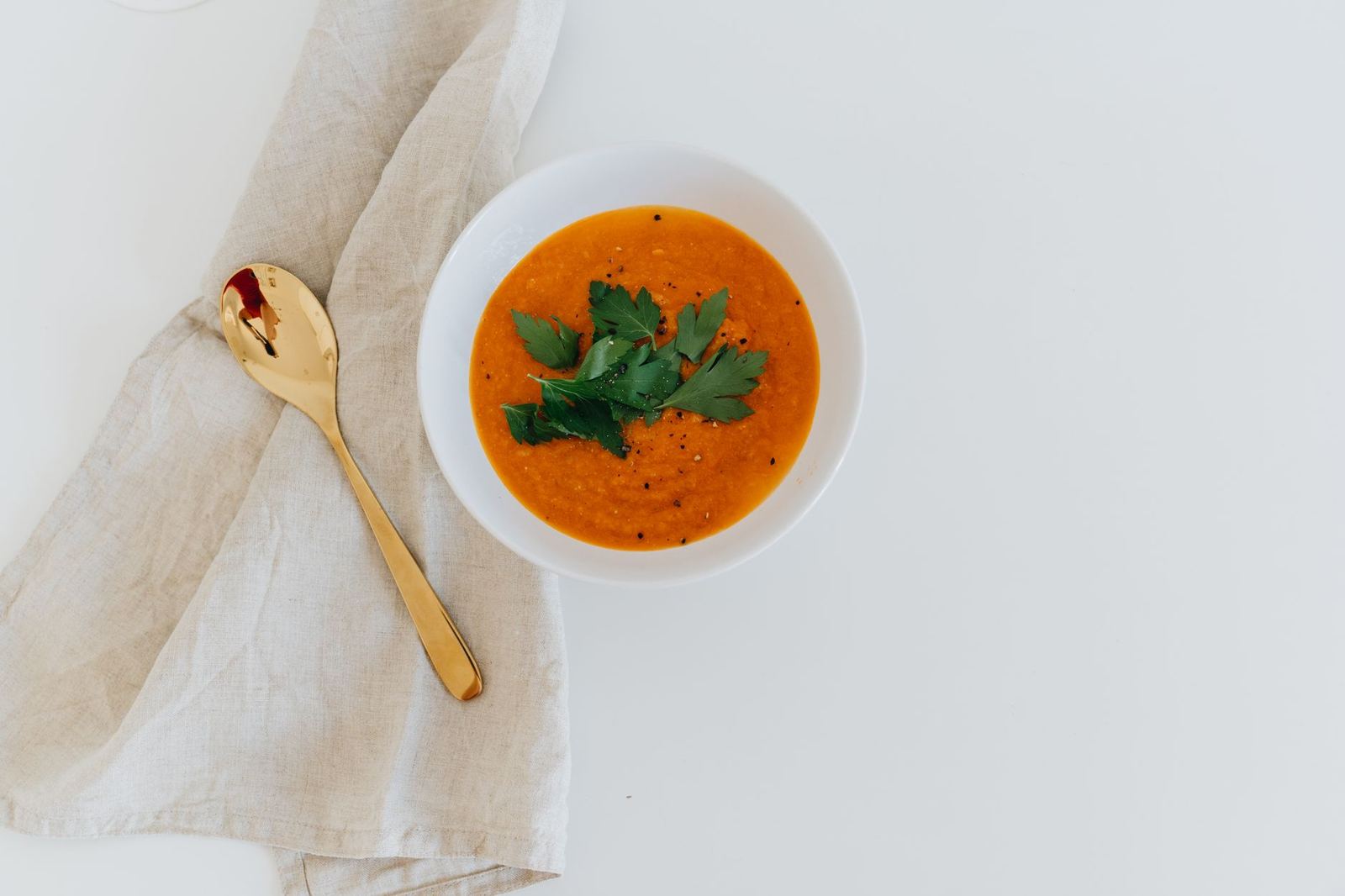
Flavor variations and toppings
The base is forgiving. Ground cumin and coriander lean the soup toward the warm, earthy flavors of Indian home cooking. A pinch of turmeric deepens the color. A small spoonful of mustard seeds or cumin seeds sizzled in hot oil and poured over the top adds a toasted note and a little crunch.
For a brighter bowl, finish with lime juice and chopped cilantro. For heat, add a thin slice of green chili while the onion cooks, or a pinch of cayenne at the end. Toasted pumpkin seeds, a spoonful of yogurt or a few cooked lentils stirred in make the soup more filling.
The soup also pairs well with plain rice. The kichari recipe on this site, a soft one-pot rice and mung bean dish, is a mild partner for the sharper ginger. For something sweet afterward, try the rice pudding with cardamom.
Ginger: what research says and what to watch
Ginger is often described as a remedy, so it helps to be clear about what the research supports. The National Center for Complementary and Integrative Health notes that there have been many studies on the use of ginger for health purposes in people, but some of them have not been of high quality. It also points out that most of the studies tested dietary supplements rather than foods, which means results from capsules do not automatically apply to the amount of ginger in a bowl of soup.
The same page lists side effects: ginger can cause abdominal discomfort, heartburn, diarrhea, and mouth and throat irritation when taken orally. Because these side effects are listed, people new to ginger may prefer to start with a small amount. The NCCIH also says that if you take any type of medicine, you should talk with your health care provider before using ginger or any other herbal products, because some herbs and medicines interact in harmful ways.
Ayurveda is a traditional system, and the NCCIH describes Ayurvedic medicine as one of the world’s oldest medical systems and one of India’s traditional health care systems. The soup is a cooking recipe, not a treatment. People who have a health condition, who are pregnant, or who take medication should speak with a clinician before changing their diet or using herbs and supplements.
Coconut milk, vegetables and a balanced plate
Carrots count toward daily vegetable intake. The NHS advises eating at least 5 portions of fruit and vegetables a day, with a portion generally 80g, and notes that fruit and vegetables provide fibre, which can help digestion and prevent constipation. A generous bowl of this soup holds a good share of vegetables, although it works best alongside other vegetables across the day.
Coconut milk adds richness, and it also adds saturated fat. The NHS lists coconut oil among the plant foods that are sources of saturated fat, and it advises that unsaturated oils such as olive, rapeseed and sunflower oil are healthier than saturated fats. A practical balance is to cook the onion in an unsaturated oil and to use coconut milk as a finishing touch, in a measured amount, rather than as the main liquid. Light coconut milk or an extra splash of stock lowers the richness further.
Serving, storing and reheating
Serve the soup hot, with bread, flatbread or a scoop of plain rice on the side. Because it is smooth and mild, it suits a light lunch as well as a first course at dinner.
Leftover soup should be cooled quickly and refrigerated rather than left on the stove. Divide a large batch into shallow containers so it cools faster. Coconut milk can separate on chilling, so stir well while reheating gently and add a splash of water if needed. If rice is served with the soup, the NHS notes that rice and grains are an excellent choice of starchy food, but cooked rice has its own storage rules, which are spelled out in the rice pudding method.
Frequently asked questions
Can carrot ginger soup be made vegan?
Yes. Use oil instead of ghee and vegetable stock or water. Coconut milk already keeps the soup dairy-free, so the finished bowl is vegan.
Can the soup be frozen?
Most blended vegetable soups freeze well, though coconut milk may separate slightly. Stir well while reheating, and add a splash of water if the texture looks thin.
Is fresh ginger better than ground ginger?
Fresh ginger gives a brighter, sharper flavor. Ground ginger is more muted and can be used in a pinch, added with the other ground spices.
Is ginger safe for everyone?
Ginger is a common food, but the National Center for Complementary and Integrative Health lists side effects such as abdominal discomfort and heartburn, and advises talking with a health care provider before using ginger if you take any type of medicine.