
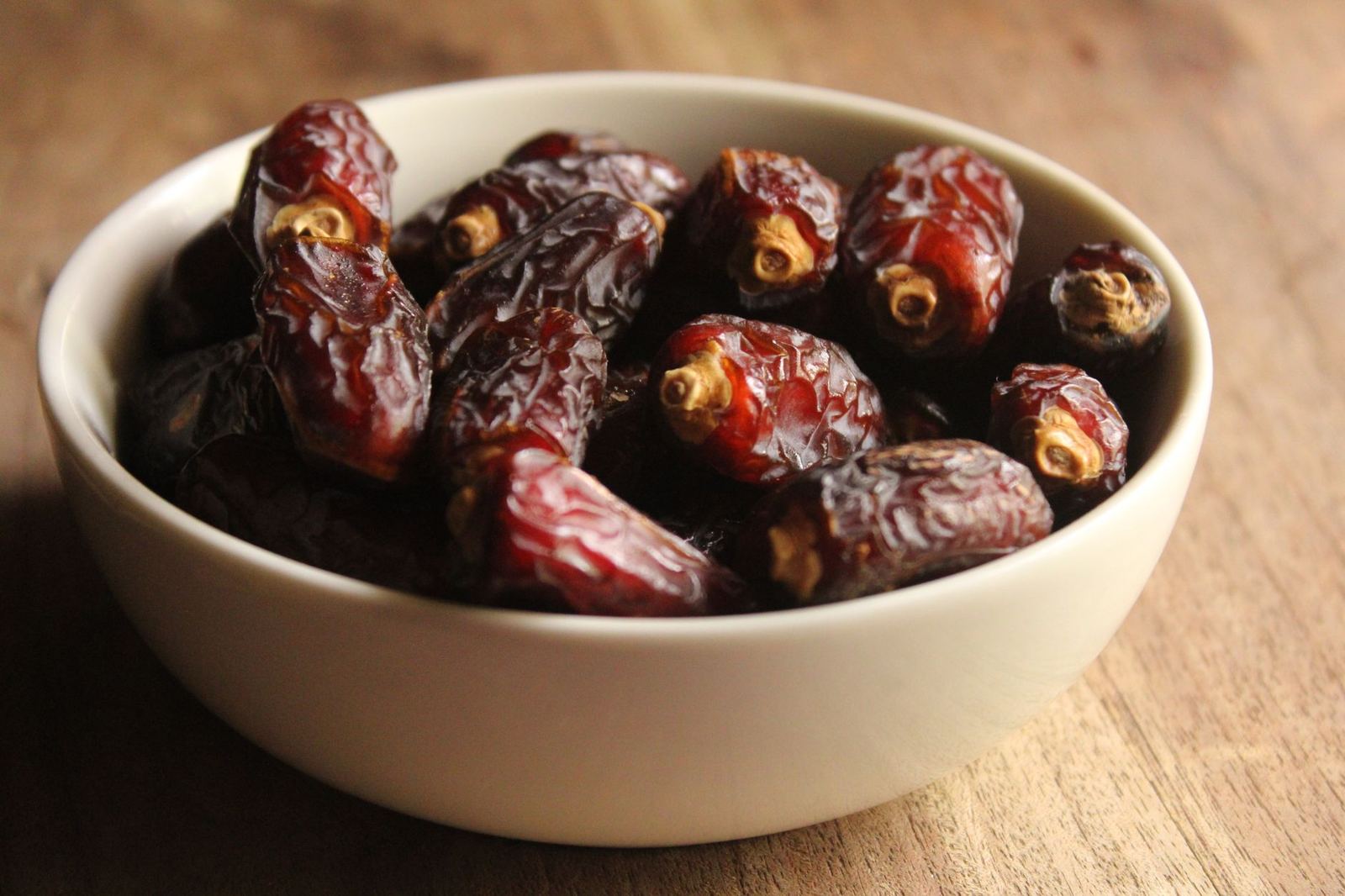
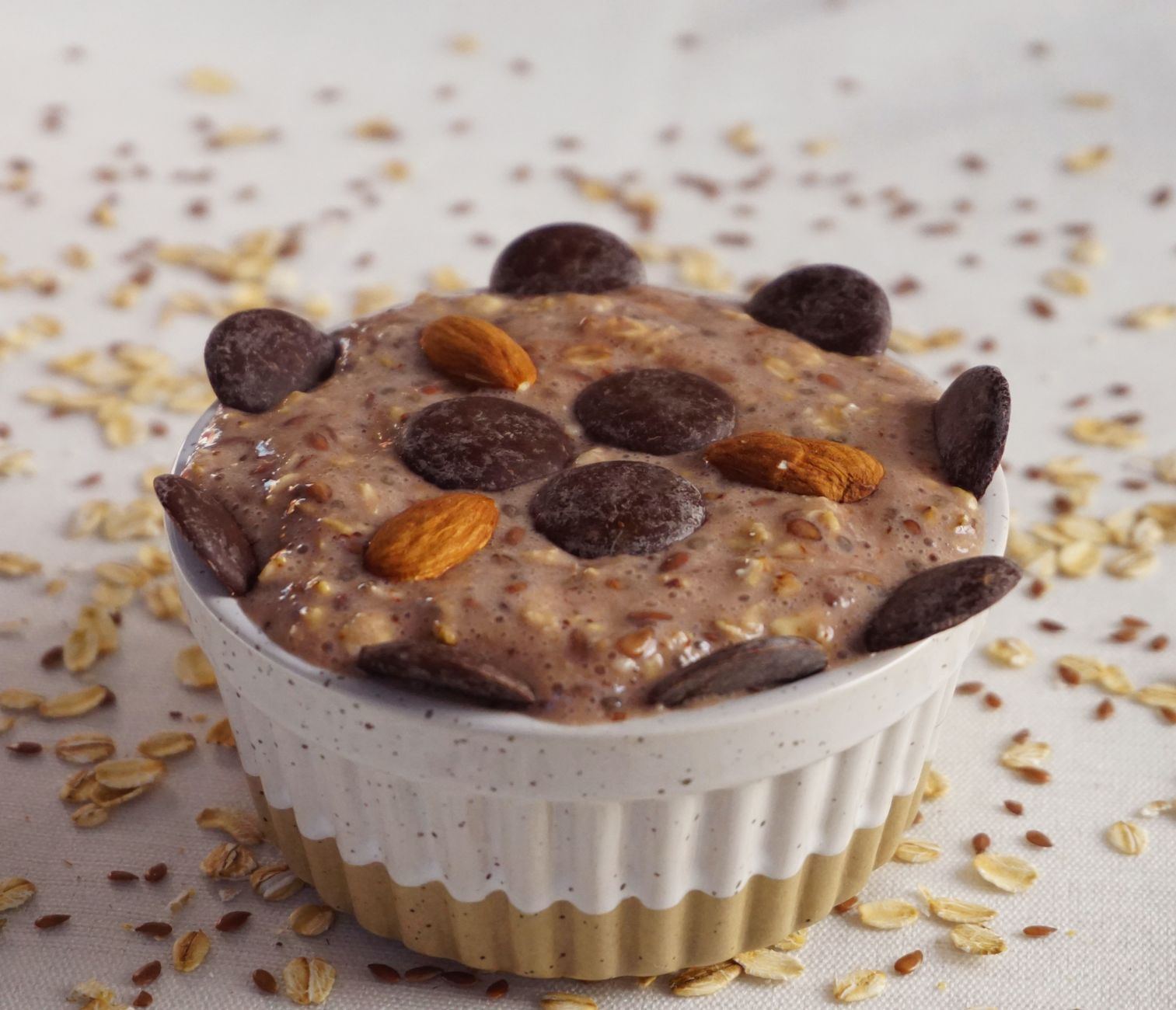
Chocolate almond bars like these need no oven: dates are blended into a sticky base with almonds, cocoa and cardamom, pressed into a pan, topped with melted dark chocolate and chilled until firm enough to slice.
The method below is an original write-up that belongs with the other ayurvedic recipes on this site, which collect soups, drinks, one-pot meals and sweets.
What these bars are and why the ingredients are simple
Sweets in traditional Indian cooking are often built from nuts, dried fruit, ghee and unrefined sugar rather than from refined flour. These bars follow that spirit. Dates provide sweetness and act as the binder, almonds add crunch and body, cocoa gives a chocolate flavor, and ground cardamom brings a floral, slightly citrusy warmth that pairs well with both almonds and chocolate. A pinch of salt sharpens the flavor.
The recipe is called ayurvedic here because the ingredients are common in the Ayurvedic kitchen, not because the bars are a remedy. The National Center for Complementary and Integrative Health describes Ayurveda as one of the world’s oldest medical systems and one of India’s traditional health care systems, and treats diet as one part of a wider lifestyle approach. Nothing in this recipe is a treatment for any condition.
Because the bars need no baking and no precise temperatures, they suit a beginner. The two skills that matter are processing the dates until they form a cohesive dough and chilling the bars long enough to set before cutting.
Ingredients
Quantities are given in proportions, so the bars can be scaled to the size of the pan and the food processor. The base should hold together when pinched, and the chocolate layer should be thin enough to cut cleanly.
- Soft pitted dates, such as Medjool, as the largest part of the base
- Raw or dry-roasted almonds, roughly half the volume of the dates, plus a small handful extra for the top
- Unsweetened cocoa powder, a few spoonfuls, for the base
- Ground cardamom, to taste, or the seeds from a few cracked pods ground fine
- A pinch of salt
- A spoonful of ghee or coconut oil, optional, for a softer base
- Dark chocolate, chopped, for the topping, with a little extra oil or ghee to thin it
- Flaky salt or chopped almonds, optional, for the finish
Almonds can be used raw or dry-roasted. Harvard’s Nutrition Source notes that raw almonds are nutritionally comparable to dry-roasted, so the choice is one of flavor: dry-roasting gives a deeper taste. Choose plain almonds rather than flavored ones.
Method
Line a small square or loaf pan with parchment so the bars can be lifted out in one piece. Then work through the steps in order:
- Check the dates for pits and tear any very hard ones in half. If the dates are dry and firm, cover them with warm water for a short while, then drain well and pat dry.
- Pulse the almonds in a food processor until coarsely chopped, with some pieces left for texture. Set aside a few spoonfuls for the top.
- Add the dates, cocoa, cardamom, salt and the optional ghee or coconut oil to the processor. Process until the mixture clumps into a sticky dough. Stop and scrape down the bowl as needed.
- Return the chopped almonds and pulse briefly, only enough to combine.
- Press the mixture firmly and evenly into the lined pan. Use the back of a spoon or a piece of parchment to level the top.
- Melt the chopped dark chocolate gently in a heatproof bowl set over a pan of barely simmering water, or in short bursts in a microwave, stirring between each. Stir in a little ghee or oil for a smoother, thinner layer.
- Pour the chocolate over the base and spread it to the edges. Scatter the reserved almonds and a little flaky salt over the top.
- Chill in the refrigerator until the chocolate is completely set and the base is firm.
- Lift the slab out by the parchment and cut into bars with a sharp knife, wiping it between cuts.
If the base feels dry and crumbly, add another date or a splash of warm water and process again. If it is too sticky to press, chill the mixture for a little while, or add more almonds.
Variations and serving
The bars adapt easily. Replace some of the almonds with walnuts, cashews or pistachios, or add a spoonful of sesame seeds to the base for a nuttier flavor. Orange zest suits chocolate and cardamom well, and a pinch of ground cinnamon works as a warm background note. For a vegan version, use coconut oil rather than ghee.
Serve the bars cold from the refrigerator with tea, or cut them small for a dessert plate. In many households they are eaten as an afternoon snack. For other sweets in the same spirit, see sesame cookies, which use jaggery and ghee, and for a savory, cooling dish to precede a sweet course, the recipe for fennel soup.
Store the bars in a sealed container in the refrigerator and take them out a few minutes before serving, so the chocolate softens slightly. They also freeze well if wrapped, which makes them handy for a batch.
Tips for texture and flavor
Dates vary a great deal between varieties and between packets, which is the main reason the recipe uses proportions. Soft, moist dates need little help, while firm or older ones benefit from a short soak in warm water. Always drain and dry them before processing, since extra water makes the base gummy and stops the chocolate from setting neatly.
For a smoother bar, grind the almonds finer before adding the dates. For a bar with more bite, leave them coarse and press a few whole almonds into the top before the chocolate sets. Toasting the almonds in a dry pan until fragrant, then cooling them completely, deepens the flavor without changing the method.
Cardamom is potent, so start with a small amount and taste the dough before the chocolate goes on. Freshly ground seeds taste brighter than pre-ground powder. If the chocolate layer cracks when cut, let the slab sit at room temperature for a few minutes and use a warm, dry knife.
What nutrition sources say about the ingredients
These are sweets, and the nutrition information should be read that way. Harvard’s Nutrition Source describes almonds as a calorie-dense food that is also nutrient-dense, with the majority of its fat being monounsaturated. Its page on almonds adds that observational studies link nut intake with a lower risk of heart disease, though those studies cannot prove cause.
On chocolate, the Nutrition Source says that choosing dark chocolate and eating modest quantities may offer the greatest health benefits, and it notes that dark chocolate and cocoa powder sometimes contain small amounts of heavy metals like cadmium and lead, naturally found in soil, air and water. Its dark chocolate page explains the issue in more detail. Dates are a concentrated sweetener even without refined sugar, and the same site reminds readers that the body does not need to get any carbohydrate from added sugar, so a small bar is plenty.
The recipe contains tree nuts, a common allergen, and some dark chocolate is made on equipment that also processes milk. People with allergies, with diabetes, or on a restricted diet should check labels and ask a clinician or dietitian about portions before making sweets a regular habit.
Frequently asked questions
Do chocolate almond bars need any baking?
No. The base is made by processing dates and almonds, and the topping is melted chocolate, so everything sets by chilling.
Can I use other nuts?
Yes. Walnuts, cashews and pistachios all work. Keep the total proportion of nuts to dates similar so the base still holds together.
How do I keep the bars from crumbling?
Process the dates until they form a sticky dough, press the mixture firmly into the pan, and chill the bars until fully set before cutting.
Are these bars an Ayurvedic remedy?
No. They are a sweet snack made from ingredients common in Indian and Ayurvedic cooking. Questions about health conditions belong with a clinician.