
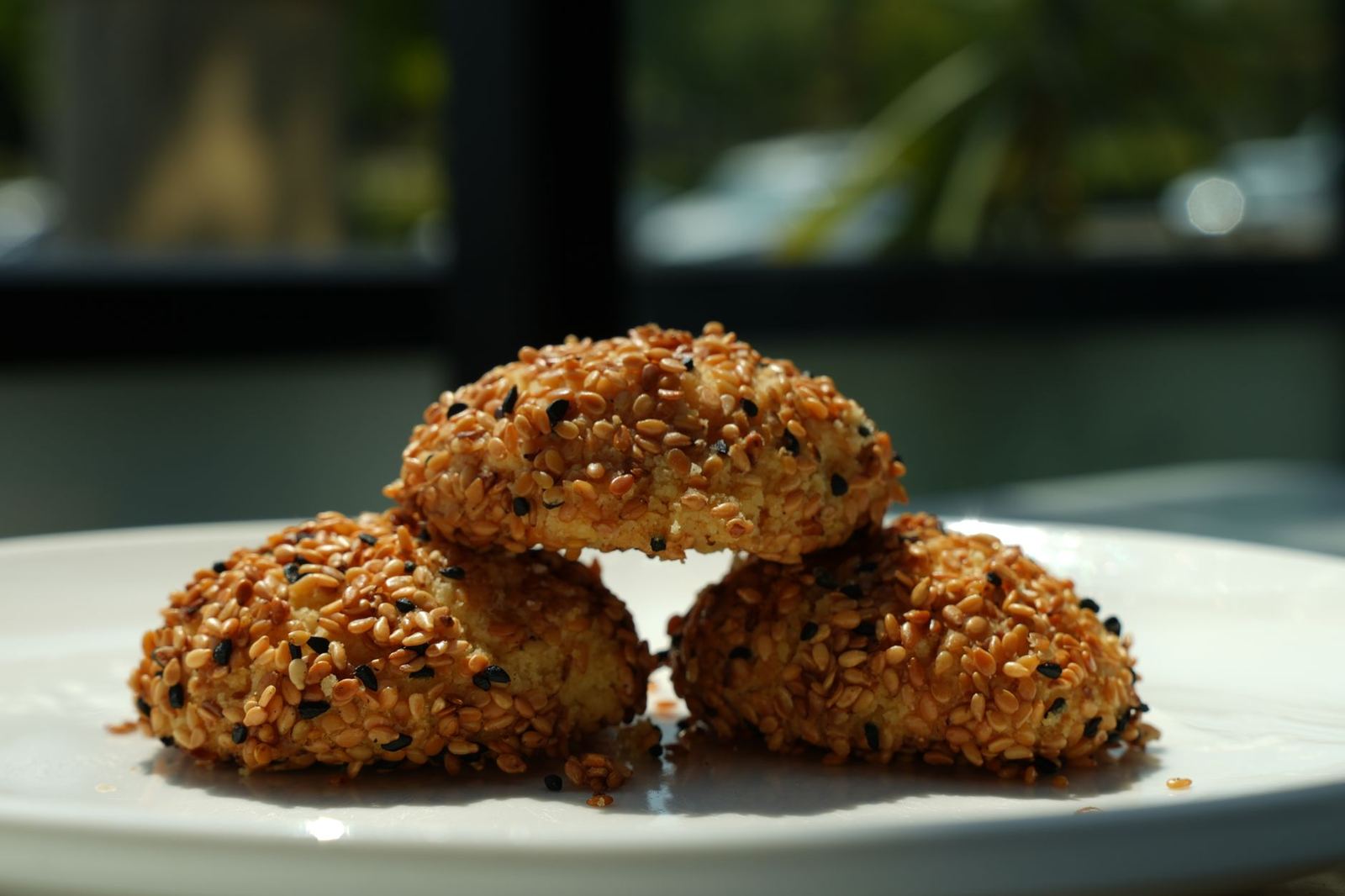
Sesame cookies with jaggery and ghee are crisp, nutty rounds sweetened with unrefined cane sugar instead of white sugar. This original method covers the dough, the shaping and the bake, without fixed measurements.
The cookies sit alongside the other sweets, drinks and one-pot meals in the collection of ayurvedic recipes, where each page gives a full method.
Why sesame, jaggery and ghee belong together
Sesame cookies are a good example of how a traditional pantry builds a sweet from a few honest ingredients. Sesame seeds supply the flavor and the crunch, ghee carries the richness, and jaggery brings a deep, caramel-like sweetness that white sugar lacks. Flour binds it all, and a pinch of salt keeps the sweetness from tasting flat.
Ayurveda is described by the National Center for Complementary and Integrative Health as “one of the world’s oldest medical systems” that “remains one of India’s traditional health care systems.” Its food traditions favor freshly made dishes cooked with whole ingredients and spices, and a cookie like this one fits that style as a modest treat rather than a daily staple. This page is about the kitchen craft only. It does not suggest that any cookie can treat a condition. The NCCIH overview of Ayurvedic medicine explains the tradition and the research behind it in plain terms.
Jaggery is a dark, unrefined sweetener made from sugarcane, sold as a hard block or as soft crumbs. It melts into butter or ghee easily and tastes of toffee and molasses. It is still a sugar, though. MedlinePlus states that “Raw and brown sugars are no healthier than granulated white sugar,” and the same sensible reading applies to jaggery: the reason to use it here is flavor and tradition, not a nutritional shortcut.
Ingredients for sesame cookies
Proportions matter more than exact weights in a cookie like this, and every oven and every batch of jaggery behaves a little differently. The list below gives the components in the order they go into the bowl.
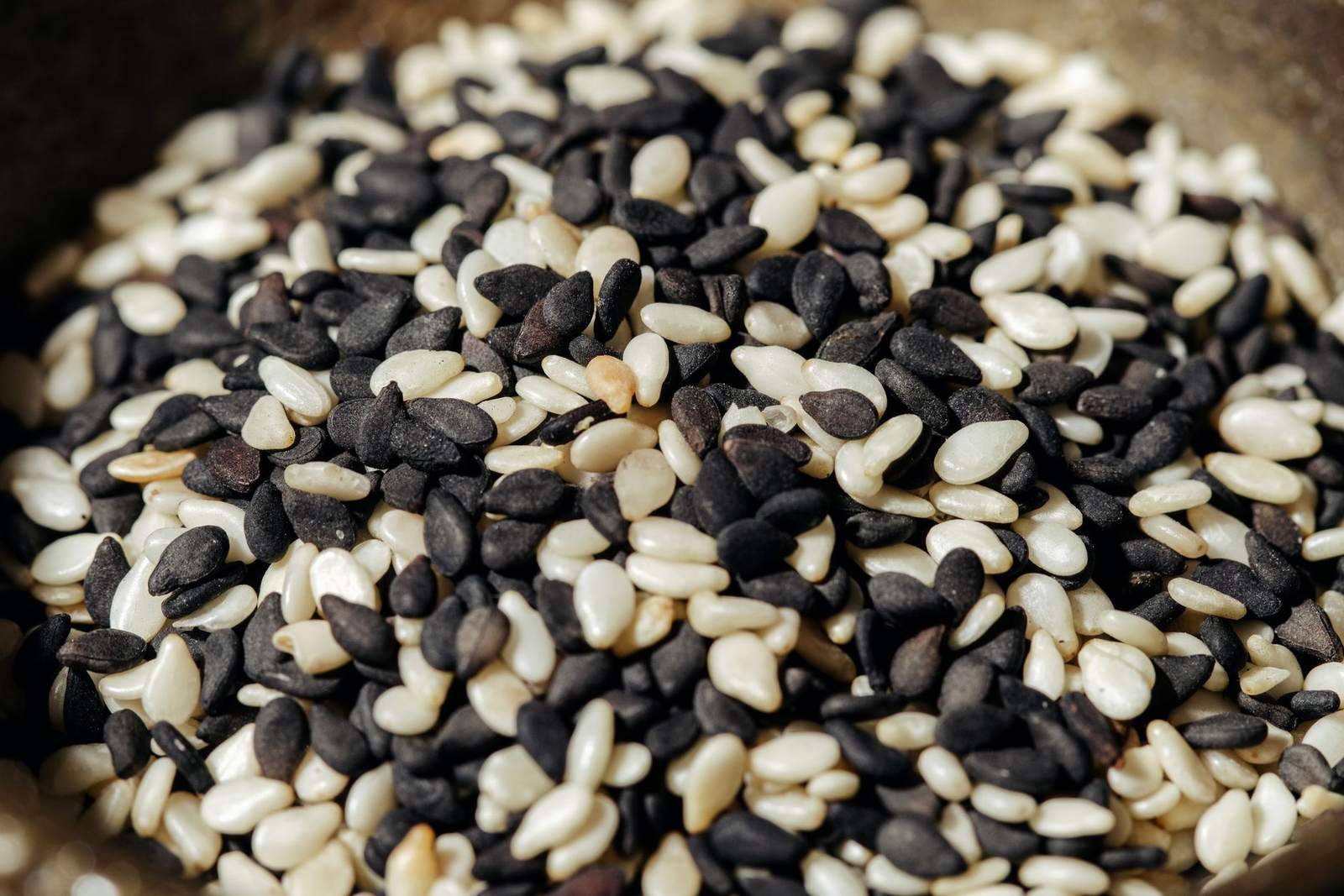
- Sesame seeds, white or a mix of white and black, divided into a portion to toast and a portion to coat
- Ghee, softened until it is spreadable but not melted
- Jaggery, grated or crushed into small crumbs so it blends without lumps
- Whole wheat flour or plain flour, with a little extra for rolling
- A pinch of salt
- Ground cardamom, which is optional but classic with sesame
- A spoonful of milk or water, only if the dough needs help coming together
Whole wheat flour gives a sturdier, more rustic cookie with a slightly nutty taste of its own, while plain flour makes it more tender and sandy. Either one works, and the choice is mostly about texture. For a dairy-free version, a neutral oil can stand in for the ghee, though the flavor will be less rounded.
How to make sesame cookies, step by step
- Toast the sesame seeds for the dough in a dry pan over gentle heat, stirring all the time. They are ready when they smell nutty and turn a shade deeper. Tip them onto a plate right away so they stop cooking in the hot pan.
- Beat the softened ghee and the crushed jaggery together with a spoon or a whisk until the mixture looks creamy and the jaggery has largely dissolved into the fat.
- Stir in the toasted seeds, the salt and the cardamom if using it.
- Add the flour in small additions, mixing gently. Stop as soon as the dough holds together when pressed. Overworking the dough makes the cookies tough.
- If the mixture feels crumbly and will not bind, add a small spoonful of milk or water, then press it together again.
- Rest the dough, covered, for a short while so the flour hydrates and the ghee firms slightly. A chilled dough is easier to shape.
- Heat the oven to a moderate temperature and line a tray with parchment.
- Roll small portions of dough into balls, press each into the reserved raw sesame seeds on a plate, then flatten gently into thick discs on the tray, leaving space between them.
- Bake until the edges turn golden and the tops look dry. The cookies will still be soft when they come out and will firm up as they cool.
- Let the cookies cool on the tray for a few minutes, then move them to a rack until they are completely cold.
Watch the tray closely near the end of baking. Jaggery darkens and can scorch quickly, so a cookie that looks nearly done is usually done.
Texture fixes and simple variations
If the cookies spread into thin, greasy puddles, the dough was too warm or the ghee too soft. Chill the shaped discs before baking next time. If they come out dry and sandy, there was too much flour or too little fat, so add a touch more ghee or press the dough together with a spoonful of milk.
Jaggery sometimes arrives in hard lumps that refuse to crush. Warm the block briefly, or shave it with a sharp knife, before beating it into the ghee. Finer crumbs dissolve more evenly and give a smoother crumb in the baked cookie.
Variations are easy. Replace part of the flour with ground almonds for a richer cookie, add a little grated orange zest for brightness, or use only black sesame seeds for a stronger, slightly bitter edge. A pinch of ground ginger or a few crushed fennel seeds also suits the sesame well. For a chocolate-and-nut cookie in a different style, try the no-bake chocolate almond bars, which need no oven at all.
Serving, storing and eating them well
These cookies are at their best with a hot cup of tea or a glass of warm milk. They are sweet and dense, so a small piece goes a long way. Harvard’s Nutrition Source notes that “Your body doesn’t need to get any carbohydrate from added sugar,” and describes sweets as something to use sparingly, which is a fair way to think about any sugar-sweetened cookie, whatever the sweetener.
For storage, keep the cooled cookies in an airtight tin at room temperature. Humidity softens them, and a short time in a warm oven restores some crispness. The dough also freezes well as shaped balls, so a few cookies can be baked fresh without making the whole batch.
The Harvard Nutrition Source page on added sugar is a clear primer for anyone who wants to put a sweet treat like this into a balanced eating pattern.
For a morning dish that suits a cool day, the warm porridge method on the ayurvedic breakfast page is a good companion to a sweet like this.
Sesame allergy and health notes
Sesame is an allergen, and a cookie made with a generous coating of seeds is not suitable for anyone with a sesame allergy. FARE, the food allergy research and education organization, reports that “On January 1, 2023, sesame became the ninth major allergen that must be labeled in plain language on packaged foods in the U.S.” The same page adds that “Products manufactured prior to 2023 may still contain unlabeled sesame and will remain on store shelves until replaced by new inventory.” Anyone cooking for guests should ask about allergies before serving these cookies, and should read the labels on any prepared ingredients.
The FARE sesame allergy guide covers symptoms, label reading and what to do about avoidance.
People who have a health condition, who are pregnant, or who take medication should talk with a clinician before making large changes to their diet. NCCIH makes the same point about the tradition itself: “If you have a health condition, talk with your conventional health care provider before using Ayurvedic products.” This is an independent informational site and is not affiliated with any cookbook author, publisher, clinic or product brand.
Frequently asked questions
Can I make sesame cookies without jaggery?
Yes. Brown sugar or coconut sugar can replace it in roughly the same amount. The flavor will be a little milder and the cookie slightly lighter in color, but the method does not change.
Why are my cookies too hard?
Hard cookies usually mean the dough was overmixed or baked too long. Mix just until the dough holds together, and take the tray out while the centers still look slightly soft.
Is ghee necessary?
Ghee gives the traditional flavor and a short, crumbly texture, but a neutral oil or plain butter works as a substitute. Butter adds moisture, so the dough may need a little more flour.
Can the cookies be made gluten-free?
A blend of rice flour and ground almonds can replace the wheat flour. The dough is more fragile, so shape it carefully and let the cookies cool completely on the tray before moving them.