
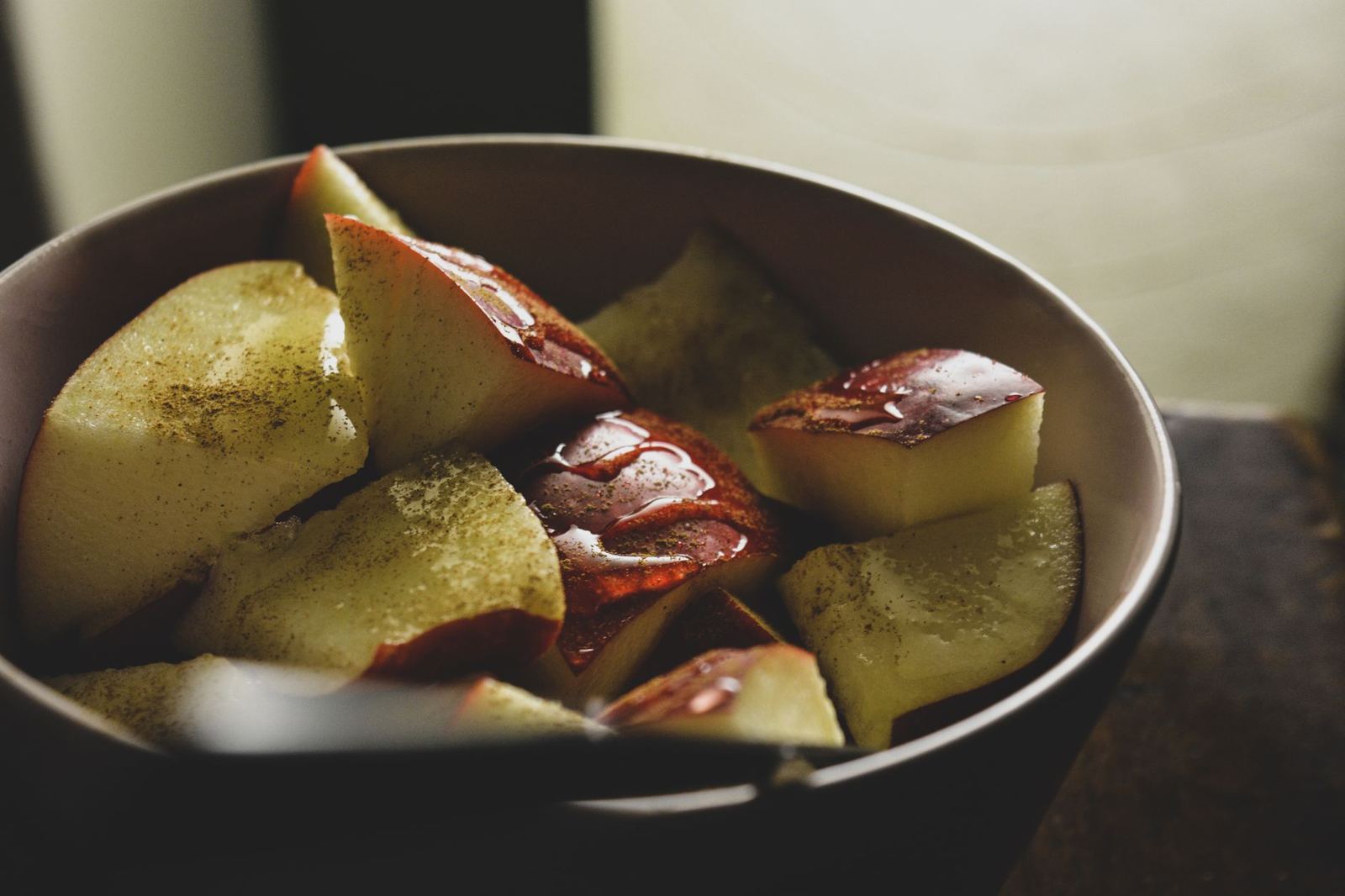
Stewed apples are apple pieces simmered gently in a little water with cinnamon and cloves until soft and fragrant. This original method needs no added sugar and works warm for breakfast or as a simple dessert.
The dish belongs with the other fruit, grain and soup recipes in the collection of ayurvedic recipes, where warm, simply cooked food is the common thread.
Why cooked fruit has a place in an Ayurvedic kitchen
Ayurveda is a traditional system from India. The National Center for Complementary and Integrative Health describes it as “one of the world’s oldest medical systems” and says it “remains one of India’s traditional health care systems.” Within that tradition, cooked and warmed foods are common, and fruit is often stewed with spices rather than eaten cold and raw. That preference is a matter of culinary custom, and this page makes no claim that a bowl of apples can treat anything.
Stewing also changes the fruit in useful kitchen ways. Heat softens the flesh, releases juices and brings the spices into the fruit, so the result tastes sweeter than the raw apple even when no sugar is added. The texture is gentle, which makes the dish popular for children, for older adults and for anyone who prefers soft food.
The NCCIH overview of Ayurvedic medicine is a reliable place to read about the tradition and about what research has and has not shown.
Picking the right apples
Not every apple stews well. Soft, mealy varieties collapse into sauce within minutes, which is fine for a smooth puree but not for tender pieces. Harvard’s Nutrition Source says the best apples for cooking are “Tart, mildly sweet apples with firm crisp flesh that don’t become mushy at high temperatures,” and names Granny Smith, Honeycrisp, Braeburn, Cortland, Melrose and Jonagold among them.
A mix of two varieties gives a nice result: one firm and tart for structure, one sweeter and softer to melt into a light sauce around the pieces. Taste the raw apple before cooking, because that tells you how much sweetness, if any, the pot needs.
The skin deserves a decision. Harvard notes that “Discarding the skin removes much of the fiber and the majority of flavonoids,” and adds that “Apple skin supplies the majority of healthy phytochemicals and fiber, so it is not best to remove it.” Leaving the skin on is simpler and keeps more of the fruit, and it also holds the pieces together better. Wash the apples well first. Peel them only if the skin bothers you or the dish is meant for a very young child.
The Nutrition Source page on apples also covers how to wash apples and which varieties suit baking.
Ingredients for stewed apples
- Firm cooking apples, washed, cored and cut into bite-size wedges or chunks
- A splash of water, just enough to cover the base of the pot
- A cinnamon stick, or a pinch of ground cinnamon
- Whole cloves, a few at most, because their flavor is strong
- A squeeze of lemon juice, to keep the fruit bright and to balance the sweetness
- A small piece of ghee, optional, for a richer finish
- Jaggery or honey, optional, only if the apples are very tart
- A pinch of cardamom or fresh ginger, optional
Whole spices work better than ground spices in this dish, because they flavor the liquid gently and can be fished out before serving. Ground cinnamon tends to cloud the pot, but it is perfectly fine when whole sticks are not available.
Method: a slow, covered simmer
- Put the apple pieces in a heavy saucepan with a splash of water, the cinnamon stick, the cloves and the lemon juice.
- Cover the pot and bring it to a gentle simmer over low heat. A lid traps steam, so the apples cook in their own juices and stay full of flavor.
- Stir now and then, and check the water level. Add a spoonful more if the base looks dry.
- Cook until the apples are tender when pressed with the back of a spoon but still hold their shape. This takes less time with thin pieces and more with thick ones.
- Taste. Add jaggery or honey only if needed, and stir until it dissolves.
- Remove the cloves and the cinnamon stick, and stir in a little ghee if using it.
- Leave the pot to rest off the heat for a few minutes so the juices thicken slightly.
For a chunkier dish, take the pot off the heat as soon as the pieces yield to a spoon. For a smooth sauce, cook longer and mash the fruit with a fork or a potato masher while it is still hot.
Spices, safety and how to serve
Cinnamon is the main spice in the pot. NCCIH reports that “Cinnamon is likely safe when consumed in the amounts commonly used in foods as a spice or flavoring agent,” and it also says “Research doesn’t clearly support using cinnamon for any health condition.” In other words, the cinnamon here is for taste and warmth. The NCCIH page on cinnamon adds notes about different cinnamon types and about pregnancy.
Cloves are intense, so use them sparingly and take them out before serving. Biting into a whole clove is unpleasant, which is another reason to use whole spices that can be removed.
Serve the apples warm, spooned over porridge, plain yogurt or a bowl of cooked grain. The ayurvedic breakfast porridge pairs particularly well, since the soft fruit supplies a tart contrast to the creamy grain. They are also good on their own at the end of a meal, particularly after a savory pot of mung bean soup.
Storing, reheating and variations
Cool the apples promptly and keep them in a covered container in the refrigerator. Reheat gently with a splash of water, taking care not to scorch the bottom of the pot. They also freeze well in a sealed container, which makes a large batch worthwhile.
The recipe lends itself to variation. Pear and apple make a delicate pairing, and a few raisins or chopped dates add chew and sweetness. Orange zest brings brightness, and a little fresh ginger gives warmth. Roasted nuts or seeds scattered on top add crunch against the soft fruit.
For oven-based fruit dishes, Harvard’s Nutrition Source describes oven-baked apple chips as a way to use the same fruit in a different form. Stewing is the gentler, quicker route to soft fruit, and it needs just one pot.
People who have a health condition, who are pregnant or who take medication should talk with a clinician before changing their diet or using herbs and supplements. NCCIH advises: “If you have a health condition, talk with your conventional health care provider before using Ayurvedic products.” This site is independent and informational, and is not affiliated with any cookbook author, publisher, clinic or product brand.
Frequently asked questions
Do I need to peel the apples?
No. The skin holds much of the fiber and plant compounds, and it helps the pieces keep their shape. Peel only if you prefer a completely smooth texture or are serving a very young child.
Can I stew apples without any sweetener?
Yes, and many cooks prefer it. Ripe apples turn sweet as they cook, and the cinnamon adds an impression of sweetness. Taste before adding anything.
Why did my apples turn to mush?
A soft variety or a long, hard boil is the usual cause. Choose firm, tart apples, keep the heat low and take the pot off as soon as the pieces yield to a spoon.
Can I use ground spices instead of whole ones?
You can. Use a small pinch of each, stir well and expect a slightly cloudy sauce. Ground cloves are strong, so add them cautiously.