
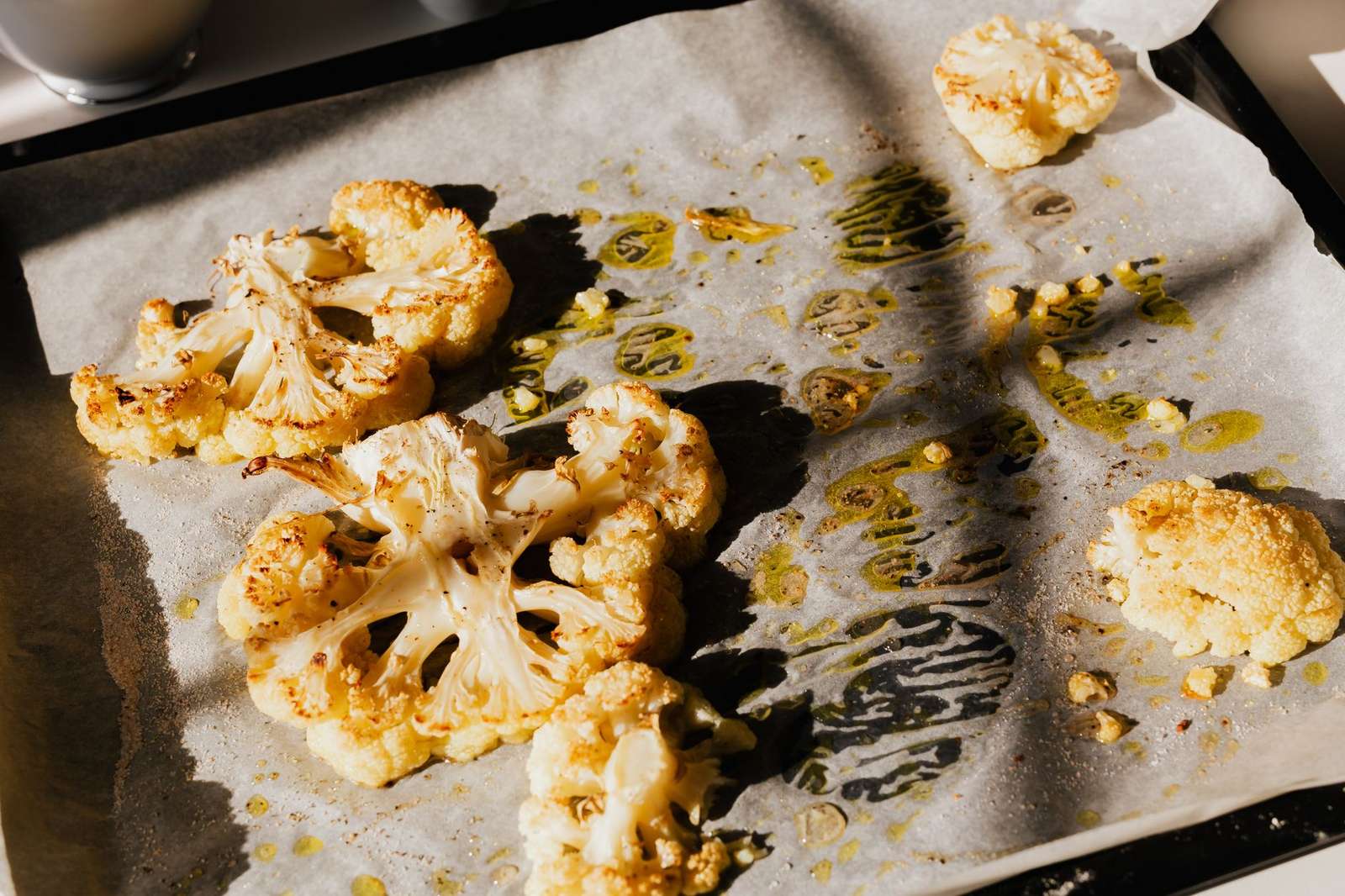
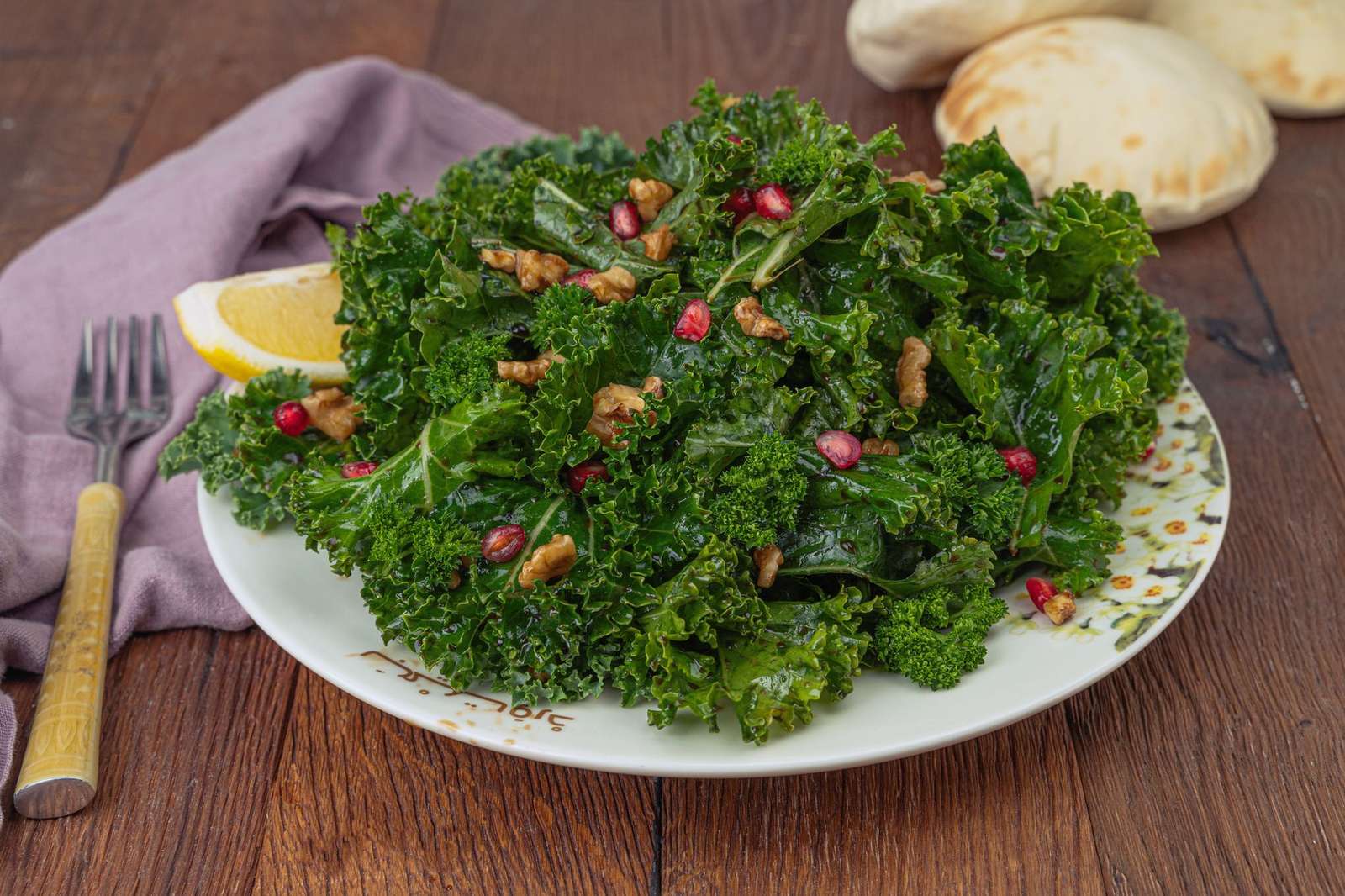
A cauliflower kale salad pairs roasted cauliflower with sturdy raw kale and a lemon tahini dressing. The kale is massaged to soften it, and the cauliflower is roasted until the edges turn deeply golden.
This recipe belongs to the vegetarian cooking section of an independent kitchen-notes site, and it is written as an original method with proportions described in words, so the result can be adjusted to taste.
Ingredients for the salad and dressing
The salad is built from a few ordinary ingredients, and each has a job. Cauliflower brings sweetness once it browns, kale brings chew and bitterness, and the dressing ties everything together with creaminess and acid. Quantities depend on how many people are eating, so the list below describes proportions: roughly equal volumes of cauliflower florets and chopped kale make a balanced bowl.
For the salad
- A head of cauliflower, cut into small, even florets
- A large bunch of kale, stems removed and leaves cut into thin ribbons
- Olive oil or another cooking oil, enough to coat the cauliflower lightly
- Salt and freshly ground black pepper
- Ground cumin or coriander, a modest pinch for roasting (optional)
- Toasted pumpkin seeds, sunflower seeds or chopped almonds for crunch
- Dried cranberries, raisins or chopped dates for a touch of sweetness (optional)
For the lemon tahini dressing
- Tahini, stirred well before measuring
- Fresh lemon juice and a little finely grated zest
- A small clove of garlic, grated very finely
- Cold water, added a spoonful at a time to loosen the dressing
- Salt, and a little maple syrup or honey if the lemon is very sharp
Look for cauliflower with tight, creamy-white florets and no brown spots. Kale varieties differ: curly kale is sturdy and holds dressing in its ruffles, while lacinato (also sold as dinosaur or Tuscan kale) is flatter, more tender and slightly sweeter. Either works, though curly kale benefits more from the massaging step below.
How to make the salad
The method has three parts that can be done in any order: roast the cauliflower, soften the kale and whisk the dressing. Roasting takes longest, so it goes in the oven first and the other parts are prepared while it cooks.
- Heat the oven until it is very hot, and place a large baking tray inside so it warms up with the oven. A hot tray starts the browning the moment the cauliflower lands on it.
- Toss the cauliflower florets with oil, salt, pepper and the optional spice until every piece has a thin coating. Too much oil makes the florets greasy, and too little leaves them dry and pale.
- Spread the florets on the hot tray in an even layer with space between them. Crowded cauliflower steams and turns soft instead of browning, so use a second tray if needed.
- Roast, turning the florets once partway through, until they are tender when pierced and deeply golden at the edges. Smaller florets finish sooner than large ones, so cutting them evenly matters.
- While the cauliflower roasts, put the kale ribbons in a large bowl with a pinch of salt and a small drizzle of oil. Massage the leaves with clean hands, squeezing and rubbing, until they darken, shrink and feel silky instead of stiff.
- Whisk the tahini with lemon juice, zest, garlic and salt. The mixture will first thicken and seize, which is normal. Add cold water gradually, whisking, until it loosens into a smooth, pourable dressing the texture of heavy cream. Taste and adjust with more lemon or salt.
- Add the warm cauliflower to the kale, pour over most of the dressing and toss. Add the seeds or nuts and the dried fruit, then serve with the rest of the dressing on the side.
The salad is at its best while the cauliflower is still slightly warm, because the heat softens the kale a touch more and the dressing clings better.
Why the combination works
Each part of the dish is chosen for flavor and texture, and the nutrition happens to line up as well. The MedlinePlus entry on the vegetarian diet lists green vegetables such as broccoli, spinach, kale and collard greens among plant sources of iron, and it lists kale among the green vegetables that supply calcium. Tahini also appears on its list of calcium sources, alongside almonds, sunflower seeds and white beans.
The lemon does more than add brightness. MedlinePlus explains that eating foods high in vitamin C at the same meal as iron-rich foods increases iron absorption, and it names citrus fruits among the vitamin C foods. The same page adds that the body does not absorb the iron in plant foods as well as the iron in meat and other animal foods, which makes the lemon a sensible pairing for a meatless plate. Cooks who rely on plants for iron can pair this salad with lentils or beans for more.
The Healthy Eating Plate guidance from Harvard says the more vegetables, and the greater the variety, the better, and it recommends healthy oils such as olive oil for cooking and on salad. This salad follows that pattern with a raw vegetable, a roasted vegetable and an oil-based dressing.
Variations and serving ideas
The basic formula is flexible, and several swaps keep the salad interesting through the season.
- Add a protein. Roasted chickpeas, crumbled paneer or cubes of seasoned tofu turn the salad into a full meal. The pressing and crisping method for tofu is covered in the guide to tofu tacos.
- Change the spice. Cumin and coriander suit the dressing’s earthiness, while smoked paprika or a pinch of chili flakes adds warmth.
- Swap the greens. Collard greens, cabbage or a mix of kale and baby spinach all work. Tougher leaves need more massaging.
- Use other vegetables. Broccoli, sweet potato and carrots roast well alongside or in place of cauliflower.
- Change the dressing. Yogurt thinned with lemon juice is a lighter option, and a splash of apple cider vinegar can replace some of the lemon.
As a side dish, the salad suits grain bowls and flatbreads. As a main course, a scoop of cooked quinoa or rice makes it more filling. For a different weeknight vegetable dish cooked much faster, the notes on vegetable stir fry show another way to get browned vegetables on the table.
Anyone with a health condition, anyone who is pregnant or breastfeeding, and anyone who takes medication should ask a clinician before making large changes to their diet. This independent site is not affiliated with any cookbook author, publisher, school or practitioner.
Make-ahead and storage
The components keep best when stored separately. Roasted cauliflower can be cooled and kept in a covered container in the refrigerator, and the dressing keeps well in a jar. Kale that has been massaged will hold its texture much longer than most salad greens, because the leaves are already broken down and sturdy, so it can be dressed ahead for lunches without wilting into slime. Even so, keep the crunchy toppings and fruit apart until serving.
Tahini dressing thickens as it sits. A spoonful of cold water whisked in just before serving brings it back to a pourable consistency. Reheating the cauliflower briefly in a hot oven or a dry pan restores some of its crispness if it has softened in storage, though the salad is also good cold.
Frequently asked questions
Why does kale need to be massaged?
Raw kale is tough and fibrous. Rubbing the leaves with salt and a little oil breaks down the structure, so the leaves turn darker, softer and less bitter without any cooking.
Can the cauliflower be roasted ahead of time?
Yes. Roasted cauliflower can be cooled, covered and refrigerated, then tossed into the salad cold or warmed briefly in the oven before serving.
What can replace tahini?
Any smooth nut or seed butter, such as sunflower seed butter or almond butter, can fill in with a slightly different flavor. Thick plain yogurt is another option for a lighter dressing.
Is the salad vegan?
Yes, as written. MedlinePlus defines a vegan diet as one that includes only plant-based foods, and every ingredient here comes from a plant provided the sweetener is maple syrup instead of honey.