
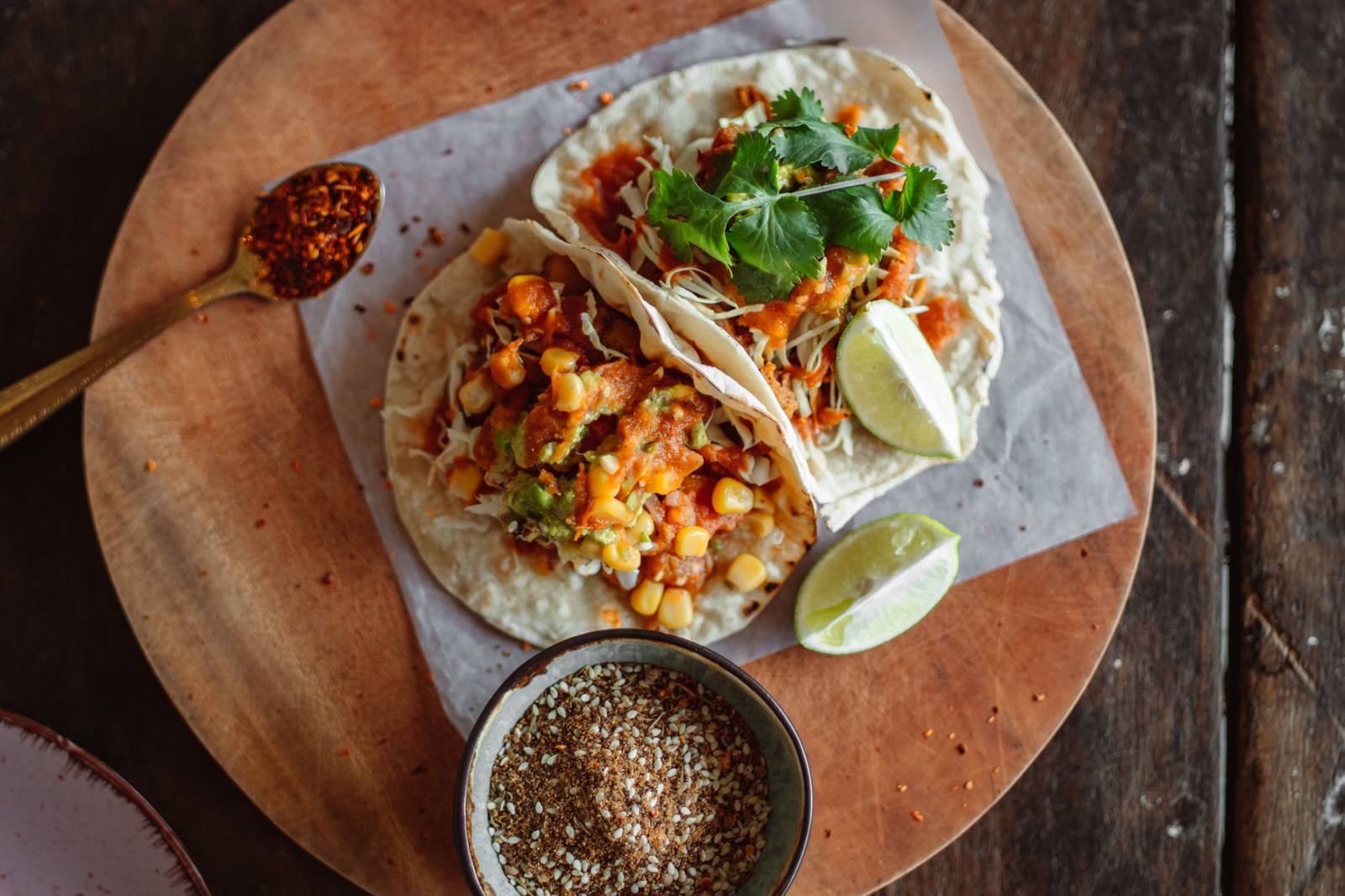
Tofu tacos work when the tofu is pressed dry, seasoned boldly and browned in a hot pan until crisp at the edges. Warm tortillas, a crunchy slaw and a squeeze of lime finish the plate.
The method below is part of the vegetarian cooking section of an independent kitchen-notes site. It is an original write-up with proportions described in words, so the seasoning can be tuned to taste.
Choosing and pressing the tofu
Tofu is made from soybeans, and the style on the shelf decides how it behaves in a pan. Firm and extra-firm blocks hold their shape and brown well, which makes them the right choice for tacos. Soft and silken tofu hold much more water and fall apart under heat, so they suit soups and sauces better than crisping.
Pressing is the step that separates crisp tofu from pale, soggy tofu. Water trapped inside the block turns to steam in the pan and blocks browning, and it also dilutes any seasoning. Removing most of it first lets the surface fry instead of steam.
- Drain the block and pat it dry with a clean kitchen towel or paper towels.
- Wrap it in fresh towels and set it on a plate or board.
- Put a flat, heavy weight on top, such as a cast iron pan or a few cans on a small tray, and leave it until the towels are clearly damp. Change the towels if they become soaked.
- Unwrap the block. It should feel noticeably firmer and drier.
A dedicated tofu press does the same job, and so does a stack of heavy books on a tray. Whichever method is used, the aim is steady pressure that does not crush the block.
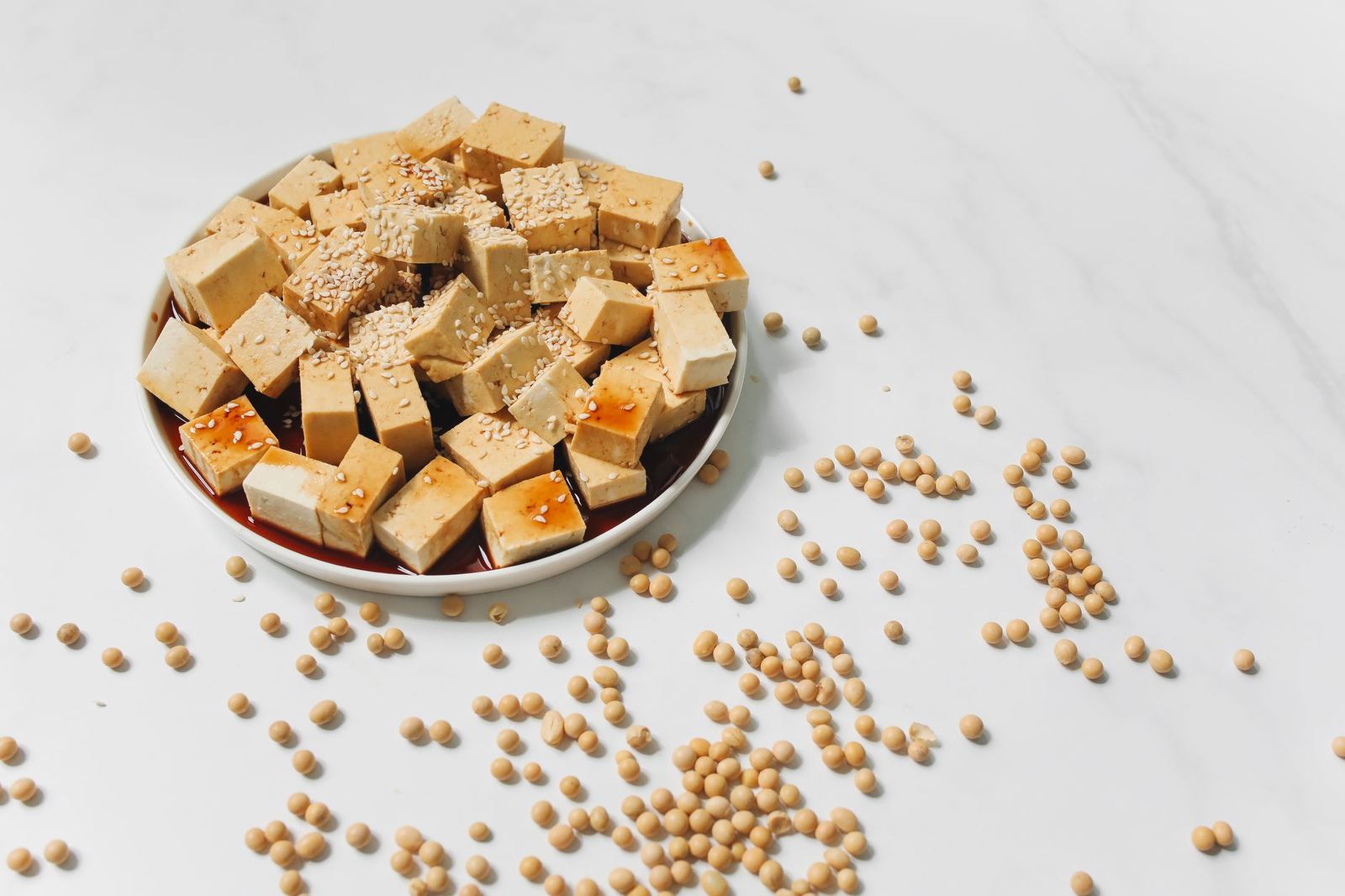
Ingredients for the tacos
The list below gives proportions in words. A block of firm tofu generally feeds a small group when paired with plenty of toppings, and the spice mixture should be added a little at a time until the tofu is well coated.
For the tofu
- A block of extra-firm or firm tofu, pressed
- Cooking oil with a high smoke point, enough to coat the pan
- Ground cumin, smoked paprika, chili powder and garlic powder, in roughly equal parts
- Dried oregano, a small pinch
- Salt, and a splash of lime juice or soy sauce for depth
For serving
- Corn or flour tortillas
- Shredded cabbage or lettuce
- Avocado slices or mashed avocado
- Fresh salsa, diced tomato or pickled onion
- Chopped cilantro and wedges of lime
- Plain yogurt or a plant-based cream for drizzling
Seasoning and crisping method
The cooking is quick once the tofu is ready, so the toppings and tortillas are best prepared first.
- Cut the pressed tofu into small cubes for a firm bite, or crumble it by hand into rough, uneven pieces that resemble ground filling. Crumbles have more surface area and brown into crunchy edges, while cubes stay meatier.
- Mix the spices with the salt in a small bowl. Toss the tofu with a thin film of oil and the spice mixture until every piece is coated.
- Heat a wide skillet over medium-high heat until a drop of water skitters across it, then add a layer of oil.
- Add the tofu in an even layer. Resist the urge to stir right away: leaving it alone for a stretch lets a crust form on the underside.
- Turn the pieces and keep cooking, stirring occasionally, until most of the surfaces are deep golden and crisp. Work in batches if the pan looks crowded, because a crowded pan steams the tofu instead of browning it.
- Finish with a squeeze of lime and a pinch of salt, then take the pan off the heat.
- Warm the tortillas in a dry pan, directly over a gas flame or wrapped in a damp cloth, until soft and pliable.
- Fill each tortilla with the tofu and add cabbage, avocado, salsa, cilantro and a drizzle of yogurt. Serve right away, with lime on the side.
Spices burn quickly in a very hot pan, so if the coating darkens too fast, lower the heat and add a splash of oil. Another approach is to brown the tofu plain and stir in the spices during the last stretch of cooking.
Why tofu works as a taco filling
Tofu has a mild flavor, which makes it an ideal canvas for a bold spice mix. It also carries real nutrition. The Harvard Nutrition Source calls soy a nutrient-dense source of protein that can safely be consumed several times a week, and says soy foods are rich in nutrients including B vitamins. The Harvard soy page names whole soy foods such as tofu and soybeans among the foods it covers.
MedlinePlus lists tofu among the soy foods that provide protein for people who eat no animal products, and it also lists tofu as a calcium source. The NHS says calcium-set tofu is another source of calcium and includes tofu among the non-dairy protein sources, with eggs, tempeh and other meat alternatives. Labels differ between brands, so the ingredient list shows whether calcium salts were used to set the block.
The MedlinePlus vegetarian diet entry also advises including a protein source with all meals, and it adds that protein foods do not need to be combined at the same meal. A taco plate with tofu, tortillas, avocado and vegetables already has a protein anchor, a grain and plenty of produce. A wider comparison of protein foods appears in the guide to vegetarian protein sources.
Variations, toppings and sides
- Different spice profiles. Swap the chili and paprika for curry powder, garam masala or a mix of ground coriander and cumin for an Indian-style filling that sits well in a warm flatbread.
- Sauces. A lime and yogurt sauce, a green chutney or a tahini drizzle each give a different character.
- Crunch. Toasted pumpkin seeds, crushed tortilla chips or quick-pickled red onion add texture against the soft tortilla.
- Heat. Fresh chili, hot sauce or chili flakes can be added at the table so everyone sets their own level.
- Bowls. The same filling works over rice or in a salad bowl without tortillas.
A cold, bright side balances the warm filling. A crisp cauliflower kale salad with lemon tahini dressing makes a good partner, since it adds greens and a creamy sauce next to the spiced tofu.
Packaged meat substitutes are sometimes used in tacos, and MedlinePlus advises watching for products that are high in sodium. Pressed, home-seasoned tofu gives control over the salt.
People with a soy allergy should avoid tofu entirely. Anyone with a health condition, anyone who is pregnant or breastfeeding, and anyone who takes medication should ask a clinician or registered dietitian before making big changes to their diet. This independent site is not affiliated with any cookbook author, publisher, school or practitioner.
Leftovers and prep ahead
Pressed tofu can be prepared ahead and kept in the refrigerator until needed, and the toppings can be chopped in advance. Crisp tofu is best straight from the pan, but cooked filling can be cooled, covered and chilled, then reheated in a hot skillet to bring back some crunch. Tortillas should be warmed fresh. Keep wet toppings such as salsa apart from the tortilla until serving to prevent sogginess.
Frequently asked questions
Does tofu have to be pressed?
Pressing is optional but worth it for tacos. Removing water lets the tofu brown and absorb seasoning, while unpressed tofu tends to steam and stay soft.
Which type of tofu is best for crisping?
Firm or extra-firm tofu holds together in the pan. Silken and soft types are too delicate for frying and suit blended sauces and soups.
Is soy safe to eat regularly?
The Harvard Nutrition Source states that soy can safely be consumed several times a week. Questions about soy supplements or specific conditions are best put to a clinician.
Can the filling be made gluten-free?
Yes, if corn tortillas are used and any soy sauce is replaced with a gluten-free tamari or just salt and lime. Packaged ingredients should be checked for gluten on the label.