
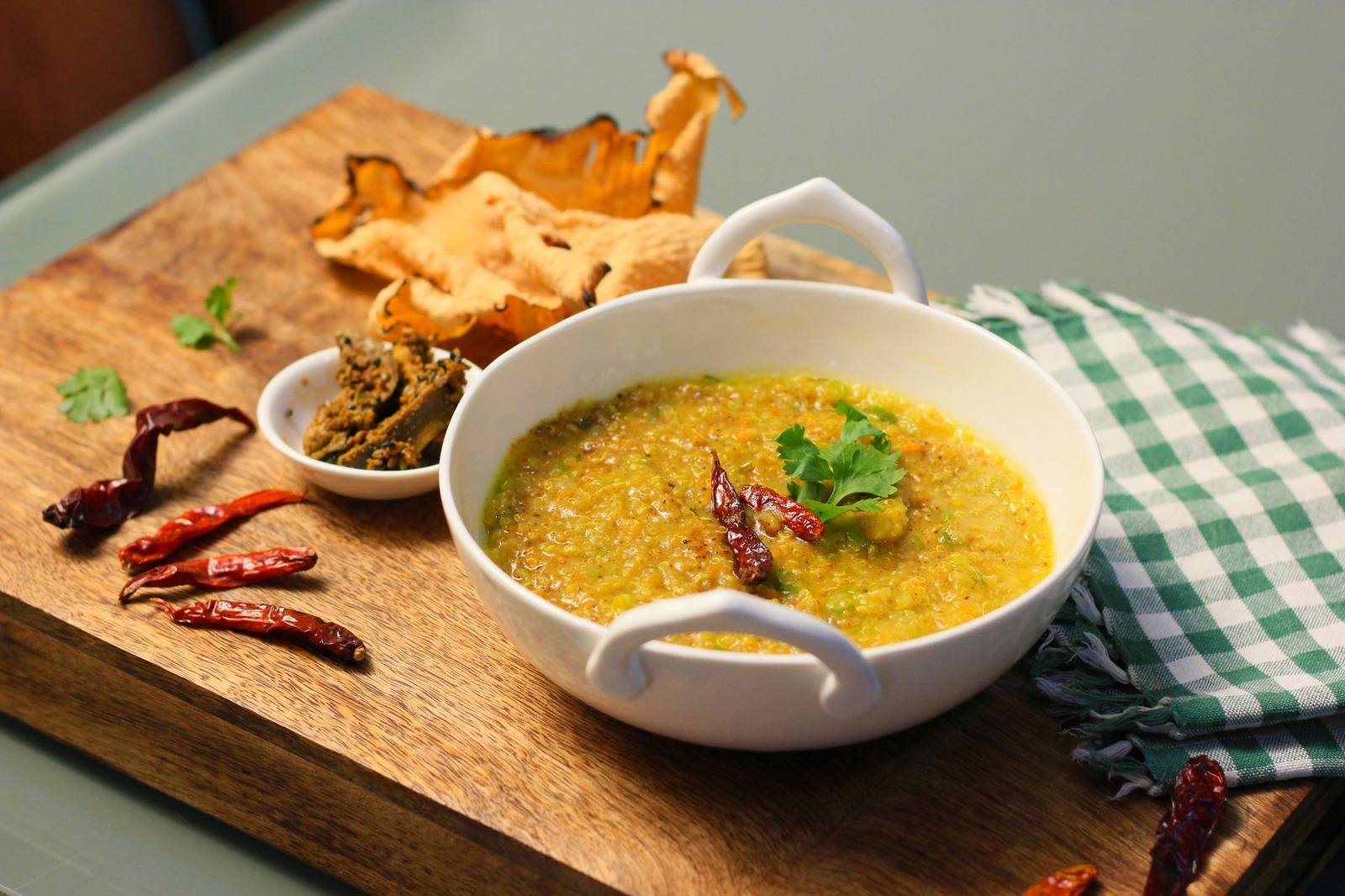
Mung bean soup is a thin, savory soup of whole green mung beans, simmered until the skins split and the beans turn creamy. This original method covers soaking, cooking and seasoning, with no fixed measurements.
It is one of the comforting one-pot dishes in the collection of ayurvedic recipes, alongside the dal, the kichari and the breakfast porridge.
What mung beans are and where they sit in Ayurvedic cooking
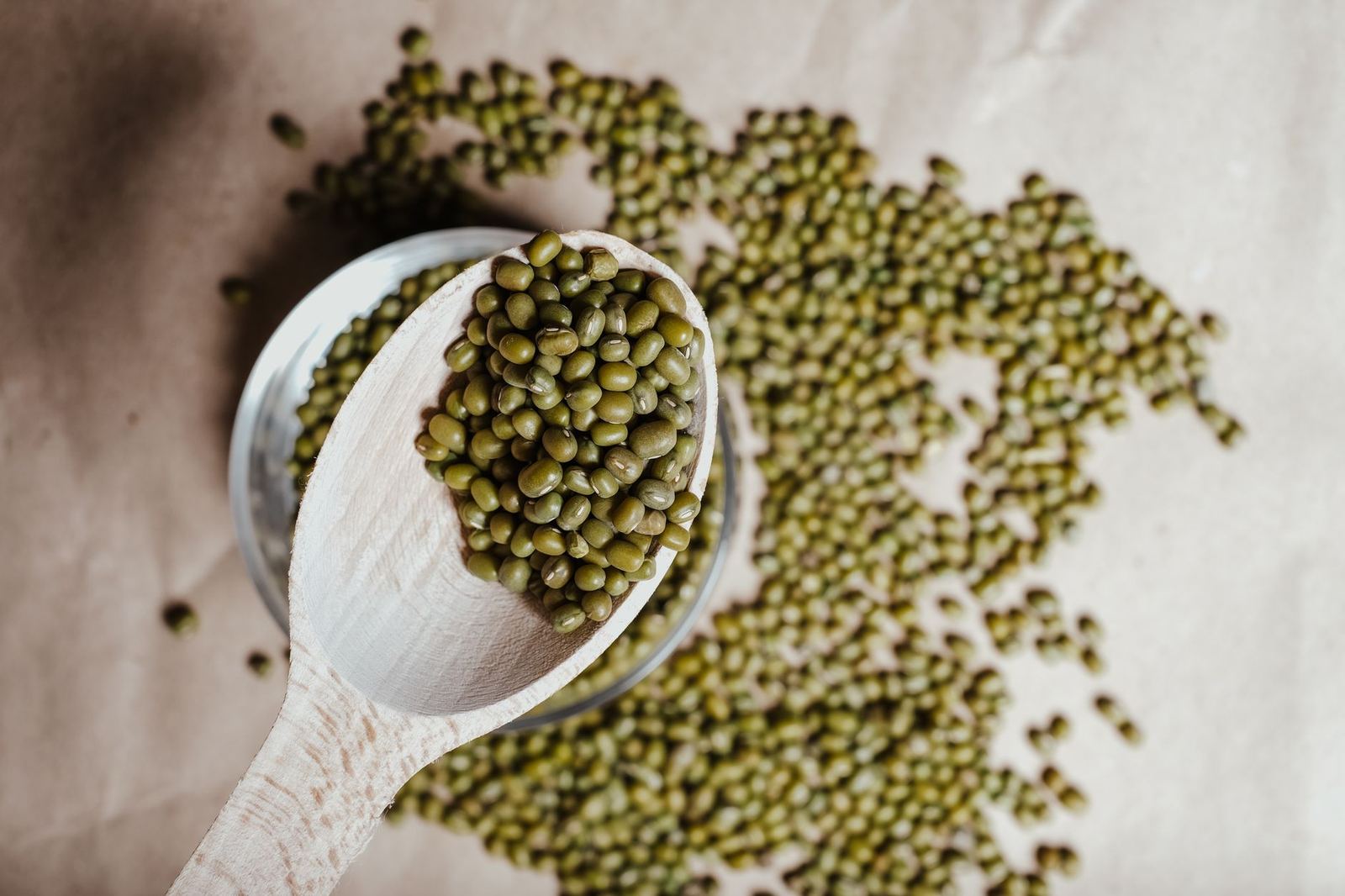
Mung beans are small green pulses that cook faster than most beans and need no peeling. They are sold whole, split with the skin on, or split and peeled as yellow dal. This soup uses the whole beans, which keep a bit more texture and give a deeper, earthier flavor.
Ayurveda is a traditional system from India. The National Center for Complementary and Integrative Health notes that “Ayurvedic medicine is one of the world’s oldest medical systems and remains one of India’s traditional health care systems.” Mung beans are among the most familiar pulses in that cooking tradition, and they turn up in porridges, soups and rice dishes alike. This page describes a kitchen method. It makes no claim that a bowl of soup treats or prevents any condition, and the NCCIH page on Ayurvedic medicine sets out what research does and does not show.
Harvard’s Nutrition Source explains that “Pulses include beans, lentils, and peas,” and calls legumes “an inexpensive source of protein, vitamins, complex carbohydrates, and fiber.” Mung beans belong to that family, which is one reason a pot of soup makes a filling, low-cost meal.
Soaking whole mung beans
Whole mung beans can be cooked without soaking, but a soak shortens the simmer and gives a more even texture. Harvard says about legumes in general that “Soaking dried beans for at least three hours and cooking them may help decrease this side effect,” meaning the gas and bloating some people notice after eating pulses. The Nutrition Source page on legumes covers the broader picture of pulses and health.
To soak, rinse the beans in several changes of water, sorting out any stones or shriveled beans. Cover them with plenty of cool water, because they swell considerably, and leave them to stand. Drain and rinse again before cooking, and use fresh water in the pot. If you forget to soak, start the beans in cold water and add extra simmering time.
Ingredients for mung bean soup
- Whole green mung beans, sorted, rinsed and soaked
- Water, enough to keep the soup brothy while the beans swell and break down
- Ghee or a neutral oil for the tempering
- Cumin seeds, plus a few mustard seeds if available
- Fresh ginger, grated, and a clove or two of garlic, optional
- Ground turmeric, a small pinch in the pot
- Ground coriander
- A chopped tomato or a handful of greens such as spinach, optional
- Salt, and lemon juice at the end
- Fresh cilantro for the top
Carrot, zucchini or pumpkin, cut small, can go into the pot with the beans for a vegetable-heavy soup. Choose vegetables that cook in about the same time as the beans so nothing falls apart.
Method: simmer, then temper
- Put the drained beans in a pot with fresh water and the turmeric. Bring to a boil, then lower the heat to a steady simmer.
- Skim off any foam that rises in the early stage, which keeps the broth clean and clear.
- Partly cover the pot and keep simmering, topping up with hot water when the level drops. Stir occasionally.
- Continue until the beans are soft all the way through and many have burst open, thickening the broth. Older beans take longer, so judge by taste and texture rather than the clock.
- Add chopped vegetables or greens when the beans are nearly tender, and simmer until just cooked.
- For a smoother soup, press a ladle of beans against the side of the pot, or blend a small portion and stir it back in.
- In a small pan, heat the ghee over medium heat. Add the cumin and mustard seeds and wait for them to crackle and smell nutty, then add the ginger and garlic for a few seconds.
- Stir in the ground coriander off the heat so it does not scorch, then pour the whole tempering into the soup.
- Season with salt, add the lemon juice and scatter the cilantro on top.
Salt late in the process if the beans are old or the water is hard, because salt can slow the softening of the skins. Taste at the end and adjust the salt and lemon until the soup tastes lively.
Seasoning, variations and serving
The tempering is where the soup gets its character. Cumin and mustard seeds give a savory base, ginger adds warmth, and lemon brings freshness at the finish. A little asafoetida, if available, is common in Indian kitchens and adds a savory depth similar to garlic.
For a more substantial meal, ladle the soup over steamed rice or serve it with flatbread. A spoonful of plain yogurt stirred into each bowl adds a cool, sour contrast. For a lighter dish, keep the broth thin and add more greens at the end.
Because the soup is mild and warm, a cup of fresh ginger tea goes well alongside it. Soft, spiced fruit makes a gentle finish to the meal, and the method for stewed apples is a natural partner.
Storing leftovers and fixing common problems
The soup thickens in the refrigerator as the beans absorb liquid. Loosen leftovers with a splash of hot water when reheating, and warm the pot slowly until the soup is piping hot all the way through. Store cooled soup in a covered container, and freeze portions for longer storage.
If the beans are still hard after a long simmer, they are probably old, or the water is very hard. Keep cooking and add hot water as needed, since cold water added mid-cook can slow the softening. If the soup is bland, the likely culprits are too little salt, too little acid or a timid tempering, so try a pinch more salt and a squeeze of lemon first. If the broth is too thin, simmer with the lid off for a while or blend a small portion back into the pot.
Health and safety notes
Harvard reports that the fiber in legumes “may especially help to lower blood cholesterol even without weight changes and may prevent sharp rises in blood sugar.” That is a general finding about pulses as a food group, drawn from nutrition research, and it is not a claim about this soup as a treatment. Legumes should also be cooked until completely tender and never eaten half-raw.
People who have a health condition, who are pregnant or who take medication should talk with a clinician before changing their diet or using herbs and supplements. NCCIH advises: “If you have a health condition, talk with your conventional health care provider before using Ayurvedic products.” This site is independent and informational, and is not affiliated with any cookbook author, publisher, clinic or product brand.
Frequently asked questions
Do whole mung beans need soaking?
They cook without it, but soaking shortens the simmer and gives a more even texture. Harvard also reports that soaking may reduce the gas some people notice after eating beans.
Can I use split mung beans?
Yes. Split yellow mung beans cook much faster and dissolve into a smooth soup, so skip the long soak and shorten the simmer. The whole-bean version has more texture.
Why are my beans not softening?
Old beans, very hard water and early salting can all slow softening. Keep simmering with hot water, and add the salt later in the cooking.
Can I make the soup in a pressure cooker?
A pressure cooker works well for whole beans and cuts the cooking time. Follow the maker’s instructions for pulses, cool the cooker safely before opening it and temper the soup separately in a small pan.