
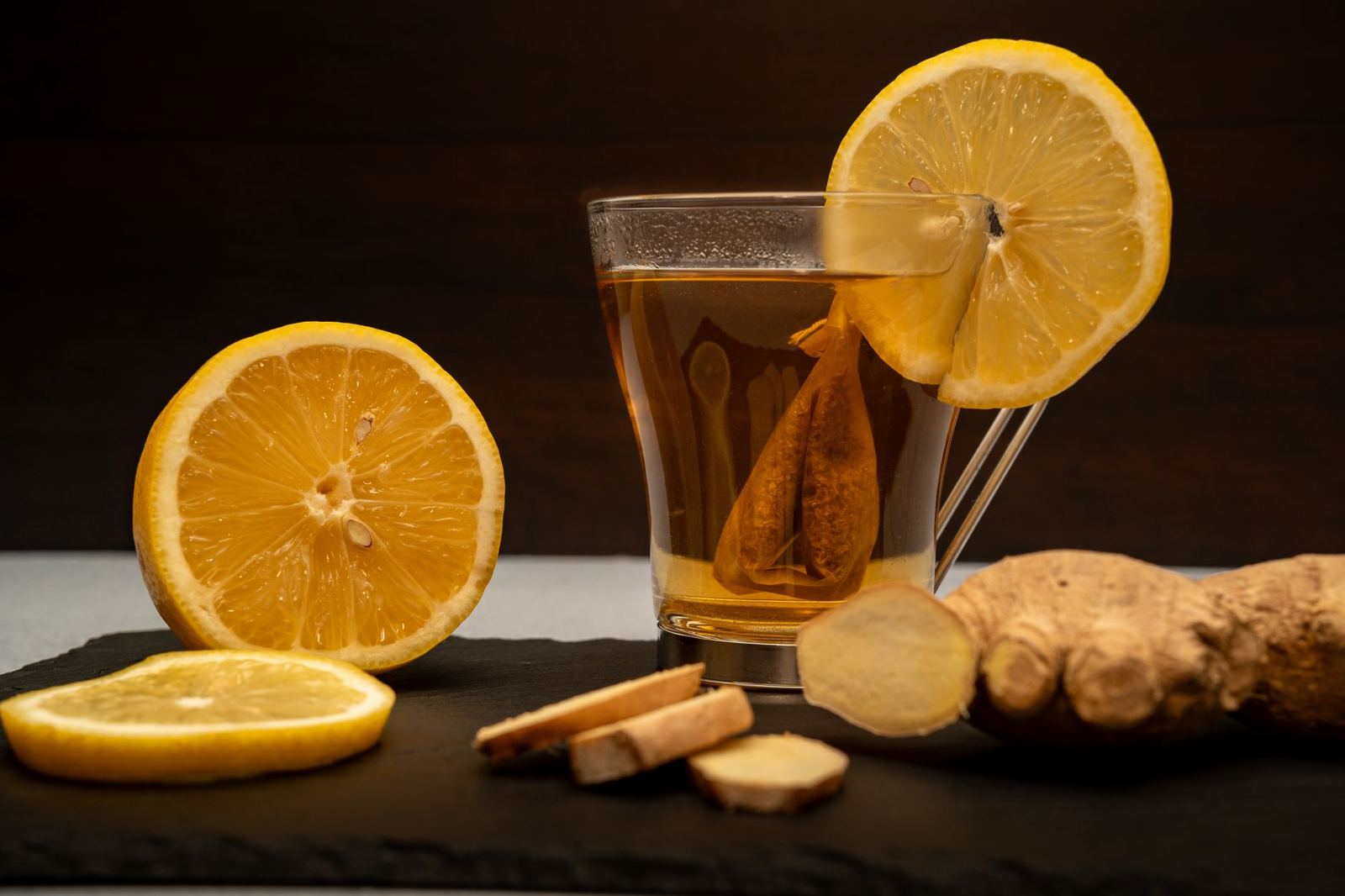
Fresh ginger tea is made by slicing the root, simmering it in water until the liquid turns golden and pungent, then straining and serving it hot. No tea leaves are needed, so the drink is naturally free of caffeine.
It is one of the simplest drinks among the ayurvedic recipes on this site, and the method below covers how to choose the root, how to cut it, how long to simmer it and how to vary the cup.
What fresh ginger tea is, and where ginger comes from
Ginger tea is an infusion, or more precisely a decoction: the root is simmered rather than steeped, because the dense fibres need heat and time to give up their flavor. NCCIH notes that ginger is native to the warm parts of Asia and is now grown in parts of South America, Africa, and the Middle East, and that its rhizome, the underground stem, is used in food and for health purposes. The rhizome is the knobby beige root sold in the produce section, and it is the only part used here.
In Ayurveda, which NCCIH describes as one of the world’s oldest medical systems and one of India’s traditional health care systems, ginger is a familiar kitchen ingredient and appears in many warm drinks and spiced dishes. This site treats Ayurveda as a traditional system of food and lifestyle practice. The recipe below is a cooking method, not a treatment.
Because the drink contains only ginger and water, the quality of the root matters. Fresh, firm ginger gives a clean, bright, peppery cup. Old, soft or shriveled pieces taste dull and sometimes musty.
Choosing and preparing the root
Look for a piece of ginger with smooth, taut skin and a heavy feel in the hand. The flesh inside should be pale yellow and juicy when snapped. Wrinkled skin, soft spots or a sour smell are signs to pick a different piece.
Young ginger has thin skin that needs no peeling. Mature ginger has thicker, tougher skin, and many cooks scrape it away with the edge of a spoon, which removes the skin without wasting the flesh underneath. If the root is scrubbed well, the skin can also stay on for a stronger, earthier cup.
How the root is cut changes the tea:
- Thin coins: the most common cut, giving a balanced cup in a moderate simmer.
- Fine matchsticks or grated root: a lot of surface area, so the flavor arrives quickly and the tea turns sharper and cloudier.
- Bruised chunks: a thick piece crushed with the flat of a knife releases flavor gradually and gives a softer, rounder tea.
Ingredients for a pot of ginger tea
Amounts are described in proportion so the cup can be adjusted to taste. A small saucepan is enough for a few mugs.
- Fresh water, enough to fill a small saucepan most of the way.
- A thumb-sized piece of fresh ginger, sliced into thin coins.
- Optional: a few whole black peppercorns, lightly crushed.
- Optional: a strip of lemon peel or a squeeze of lemon juice to finish.
- Optional: honey or jaggery to sweeten, added to the mug rather than the pot.
- Optional: a few fresh mint or tulsi leaves dropped in at the end.
Method: slicing, simmering and serving
- Wash the ginger and cut it into thin coins. Crush the peppercorns, if using, with the back of a spoon.
- Pour the water into a saucepan, add the ginger and peppercorns, and bring to a boil over medium heat.
- Lower the heat until the water bubbles gently and put a lid on the pan, slightly askew. Simmer until the liquid has turned pale gold and the kitchen smells sharply of ginger. A longer simmer gives a hotter, more pungent tea, and a shorter one gives a mild, fragrant cup.
- Turn off the heat. If using mint or tulsi, add the leaves now and leave the pan covered for a short while.
- Strain through a fine sieve into mugs. Add lemon juice only to the mug, because heat dulls its brightness.
- Sweeten each mug to taste, and serve while hot.
The slices can be simmered a second time for a lighter cup. Spent ginger can also be minced and stirred into a pot of rice or a stew, so nothing is wasted.
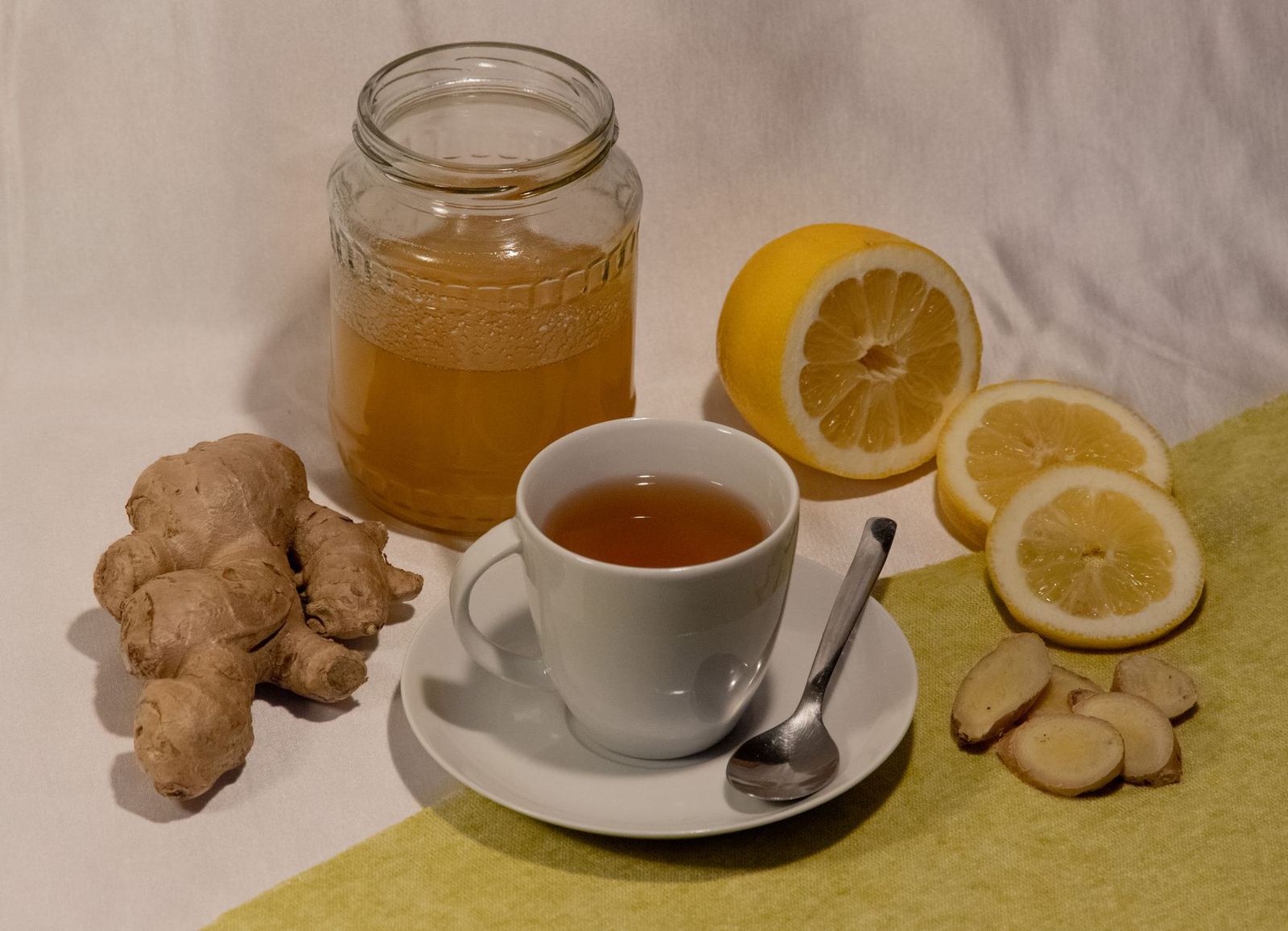
Variations on the basic cup
The base tea is a starting point, and small additions change its character a lot:
- Cooling and fresh: add lemon peel and mint, then let the tea cool and serve it over ice.
- Warmer and rounder: add a short cinnamon stick or a few cloves to the simmer.
- Creamy: for a milk-based version, add a splash of milk at the end and warm it through without boiling.
- Cumin-forward: add a pinch of cumin seeds to the pot for an earthier, savory note.
The tea pairs naturally with simple, mild food. A light bowl of mung bean soup suits it, and a plate of coconut rice with curry leaves does too; the coconut rice recipe on this site shows how to make it.
What research says about ginger
NCCIH summarises the evidence on ginger carefully. It says there have been many studies on the use of ginger for health purposes in people, but some of them have not been of high quality. Most of the studies on nausea tested dietary supplements rather than foods, so the results do not translate directly to a cup of tea. NCCIH reports that research shows ginger may be helpful for nausea and vomiting associated with pregnancy, while most studies of ginger for motion sickness have not shown it to be helpful.
The page also states that ginger can have side effects such as abdominal discomfort, heartburn, diarrhea, and mouth and throat irritation when taken orally. A milder, shorter simmer is a sensible choice for anyone who finds a strong cup irritating.
Anyone taking medicine, pregnant, or living with a health condition should talk with a clinician before changing their diet or using herbal products. NCCIH advises that if you take any type of medicine, you should talk with your health care provider before using ginger or any other herbal products, because some herbs and medicines interact in harmful ways. The same applies to Ayurvedic products in general: NCCIH advises talking with a conventional health care provider before using them if you have a health condition.
Serving, timing and storage
Ginger tea is at its best freshly made, but a larger batch keeps well in a clean covered jar in the refrigerator and can be reheated gently on the stove. It also works as a base for iced drinks.
As a drink, it counts toward fluid intake. The NHS notes that water, lower-fat milk and lower-sugar drinks, including tea and coffee, all count as part of your daily intake. An unsweetened ginger tea is a simple way to add variety to plain water without adding sugar.
Many households serve it in the morning, after a meal, or in the afternoon when something warm is wanted. There is no rule, and a cup is as welcome on a cold evening as it is chilled on a hot day.
Frequently asked questions
Can I use ground ginger instead of fresh?
Ground ginger can be stirred into hot water in a pinch, but it tastes duller and settles into a gritty sediment. Fresh root gives a brighter, cleaner cup and strains out cleanly.
Do I need to peel the ginger?
Not for young, thin-skinned root. Thicker skin can be scraped off with a spoon. Either way, scrub the root well before slicing.
Is fresh ginger tea caffeine-free?
Yes, as long as no tea leaves are added. The drink is made from ginger and water alone, with optional flavorings.
Can ginger tea be made ahead?
Yes. Strain it, cool it, and keep it in a covered container in the refrigerator, then reheat it gently or serve it over ice.
Is ginger tea safe for everyone?
Ginger can cause digestive discomfort or irritation in some people and can interact with medicines, so anyone taking medicine, pregnant, or managing a health condition should ask a clinician first.