
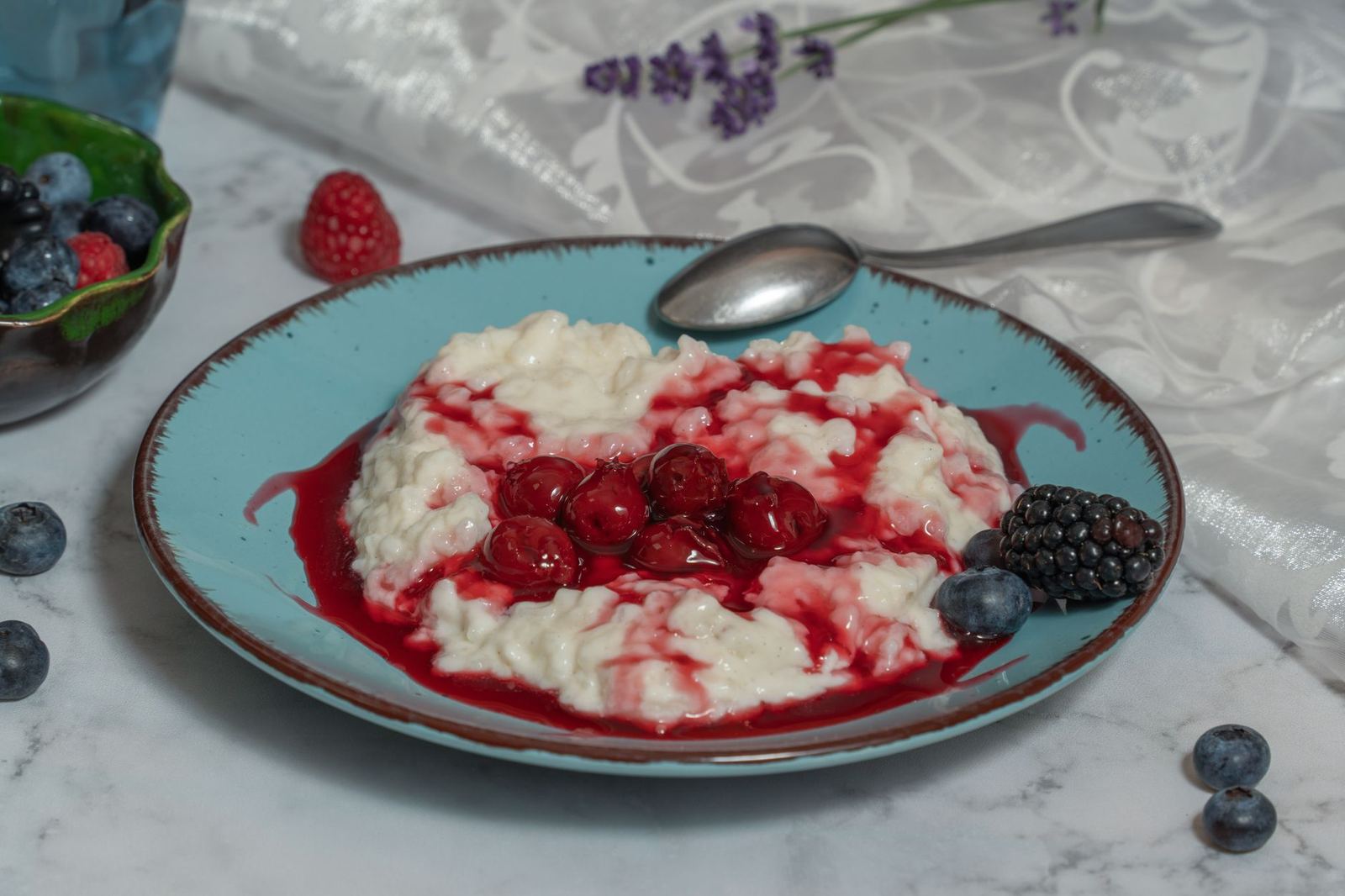
Rice pudding with cardamom is a slow-simmered dessert of rice, milk, crushed green cardamom pods and a pinch of saffron, cooked until the grains turn soft and creamy. This page covers the method, swaps and storage.
It belongs to a wider collection of ayurvedic recipes for everyday meals, and it works as a gentle, lightly sweet finish to a simple lunch or supper.
What goes into the pot
A good rice pudding needs very little. The structure is short-grain or medium-grain rice, milk, a sweetener, a few green cardamom pods and a small amount of saffron. A spoonful of ghee or butter can start the rice off, and a handful of chopped pistachios or almonds adds crunch at the end. The balance between rice and milk is a matter of taste: more milk gives a loose, spoonable pudding, while less milk gives a thick one that holds its shape on the spoon.
- Short-grain or medium-grain white rice, rinsed in cool water until the water runs mostly clear
- Whole milk, with extra on hand to loosen the pudding at the end
- Green cardamom pods, lightly crushed so the seeds open
- A pinch of saffron threads, steeped in a little warm milk
- Sugar, jaggery or honey, added toward the end of cooking
- A little ghee for the pan, and chopped nuts to finish
Each ingredient does a specific job. Rice releases starch as it cooks and thickens the milk; the pods perfume it; the saffron gives a pale golden color and a faint floral note. Sweetener goes in late, because sugar added too early can slow the softening of the rice and make the milk catch on the bottom of the pot.
Step-by-step method
The whole method happens on one burner, and the only real rule is to keep the heat low and stir often. The rice has to be cooked in the milk long enough for the grains to break down slightly and thicken the liquid.
- Rinse the rice in a bowl of cool water, swirling and draining a few times, then drain well.
- Warm a few spoonfuls of milk and drop in the saffron threads. Set the bowl aside so the color and aroma can bloom.
- Melt a little ghee in a heavy-bottomed pot over low heat. Add the rinsed rice and stir for a minute or so until the grains look glossy and smell lightly toasted.
- Pour in the milk and add the crushed cardamom pods. Raise the heat just until the milk starts to bubble at the edges, then reduce it to the lowest setting.
- Simmer uncovered, stirring every few minutes and scraping the bottom of the pot, until the rice is soft all the way through and the milk has thickened.
- Stir in the sweetener and the saffron milk. Cook a few minutes more until the sugar dissolves and the pudding reaches the thickness you like.
- Take the pot off the heat and let it rest. The pudding thickens as it cools, so loosen it with a splash of warm milk if needed.
- Fish out the cardamom pods if you prefer, and serve warm or chilled, topped with chopped nuts.
Timing depends on the rice and the pot, so judge by feel rather than the clock: the grains should crush easily between two fingers and the milk should coat the back of a spoon.
Cardamom, saffron and other flavors
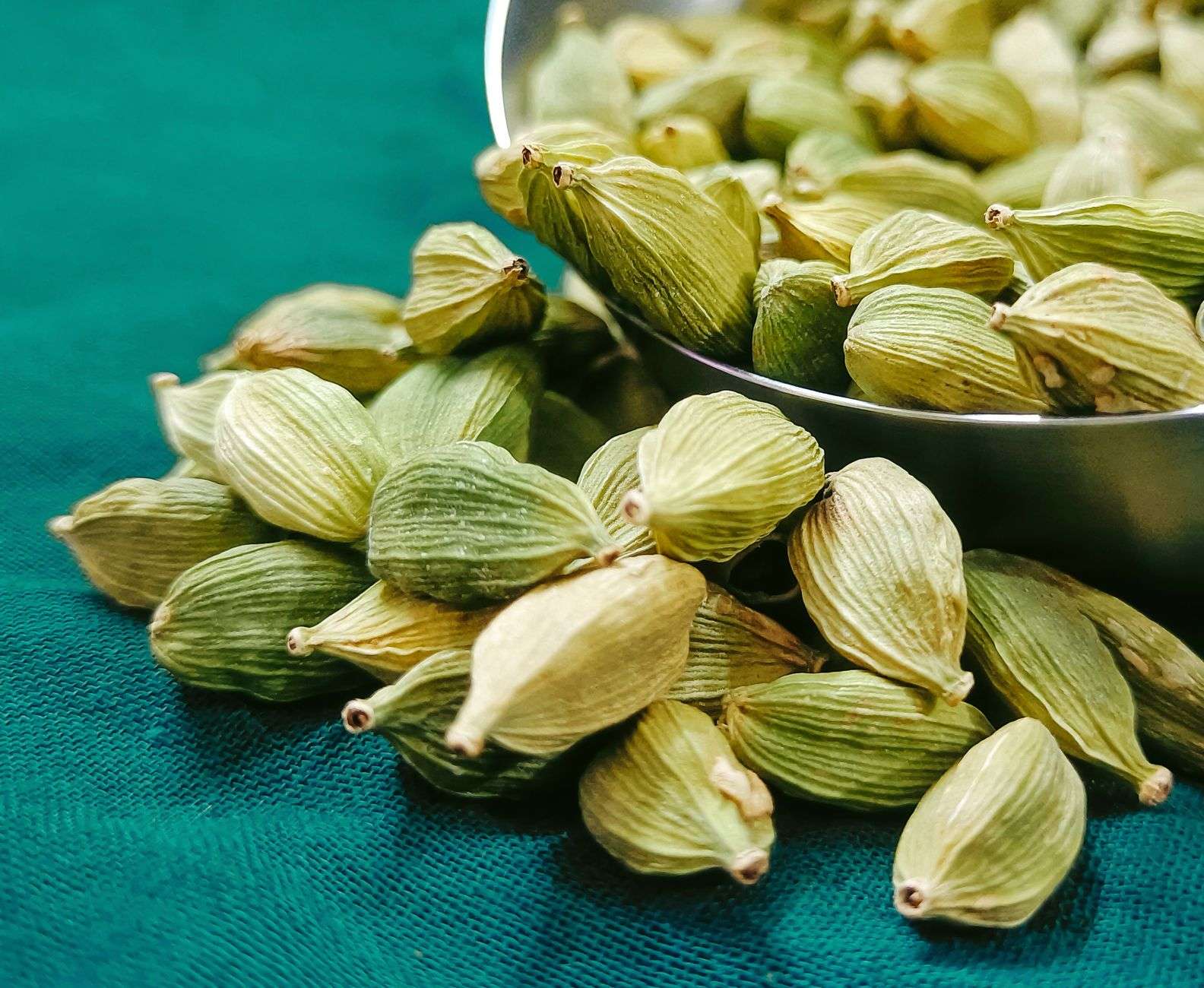
Cardamom is the signature flavor here, and a little goes a long way. Crushing the pods lightly, rather than grinding the seeds to a powder, gives a clean fragrance that stays in the background. Ground cardamom works if pods are not available, but it should be stirred in near the end so the aroma does not cook away.
Saffron is expensive, so the usual approach is to use only a few threads and soak them before they go into the pot. That releases the color evenly and avoids dark flecks in the finished pudding. Rose water, a strip of orange peel or a pinch of nutmeg are all common companions, but each should stay in the supporting role so the cardamom and saffron remain clear.
For a pudding with more texture, stir through chopped pistachios, almonds or raisins. For a lighter finish, serve it with sliced fruit. Pairing it with a plate of date energy balls makes a sweet spread that needs no refined sugar beyond the pudding itself.
Milk options and dietary notes
Whole dairy milk gives the creamiest result, but the method adapts. Lactose is the sugar found in milk and foods made with milk, and MedlinePlus explains that lactose intolerance means a person cannot digest foods with lactose in them. For people who avoid lactose, lactose-free milk cooks the same way as regular milk, and the NHS notes that fortified alternatives to milk, such as unsweetened soya, rice and oat drinks with added calcium and vitamins, are an option in a balanced diet. Plant drinks vary in how much they thicken, so the pot may need a little longer and a bit more stirring.
Coconut milk is another route, and it pairs well with cardamom. It is worth knowing that coconut cream appears on the NHS list of foods high in saturated fats, so it is a choice for occasional pleasure rather than an everyday swap.
Because this is a dessert, it fits best as a small portion. The NHS advises that foods high in salt, fat and sugar, such as cream, chocolate, crisps, biscuits, pastries, ice cream, cakes and puddings, should be eaten less often and in small amounts. A modest bowl after a plant-rich meal fits that guidance well, and it can be sweetened lightly. Ayurveda is a traditional system of medicine from India, and its food customs are best treated as cultural kitchen practice. People with a health condition, who are pregnant or who take medication should talk with a clinician before changing their diet or using herbs and supplements.
Storing and reheating rice pudding safely
Cooked rice needs more care than many people expect. The NHS explains that the spores of some food poisoning bugs can survive cooking, and if cooked rice is left standing at room temperature, the spores can germinate. The bacteria then multiply and produce toxins, and reheating food will not get rid of those toxins. The practical rules follow from that.
- Serve the pudding soon after it is cooked, or cool it quickly rather than leaving the pot on the counter.
- If it will not be eaten right away, the NHS advises: refrigerate it within 1 hour and eat it within 24 hours.
- Throw away any rice that has been left at room temperature overnight.
- Reheat only once, and only if the rice was chilled safely and kept in the fridge.
When reheating, the NHS says rice should reach a core temperature of 70C for 2 minutes so it is steaming hot throughout. Adding a splash of milk and stirring well helps the pudding heat evenly, and it loosens the thickened texture. Rice pudding served chilled straight from the fridge needs no reheating at all.
Troubleshooting and variations
If the pudding is too thick, stir in warm milk a spoonful at a time. If it is too thin, keep simmering gently, stirring often, until more moisture cooks off. A scorched layer on the bottom usually comes from heat that was too high; do not scrape it into the pudding, but pour the good portion into a clean pot and carry on.
Brown rice can be used in place of white. The NHS lists rice among starchy foods and notes that rice and grains are an excellent choice of starchy food, and that brown and wholegrain varieties can contain fibre. Brown rice takes noticeably longer and needs more milk, so plan on a longer, slower simmer.
A bowl of rice pudding is also a good partner to a light savory meal such as a carrot ginger soup, which keeps the meal warm and balanced without feeling heavy.
Frequently asked questions
Which rice is best for rice pudding?
Short-grain and medium-grain white rice release the most starch, which gives the creamiest texture. Long-grain rice also works but produces a looser, less creamy pudding.
Can the pudding be made without refined sugar?
Yes. Jaggery or honey can replace white sugar, added late in cooking. Because puddings are foods high in sugar, the NHS still advises eating them less often and in small amounts.
Is cooked rice pudding safe to keep?
It can be kept if it is cooled and refrigerated promptly. The NHS says to refrigerate cooked rice within 1 hour and eat it within 24 hours, and to reheat it only once.
Does Ayurveda say who should eat it?
Ayurveda is a traditional system, and the National Center for Complementary and Integrative Health says that anyone with a health condition should talk with a conventional health care provider before using Ayurvedic products. The recipe here is a cooking method, not medical advice.