
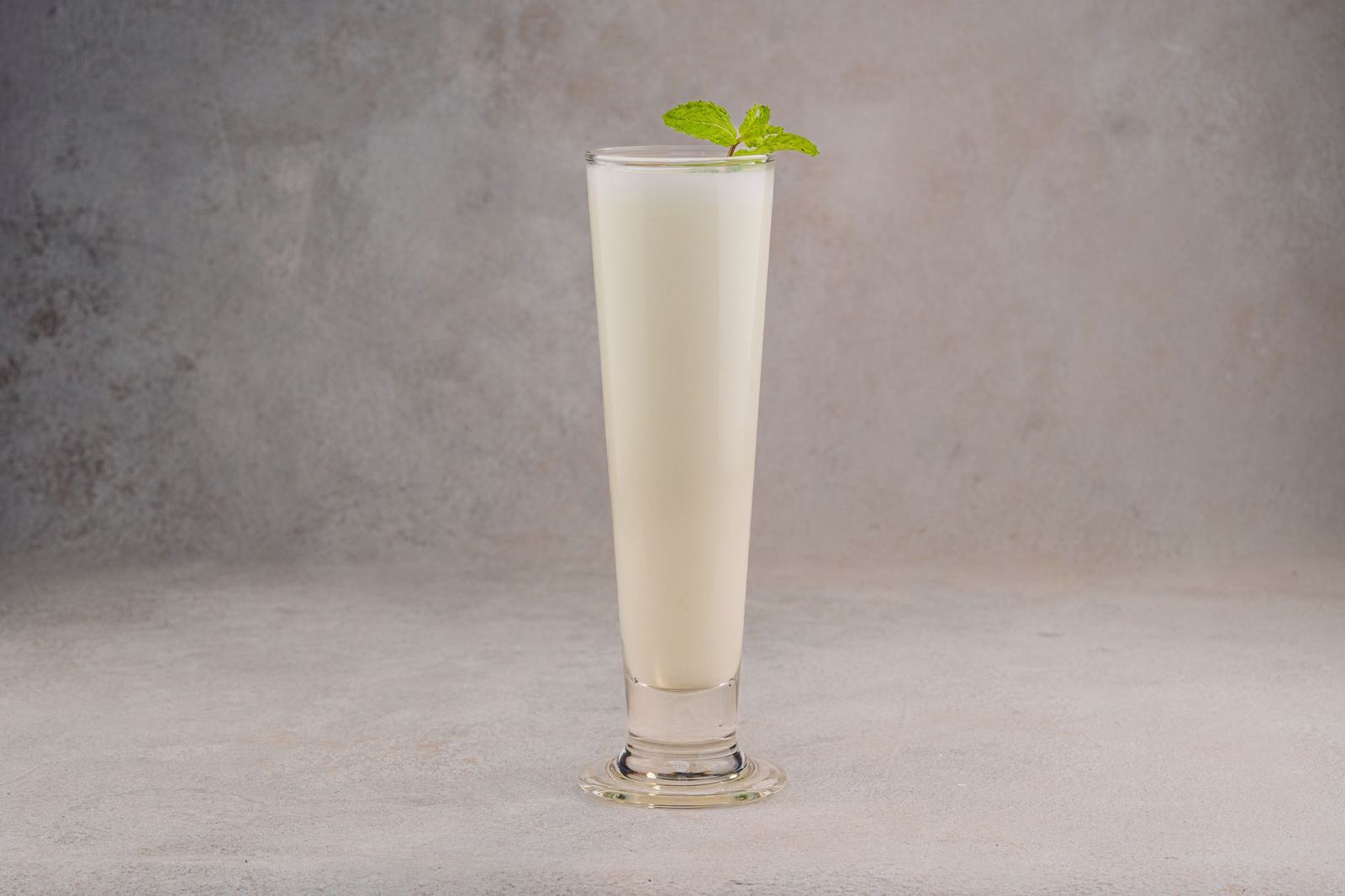
Spiced buttermilk is a thin, cooling drink made by whisking yogurt or cultured buttermilk with water, salt and toasted cumin, then adding ginger, green chili and fresh herbs. In India it is often called takra, chaas or mattha.
It is one of the lightest entries among the ayurvedic recipes on this site, and the method below covers what takra means in the tradition, how to make a good glass and how to adjust it.
What takra is in the Ayurvedic tradition
In Indian-language dictionaries, takra is defined as the liquid left after churning butter from curd; buttermilk. That is the traditional meaning: curd, or set yogurt, is churned, the butter is skimmed off and the thin, tangy liquid that remains is the drink. Water is usually added to thin it further.
A glossary of Ayurvedic and related literature notes that one text, the Bhojanakutuhala, classifies takra as a light foodstuff as opposed to dadhi, which is whole curd.
NCCIH describes Ayurvedic medicine as one of the world’s oldest medical systems and one of India’s traditional health care systems. Takra here is a traditional food and an everyday drink. This page presents it as a recipe, and nothing in it is a health claim or a substitute for medical advice.
Most modern kitchens do not churn butter at home. A practical version is made by thinning plain yogurt with water and whisking until smooth, which gives a similar drink in a few minutes. Store-bought cultured buttermilk also works and needs less thinning.
Choosing the base: yogurt, cultured buttermilk or both
Plain, unsweetened yogurt is the easiest base. Whole-milk yogurt gives a creamier glass, while lower-fat yogurt gives a lighter and sharper one. The NHS notes that adults can choose lower fat milk, so either is a reasonable choice depending on preference.
Cultured buttermilk from the dairy aisle is already thin and tangy. It needs only a splash of water, if any. Avoid flavored or sweetened yogurts, because the sugar fights the savory spices.
A plant-based version can be made with unsweetened dairy-free yogurt. It will taste different and may need a squeeze of lemon to replace the tang.
Ingredients
- Plain yogurt or cultured buttermilk, cold from the refrigerator.
- Cold water, enough to thin the yogurt to a pourable, drinkable consistency.
- Cumin seeds, dry-toasted and lightly crushed.
- A pinch of salt, or black salt (kala namak) for a sulfurous, savory edge.
- A small piece of fresh ginger, grated or finely minced.
- A fresh green chili, deseeded and minced (optional).
- A handful of fresh cilantro or mint leaves, chopped.
- A few fresh curry leaves (optional).
- A pinch of asafoetida (hing) (optional).
Method: whisking and seasoning the buttermilk
- Warm a dry skillet over medium heat. Add the cumin seeds and toast them, shaking the pan, until they smell nutty and darken a shade. Remove them promptly, since scorched cumin tastes bitter.
- Crush the toasted cumin lightly in a mortar, or press it with the back of a spoon on a board.
- Put the yogurt in a bowl or jug and whisk until it is completely smooth with no lumps.
- Add cold water a little at a time, whisking constantly, until the drink is thin enough to sip but still creamy.
- Stir in the salt, ginger, chili, cilantro or mint and the crushed cumin. If using curry leaves and asafoetida, warm them briefly in a spoonful of ghee and pour the mixture in, as in a tempering.
- Taste, adjust the salt and chill for a short while so the flavors settle. Whisk once more and serve in tall glasses.
A blender produces a frothier glass, but whisking by hand is enough. If the buttermilk is too sour, add a little more water and a pinch more salt rather than sugar.
Getting the balance right
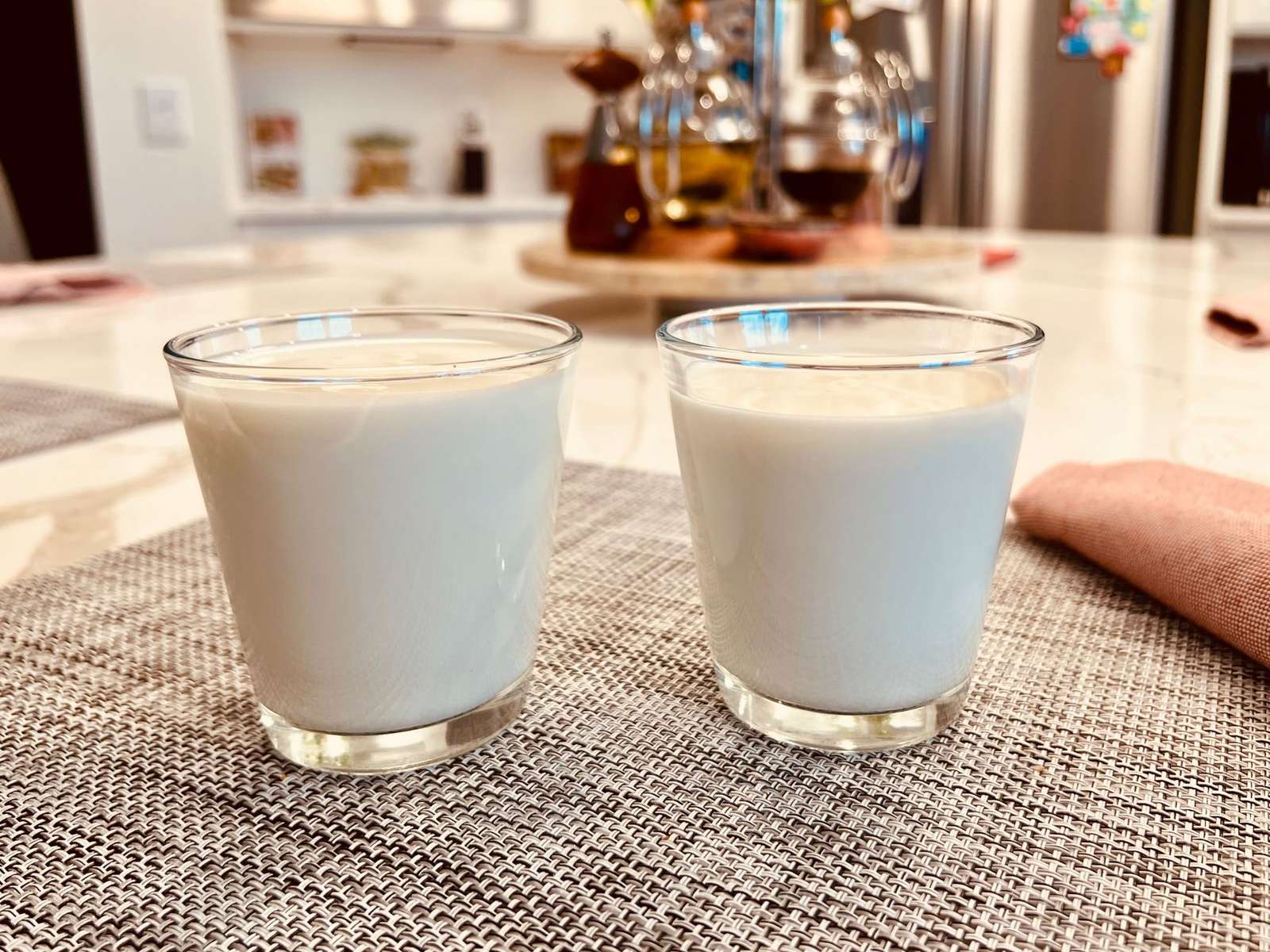
A good glass is a balance of sour, salty and fresh. Yogurt brands vary in tang, so taste the base before seasoning. A very sour base needs a little more water and salt, while a mild one benefits from a squeeze of lemon.
Texture matters as much as flavor. The drink should coat the glass lightly and pour without clumping. If it looks grainy, whisk longer or pass it through a sieve. If it is too thin, whisk in a spoonful of plain yogurt.
Grating the ginger on a fine grater, instead of chopping it, spreads the flavor evenly and avoids biting into a raw piece. Add chopped herbs at the last moment so they stay green. Serve the drink cold, but not so cold that the spices taste muted; a short rest at the table lets the aroma open up.
Variations on the basic glass
- Cooling mint buttermilk: blend in a large handful of mint leaves and a little cilantro for a green, fresh drink that suits a hot day.
- Sweet-and-salty: a light touch of jaggery softens the sourness, though this moves the drink away from the traditional savory style.
- Roasted-cumin chaas: double down on toasted cumin and leave out the chili for a simple, smoky glass.
- Ginger-forward: increase the ginger and add a pinch of black pepper for a sharper drink.
- Curry-leaf tempering: pour a quick ghee tempering of mustard seeds and curry leaves over the top, in the manner used for the coconut rice recipe on this site.
When and how it is served
Spiced buttermilk is traditionally served with lunch, alongside rice, vegetables and dal. Many households keep a jug in the refrigerator during hot weather. It is a salty, savory alternative to sweet drinks and counts as a fluid, since the NHS notes that water, lower-fat milk and lower-sugar drinks, including tea and coffee, all count as part of your daily intake.
It pairs well with rice dishes and with spicy food, because the dairy and cooling herbs temper the heat of chilies. For a sweet note after the meal, a few date energy balls make a sweet counterpoint to the savory glass.
The drink is best the day it is made. If it is stored, keep it covered and cold, whisk it before serving and discard it if it smells off.
Who should check before drinking it
Dairy is not suitable for everyone. MedlinePlus explains that lactose intolerance means that you cannot digest foods with lactose in them, and that lactose is the sugar found in milk and foods made with milk. Anyone who has symptoms after eating dairy should ask a clinician for guidance.
People with a health condition, who are pregnant, or who take medication should talk to a clinician before changing their diet or relying on traditional drinks and herbs.
Frequently asked questions
Is takra the same as chaas or mattha?
They are regional names for the same family of drinks: diluted, churned or whisked yogurt, often with salt and spices. The seasonings vary by region and household.
Can I use Greek yogurt?
Yes, but it is very thick, so it needs a lot more water and extra whisking to reach a drinkable texture.
Why toast the cumin seeds?
Dry toasting brings out a deeper, nuttier aroma than raw cumin and takes only a short time in a hot, dry pan.
Can spiced buttermilk be made without dairy?
An unsweetened dairy-free yogurt can be used in the same way. The flavor and thickness differ, and a little lemon juice helps restore the tang.
How long does it keep?
It tastes best fresh. Keep any leftovers covered and cold, whisk before serving and discard if the smell or taste seems off.