
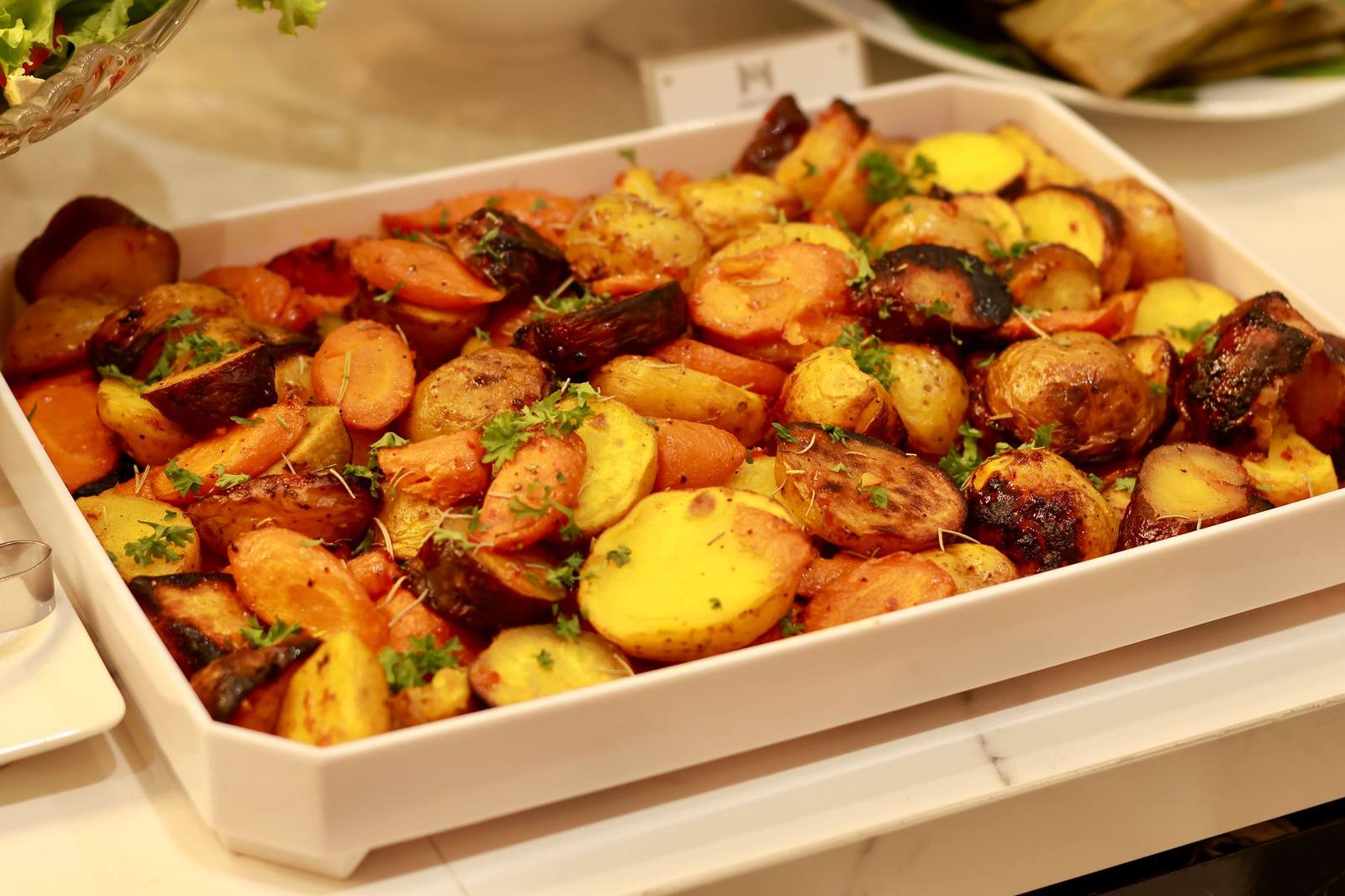
Roasted root vegetables are carrots, beets, parsnips, potatoes and similar underground vegetables cooked in a hot oven until tender inside and browned at the edges. Success depends on even cuts, enough oil, space on the tray and patience.
The method is one of the most dependable in vegetarian cooking, because a single tray can become a side dish, a salad base or the centre of a grain bowl.
What counts as a root vegetable
Root vegetables are underground plant parts eaten as food. In culinary use the term covers true roots such as carrots and turnips, and also parts that are not strictly roots, including bulbs such as onions, tubers such as potatoes, and rhizomes such as ginger. They are generally energy storage organs, which means they hold carbohydrates such as starches and sugars. That stored sugar is exactly why they respond so well to roasting.
Roasting itself is a dry-heat method in which hot air surrounds the food and cooks it evenly on all sides, using temperatures of at least 150 °C (300 °F) from an oven, an open flame or another heat source. It can enhance flavour through caramelisation and Maillard browning on the surface of the food, and meats as well as most root and bulb vegetables can be roasted. The browned surface is the whole point: boiled roots taste mild, while roasted roots taste sweeter and deeper.
The vegetables that suit the oven best include carrots, beets, parsnips, turnips, rutabaga, potatoes, sweet potatoes, onions, celeriac and radishes. Extension-service cooking guides also list asparagus, broccoli, Brussels sprouts, cauliflower, green beans, peppers and squash as good candidates, so a mixed tray is entirely reasonable.
Cutting for even cooking
Cutting is the step that decides the result. University extension guidance says to cut vegetables into bite-size pieces that are all about the same size, because pieces of different sizes finish at different times and the small ones scorch before the large ones soften. Oregon State University Extension adds a useful detail: smaller pieces, about ½ inch thick, brown more and cook more quickly, while long thin vegetables such as asparagus or green beans can be left whole.
Some practical guidance follows from that:
- Scrub rather than peel when the skin is thin and clean. Peel only if the skin is tough, waxy or bitter, which is a matter of preference as the extension recipes say to peel if desired.
- Cut dense roots such as beets and potatoes slightly smaller than soft ones such as zucchini, or add the soft ones to the tray later.
- Dry the vegetables after washing. Water on the surface turns to steam and works against browning.
- Keep the cut shape consistent: cubes, wedges or thick batons all work as long as every piece is roughly the same thickness.
Washing matters too. The extension recipes advise washing hands with soap and water and rinsing or scrubbing fresh vegetables under running water before preparing them.
Oil, seasoning and the tray
Roots need only a modest amount of fat. Oregon State’s guidance is to toss the pieces with just enough oil to make them shine, then spread them in a single layer. The Mississippi State University Extension recipe uses vegetable oil, salt and pepper, tossed in a bowl or a bag until everything is coated before it goes on the tray.
The tray is as important as the oil. A crowded tray traps steam and produces soft, pale vegetables. Oregon State suggests a baking sheet that holds the vegetables in a single layer, and notes that a metal baking sheet without sides allows more browning. A covering of foil or parchment makes cleanup easy, though direct contact with the metal browns best.
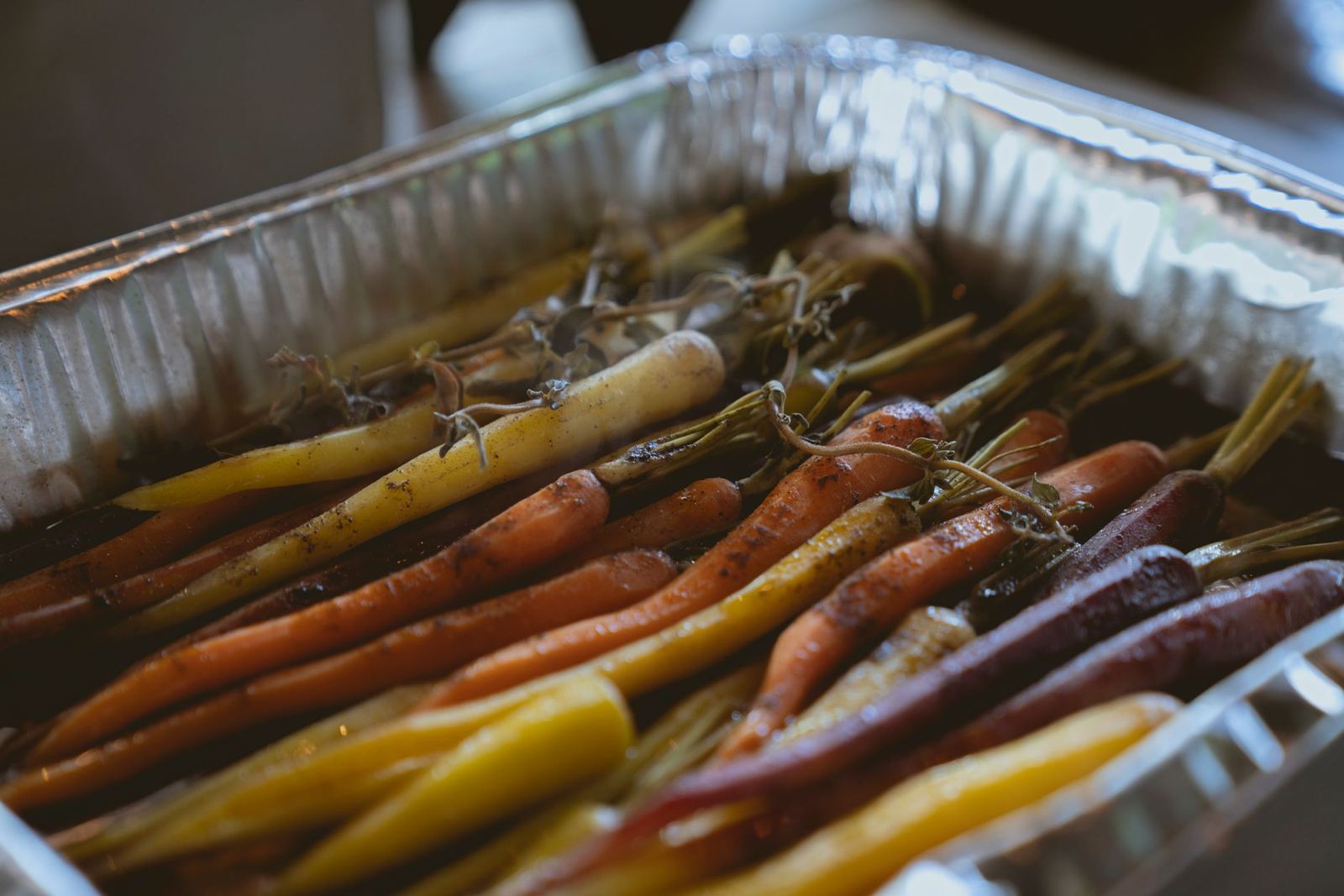
Seasoning is flexible. The Oregon State recipe suggests thyme, rosemary, oregano, balsamic vinegar and lemon juice. Cooks who like warm spices often add cumin, coriander, fennel seed or turmeric in the toss, and the vegetables take them well. Delicate herbs and acid are better added after roasting, so they stay bright.
Oven temperature and timing
Published extension recipes land in a fairly narrow band. Oregon State preheats the oven to 425°F, while the Mississippi State recipe uses 400°F. Both work; the hotter oven browns faster and the cooler one is more forgiving for large pieces.
Timing depends on thickness and density rather than on the clock. Oregon State says baking time depends on the thickness of the pieces: thin pieces such as asparagus or beans may take 5 minutes, and pieces about ½ inch thick take about 15 minutes. Mississippi State gives separate guidance for harder vegetables, saying to cook soft vegetables 20-25 minutes and hard vegetables 30 minutes or longer. Root vegetables are in the hard category, so plan on the longer end and then check.
Doneness is easy to judge. The Mississippi State recipe says vegetables are done if soft when stuck with a fork, and Oregon State describes the target as tender and slightly browned on the edges. Both recipes say to turn or stir the vegetables once, with Oregon State specifying about halfway through the roasting for even browning.
A basic method, step by step
This is an original, quantity-free method that follows the extension guidance above. Adjust amounts to the size of the baking sheet.
Ingredients
- A mix of root vegetables, such as carrots, parsnips, beets and potatoes
- Vegetable oil, enough to coat the pieces lightly
- Salt and black pepper
- Optional: dried thyme or rosemary, ground cumin, lemon juice
Method
- Heat the oven to the chosen temperature and set a metal baking sheet inside while it heats if a deeper sear is wanted.
- Wash the vegetables, dry them thoroughly and cut them into pieces of roughly even size.
- In a large bowl, toss the pieces with oil, salt, pepper and any dried herbs or ground spices until every surface is coated.
- Spread the vegetables in a single layer, leaving a little space between them. Use a second tray rather than crowding the first.
- Roast, turning the vegetables once partway through, until they are soft when pierced with a fork and browned at the edges.
- Finish with lemon juice, fresh herbs or a spoonful of yogurt or tahini, and serve warm.
Serving and keeping the leftovers
Roasted roots are as good cold as hot. Stir them into a salad of greens and grains, fold them into an omelette or tuck them into a flatbread with a spoonful of chutney. The Harvard Nutrition Source recommends eating a variety of types and colours of produce, and a tray that mixes orange carrots, purple beets and pale parsnips does that with little effort.
Leftovers should be handled promptly. Both extension recipes say to refrigerate leftovers within 2 hours. According to the USDA Food Safety and Inspection Service, leftovers can then be kept in the refrigerator for 3 to 4 days. A big tray is also an ideal starting point for planning meals ahead, as described in this guide to vegetarian meal prep.
When the oven is busy or the weather is hot, the same vegetables can be cut small and cooked quickly in a pan. The technique of a vegetable stir fry uses the same principle of even cuts, only with a hotter pan and constant movement.
As with any change in diet, people with a health condition, who are pregnant or who take medication should talk to a clinician or dietitian about their own needs.
Frequently asked questions
What temperature is best for roasting root vegetables?
University extension recipes use 400°F or 425°F. The higher setting browns faster, and the lower setting suits larger pieces.
Why are my roasted vegetables soft instead of crisp?
Usually the tray is crowded, the vegetables were wet or the pieces were uneven. A single layer on a metal sheet gives the most browning.
Do the vegetables need to be peeled?
Not necessarily. Extension recipes say to peel if desired, so thin, clean skins can stay on after scrubbing.
How long do roasted vegetables keep?
Refrigerate them within 2 hours of cooking. They keep in the refrigerator for 3 to 4 days, or can be frozen.