
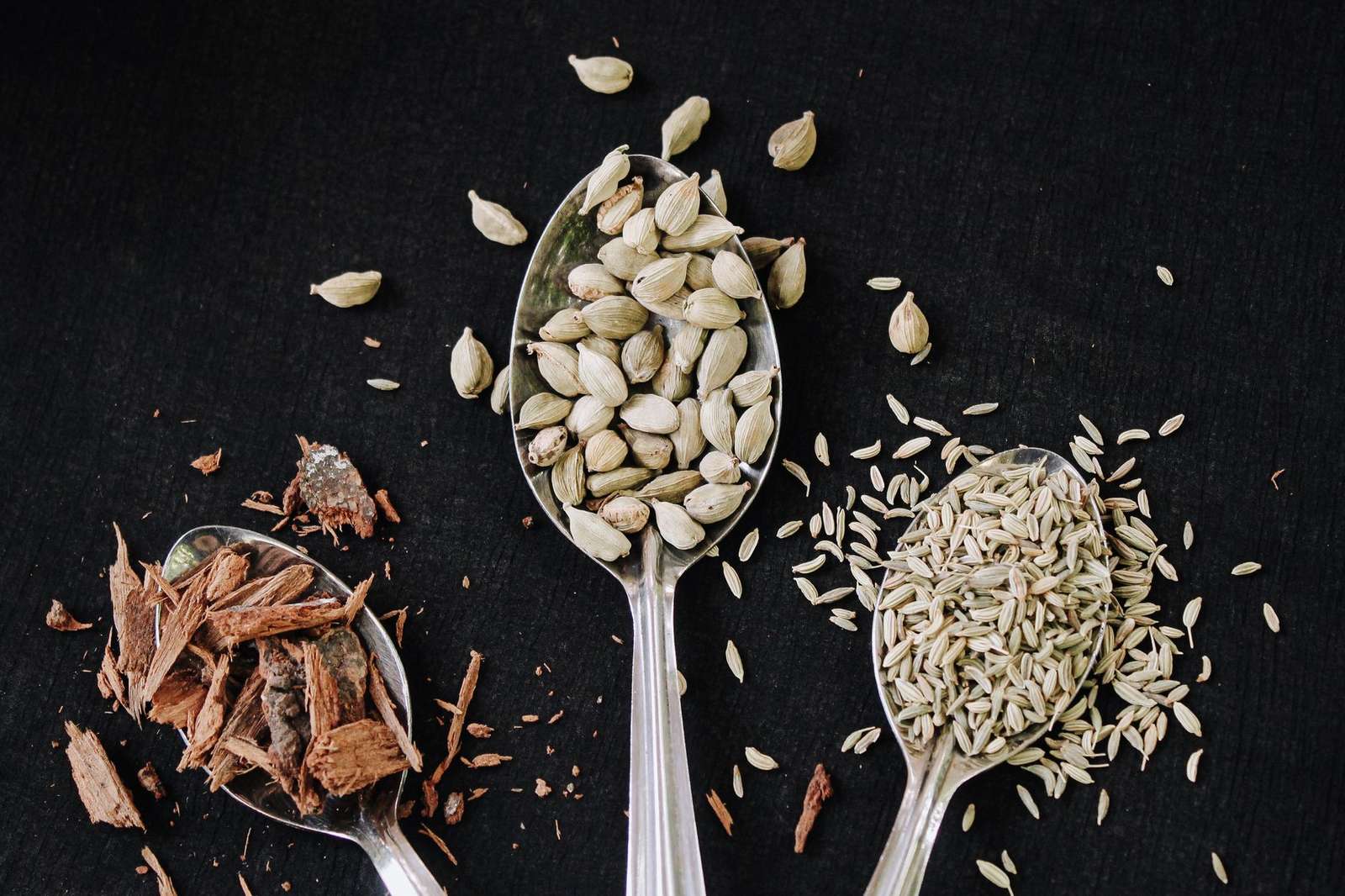
CCF tea is a caffeine-free brew made by simmering cumin, coriander and fennel seeds in water. The name comes from the initials of the three seeds. This page covers the method, the traditional background and what research does and does not show.
The drink belongs to everyday ayurvedic cooking, where whole spices are often used for gentle infusions after meals or between them.
The three seeds and what is said about them
Cumin, coriander and fennel are all common cooking seeds, and all three sit in most spice cabinets. Cumin is earthy and warm, coriander is lemony and mildly sweet, and fennel tastes of sweet anise. Simmered together they give a pale golden drink that smells like a savory spice mix and tastes lighter than it smells.
| Seed | What published sources say |
|---|---|
| Coriander | Seeds have been prescribed in traditional medicine for gastrointestinal disorders such as flatulence, diarrhea, indigestion and nausea |
| Fennel | Traditionally attributed anti-flatulent and cramp-relieving properties; used in traditional medicine for digestive and other ailments |
Sources: coriander review in PubMed Central and Swissmedic on fennel tea.
Cumin is covered in the research section below. The table entries are statements about tradition and about studies of the plants, not tests of the blend itself. No trial of this exact three-seed tea appears in the sources reviewed for this page, so nothing here promises a result from drinking it.
Ingredients
The tea needs only seeds and water, and everything else is optional. Whole seeds are preferred over ground, because they infuse cleanly and strain out easily. A small mortar is useful but not required.
- Whole cumin seeds, a small spoonful
- Whole coriander seeds, about the same amount as the cumin
- Whole fennel seeds, again roughly equal to the others
- Fresh water, a few cups, enough for a pot or flask
- Optional: a little honey or jaggery stirred in once the tea has cooled slightly
The proportions are traditionally kept roughly equal, which makes the blend easy to remember and to scale. A jar of the mixed seeds can be kept ready on the shelf, a habit that fits well with a stocked ayurvedic pantry of whole spices.
Method
This is an original method write-up, with timing described by look and smell because the strength of any tea depends on the pot, the heat and the seeds. Swissmedic points out that factors such as the temperature and amount of water used or the brewing time affect the quantity of ingredients released into a tea, so consistent habits give a more consistent cup.
- Combine the three kinds of seed in a small bowl and rub them between the fingers to wake up their aroma. For a stronger drink, crush them lightly in a mortar so they split but do not turn to powder.
- Pour the water into a pot and bring it to a boil over medium heat.
- Add the seeds, lower the heat to a gentle simmer and cover the pot loosely.
- Simmer until the water turns a pale gold and the kitchen smells of fennel and cumin. Stop earlier for a mild cup and later for a stronger, slightly bitter one.
- Strain through a fine sieve into a mug or a warmed flask, pressing the seeds gently to release the last of the liquid.
- Drink it warm, sipped slowly. Stir in a little honey or jaggery only after it has cooled a bit if sweetness is wanted.
The spent seeds can be discarded. Reusing them for a second infusion gives a weaker, thinner cup, and the aroma is mostly gone after the first simmer.
What research says about the seeds
Each seed has its own literature, and none of it is specific to the tea. A review of coriander describes the seeds as having been prescribed for gastrointestinal complaints such as flatulence, diarrhea, indigestion and nausea, and says coriander is believed to act by stimulating the liver to increase the secretion of bile and other digestive enzymes. The same review lists an infusion of coriander seeds in Turkey as an appetizer, digestive and carminative.
For fennel, Swissmedic says the plant is traditionally attributed anti-flatulent and cramp-relieving properties, and a pharmacology review reports that fennel has been used in traditional medicine for a wide range of ailments related to the digestive, endocrine, reproductive and respiratory systems. That review also notes that fennel can be used in herbal teas, which matches how the seed is used in this brew.
The cumin evidence is of a different kind. A meta-analysis of supplementation trials in adults with metabolic disorders describes cumin as recognized for anti-diabetic, anti-inflammatory and antioxidant properties but states that previous studies have reported inconclusive and sometimes conflicting results, and that further high-quality, large-scale trials are needed. Those trials examined supplements in a specific patient group, so they say little about a cup of seed tea.
The overall picture is a traditional drink built from three culinary seeds with long histories and limited direct evidence. For the broader context on how Ayurvedic practices are studied, the guide to ayurveda research explains what trials exist and what to question.
Safety and who should check first
Fennel needs the most care. Swissmedic notes that fennel naturally contains estragole and that the latest studies indicate high quantities of estragole may be harmful to health, while also saying the relevance of the available data to humans has not been conclusively clarified. Because exact dosage is not possible in teas, its preliminary recommendation is that fennel tea be used for children under 4 years only in consultation with a healthcare professional, and not be used during pregnancy and breastfeeding.
That recommendation comes from a Swiss regulator and applies to fennel tea in general, including this blend. Anyone who is pregnant, breastfeeding or preparing the drink for a young child should ask a clinician before drinking it, and a milder brew made less often is a sensible way to keep the exposure modest for everyone else.
People with a health condition should talk with their conventional health care provider before using Ayurvedic products, and anyone who takes medicine should check with their provider before using any herbal product, because some herbs and medicines interact in harmful ways. A seed tea is a food preparation, but the same questions apply when it is used regularly or for a health purpose.
Serving and variations
Because the tea is traditionally drunk warm, a flask works well for sipping between meals. It can also be served after a meal in place of a sweet drink, in a small cup, which suits the slow pace of a traditional meal.
Some cooks add a slice of fresh ginger or a few mint leaves, and others cut back on cumin if they find it too assertive. Ground seeds are best avoided, since the fine particles cloud the drink and are hard to strain. Store the dry mixture in a sealed jar away from heat and light, and make the tea fresh each time for the best flavor.
Frequently asked questions
Does CCF tea contain caffeine?
No. It is made only from seeds and water, so it contains none of the caffeine found in tea leaves or coffee.
Is the tea proven to help digestion?
No trial of the blend appears in the sources reviewed here. The digestive uses of coriander and fennel are described as traditional, and the cumin evidence concerns supplements.
Can children or pregnant people drink fennel-containing tea?
Swissmedic recommends consulting a healthcare professional for young children and avoiding fennel tea in pregnancy and breastfeeding. Anyone in those groups should ask a clinician first.
Can the seeds be ground first?
Whole seeds, lightly crushed at most, are better. Ground spice clouds the cup and is harder to strain.