
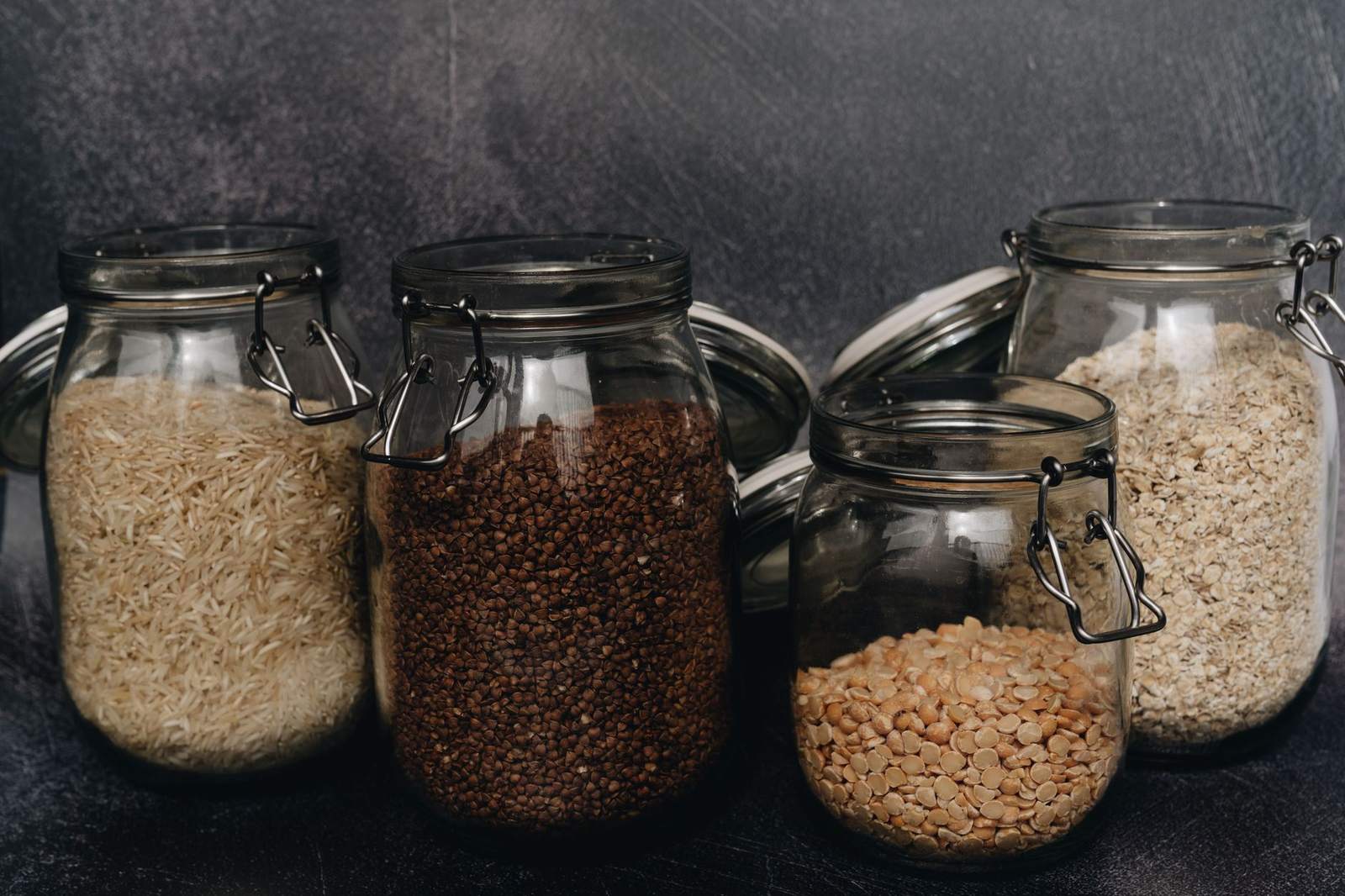
An ayurvedic pantry is a shelf of whole grains, split pulses, dried spices, good fats and a few staples for sweetness and sourness, chosen so that simple, freshly cooked meals can be assembled on short notice.
The list below builds on the principles in the guide to ayurvedic cooking, and turns them into a practical shopping and storage plan.
What an Ayurvedic pantry is for
Ayurveda is a traditional system of health and daily living from India. The National Center for Complementary and Integrative Health notes that Ayurvedic medicine is one of the world’s oldest medical systems and remains one of India’s traditional health care systems, and that its approach combines products, diet, exercise and lifestyle. Food sits inside that larger picture, so a pantry is less a collection of special products than a set of ingredients that make cooking from scratch easy.
That practical purpose explains why the traditional kitchen leans on dry goods. Rice, split lentils, whole spices and cooking fats keep for a long time, cost little, and combine into many different meals. A cook who has these on hand can make a pot of rice and lentils, a spiced vegetable dish or a warm drink without a trip to the store. The pantry also supports the habit of cooking fresh each day rather than relying on leftovers or packaged meals.
This guide describes the items an ayurvedic home cook would typically keep, why each category earns its place, and how to store it. It does not prescribe any ingredient for a health purpose. The NCCIH overview of Ayurvedic medicine is a useful reference for how the tradition is described and what research has and has not shown.
Grains: the base of most meals
Grains form the foundation of an everyday meal. Rice is the most common choice across much of India, and basmati and short-grain varieties both turn up in traditional cooking. Wheat appears as whole wheat flour for flatbreads, and millets, barley and oats are used in porridges and breads. A good starting set is white or brown rice, whole wheat flour, and one or two other grains such as millet or oats.
Whole grains deserve special mention because nutrition research supports them independently of any tradition. Harvard’s Nutrition Source advises choosing whole grains instead of refined grains, and explains that every whole grain kernel contains the bran, the germ and the endosperm. Refined flour keeps only the endosperm, which is why whole grain rice and flour are more filling and more nutrient dense. Cooks who prefer the softer texture of white rice can still rotate in whole grains through the week.
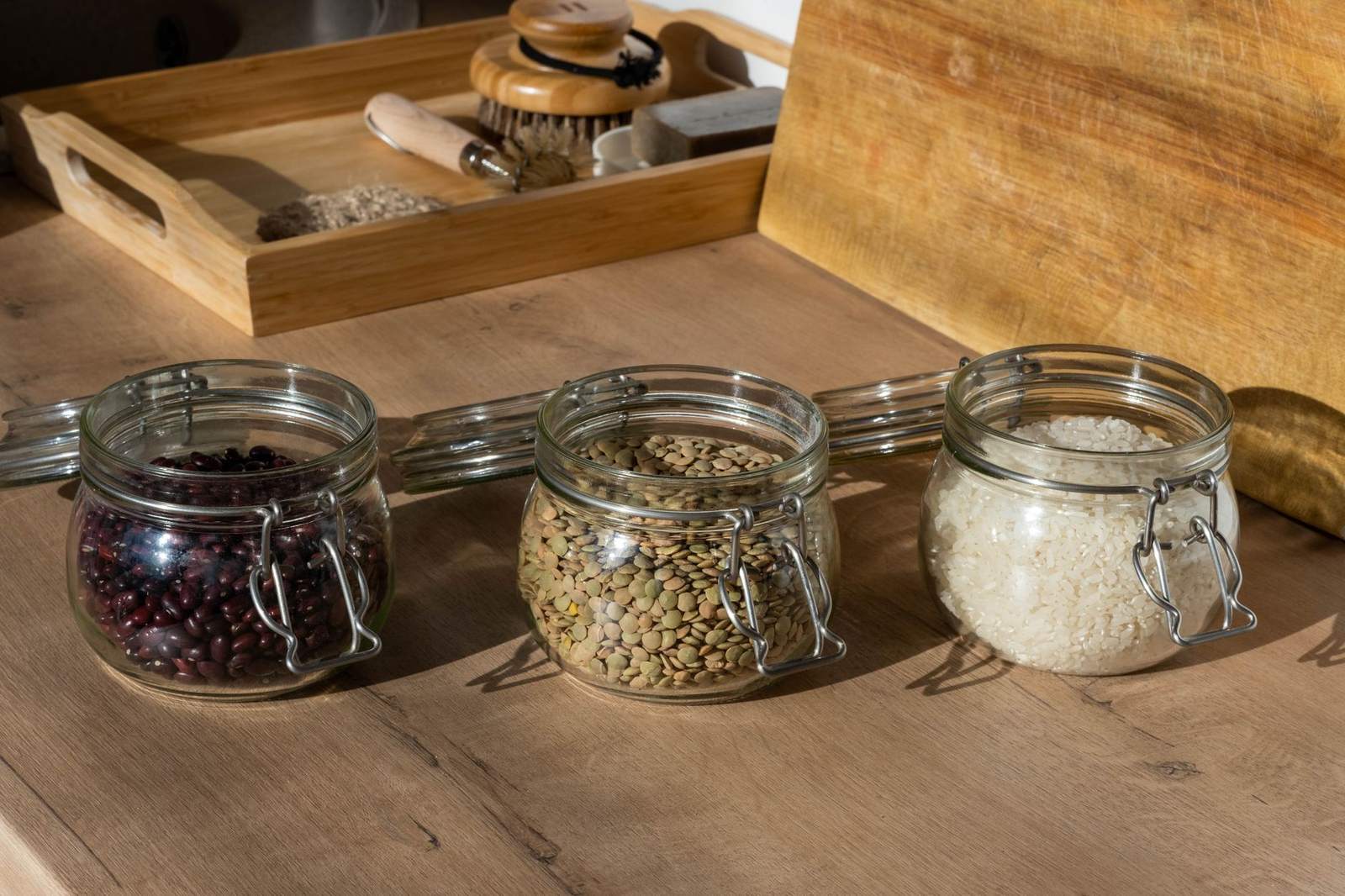
Keep grains in airtight containers away from heat and light. Glass jars with tight lids work well because the contents are visible, which makes it obvious when stock is low. Whole grain flours go stale faster than refined ones because of the oils in the germ, so buy them in smaller quantities and store them in a cool place.
Split pulses and beans
If grains are the base of the pantry, pulses are the second pillar. Harvard’s Nutrition Source defines a pulse as the edible seed from a legume plant, and counts beans, lentils and peas among them. The same page describes legumes as an inexpensive source of protein, vitamins, complex carbohydrates and fiber, which is part of why they anchor so many vegetarian cuisines.
Several kinds of pulses show up repeatedly in Ayurvedic and wider Indian cooking:
- Split yellow mung beans (moong dal), which cook quickly and become creamy, and whole green mung beans, which hold their shape longer
- Red lentils, which dissolve into a smooth soup without soaking
- Yellow split peas and pigeon peas, which are sturdier and benefit from soaking
- Chickpeas, dried or canned, for curries, salads and snacks
- Black or brown lentils for heartier stews
Soaking is a traditional step for the larger and tougher pulses. The Nutrition Source notes that soaking dried beans for at least three hours and cooking them may help decrease the gas and bloating that some people experience. Rinse every pulse in several changes of water before cooking, and store them dry in sealed containers, where they keep for a long time.
Spices and aromatics
The spice shelf is where the pantry becomes recognizably Ayurvedic. A modest, well-chosen set is more useful than a large collection of old jars. Most home cooks in the tradition reach for the same few spices daily:
- Turmeric, ground or fresh, for color and an earthy, slightly bitter flavor
- Cumin seeds, whole and ground
- Coriander seeds, whole and ground
- Fennel seeds, which are also chewed after meals in many households
- Black pepper and, for heat, dried chilies in small amounts
- Mustard seeds, cardamom pods, cinnamon bark and whole cloves
- Asafoetida (hing), a pungent resin used in tiny amounts in lentil dishes
- Fresh ginger and fresh curry leaves when available
The National Center for Complementary and Integrative Health explains that turmeric is a plant in the ginger family, grown commercially in Southeast Asia and India, and that curcumin gives the spice its yellow color. Ginger is native to the warm parts of Asia, and its rhizome, an underground stem, is used in food and for health purposes, according to the same agency. On health effects, the agency is careful: for turmeric it states that researchers do not know enough to definitively conclude if turmeric or curcumin is beneficial for any health purposes. In the kitchen, these spices are valued for flavor and aroma first. See the NCCIH pages on turmeric and ginger for details.
Buy whole spices when possible and grind small amounts as needed, since ground spices lose their aroma sooner. Store them in tins or jars away from the stove. A simple use of the whole seeds is to simmer cumin, coriander and fennel in water, which is covered in the guide to ccf tea.
Fats, sweeteners and souring agents
Cooking fats complete the set. Ghee, clarified butter cooked until the milk solids separate and are strained out, is the best known fat in Ayurvedic cooking, and it is traditionally used both for tempering spices and for stirring into rice and lentils. Sesame oil and coconut oil are common in different regions, and mustard oil appears in eastern and northern cooking. A neutral oil or plain butter can fill in where those are unavailable.
Sweeteners and souring ingredients are used in modest amounts. Jaggery, an unrefined cane sugar, and raw honey are typical sweet choices, while lemons, limes, tamarind and plain yogurt supply sourness. Harvard’s Nutrition Source reminds readers that the body does not need to get any carbohydrate from added sugar, which is a fair note for any pantry that includes sweeteners. Rock salt or ordinary sea salt completes the list.
Fats go rancid with time and light. Keep ghee tightly covered, and keep delicate oils such as sesame in a cool, dark cupboard, or in the refrigerator if they are used slowly. Plant oils and their different qualities are covered in more depth in a separate guide.
Keeping the pantry fresh and in balance
A pantry only works if it is used. Rotate stock by placing newer purchases behind older ones, and write the purchase date on jars of spices and flours. Smell spices before using them: if the aroma is faint, they are past their best. Buy dry goods in quantities that match how quickly the household cooks, since a small, active pantry beats a large, stale one.
It also helps to think of the pantry as supporting the rhythm of the day rather than as an end in itself. Meals built from these ingredients are cooked fresh, served warm and eaten with attention, a theme developed in the guide to ayurvedic eating habits.
One note of caution applies to the shelf of herbs and powders that sometimes comes with the topic. The National Center for Complementary and Integrative Health advises people with a health condition to talk with their health care provider before using Ayurvedic products, and advises pregnant or nursing people to consult their provider as well, because some Ayurvedic products may contain ingredients that could be harmful. Everyday cooking ingredients are different from supplements, but anyone with a medical condition, who is pregnant, or who takes medication should ask a clinician before making big dietary changes.
Frequently asked questions
What are the most important items in an ayurvedic pantry?
A starter set is rice or another whole grain, split mung beans or red lentils, turmeric, cumin, coriander, fennel, black pepper, ginger, and one cooking fat such as ghee or sesame oil. These cover a wide range of simple meals.
Do I need to buy special Ayurvedic products?
No. Everyday grains, pulses, spices and fats from an ordinary grocery or an Indian grocery are enough. Be cautious about herbal powders and supplements sold as Ayurvedic products, since the NCCIH notes that some preparations may contain lead, mercury or arsenic in amounts that can be toxic.
Should pulses always be soaked?
Not always. Red lentils and split mung beans cook quickly without soaking. Larger pulses such as chickpeas and whole beans benefit from soaking, which may also reduce the gas some people notice.
Is a pantry the same as a diet plan?
No. A pantry is simply a set of ingredients to cook from. It makes home cooking easier, but it does not replace advice from a doctor or dietitian.