
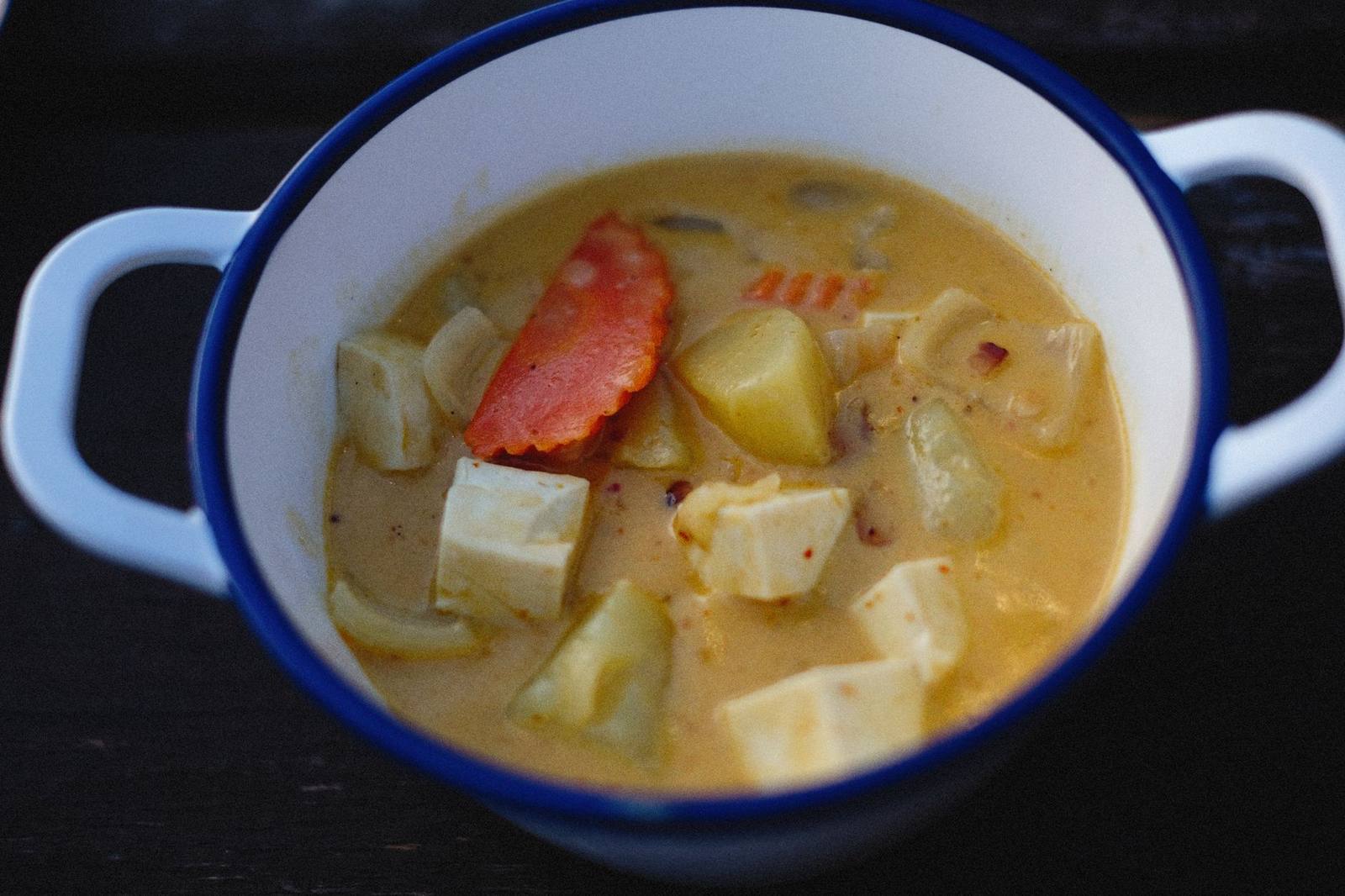
A vegetable curry is built in layers: whole spices bloomed in hot fat, an aromatic base, the vegetables and a liquid, all simmered until tender. Once the pattern is clear, almost any vegetable fits.
It is one of the most adaptable dishes in vegetarian cooking, and the same framework covers many regional styles.
What a curry is
According to Wikipedia’s curry entry, curry is a dish with a spicy sauce, initially in Indian cuisine, later modified through contact with the Portuguese and the British and eventually thoroughly internationalised. Many curries contain meat or fish, and the entry also notes that others are vegetarian.
The entry describes two broad styles. In India, the spices are fried in oil or ghee to create a paste, which may be combined with a water-based broth or, at times, milk or coconut milk. In Southeast Asia, curry often contains a spice paste and coconut milk. Both styles share one idea: spices cooked in fat first, then given liquid to build a sauce.
The word does not come from the plant of the same name. Wikipedia points out that the term is not derived from the curry tree, although some curries do include curry leaves among many other spices.
Building the base
The base is where the flavor of a vegetable curry begins. A typical sequence starts with a heavy pan, a generous spoon of oil or ghee and heat that is moderate rather than fierce.
- Fat: oil, ghee or coconut oil, depending on the style and on what the household uses.
- Whole spices: cumin seeds, mustard seeds or a stick of cinnamon, added first so they sizzle and release their aroma.
- Aromatics: chopped onion cooked until soft and golden, then fresh ginger and garlic.
- Ground spices: coriander, turmeric and chili, stirred in briefly so they do not scorch.
- Something sour or juicy: chopped tomato, a spoon of yogurt or a squeeze of lemon to bring the paste together.
Cook the base until the fat starts to separate at the edges and the mixture looks like a thick, glossy paste. That is the signal that the raw edge has gone from the spices. Rushing this stage is the most common reason a home curry tastes flat.
The spices of a vegetable curry
The spice list looks long, but each ingredient has a clear role. The Wikipedia entry notes that in medieval India, proto-curries were flavoured with mild spices such as asafoetida, cardamom, coriander, cumin, and ginger, with the limited heat of black pepper. The arrival of spicy hot chili peppers, along with ingredients such as tomatoes and potatoes, was a definite step in the development of modern curry.
Turmeric supplies color. According to the NCCIH page on turmeric, turmeric is a plant in the ginger family whose rhizome has been used for culinary purposes, and curcumin, a major component, gives the spice its yellow color.
Many cooks finish with a spice blend. Garam masala is a blend of ground spices originating in the Indian subcontinent, and the entry for curry adds that a masala mixture is a combination of dried or dry-roasted spices commonly homemade for some curries. Adding such a blend at the end keeps its aroma bright.
One more ingredient deserves mention: asafoetida. Wikipedia says that despite its smell, it adds a fine-tasting meaty flavour when it is fried in oil. A tiny pinch in the hot fat is enough to deepen a vegetarian pot.
Adding vegetables and simmering
Once the base is ready, the vegetables go in. Hard vegetables such as potato, carrot and cauliflower need the most time, while soft ones such as spinach, peas and zucchini need only a few minutes at the end.
- Cut the vegetables into pieces of similar size so they cook at the same rate.
- Add the firmest vegetables to the finished base and stir to coat them in the spiced paste.
- Pour in enough liquid to come about halfway up the vegetables. Water, stock, coconut milk or a mix will all work.
- Bring to a gentle boil, then lower the heat, cover and simmer until the vegetables are nearly tender.
- Add the softer vegetables and cook uncovered until they are done and the sauce has thickened to the desired consistency.
- Taste, adjust the salt and acidity, and stir in fresh herbs.
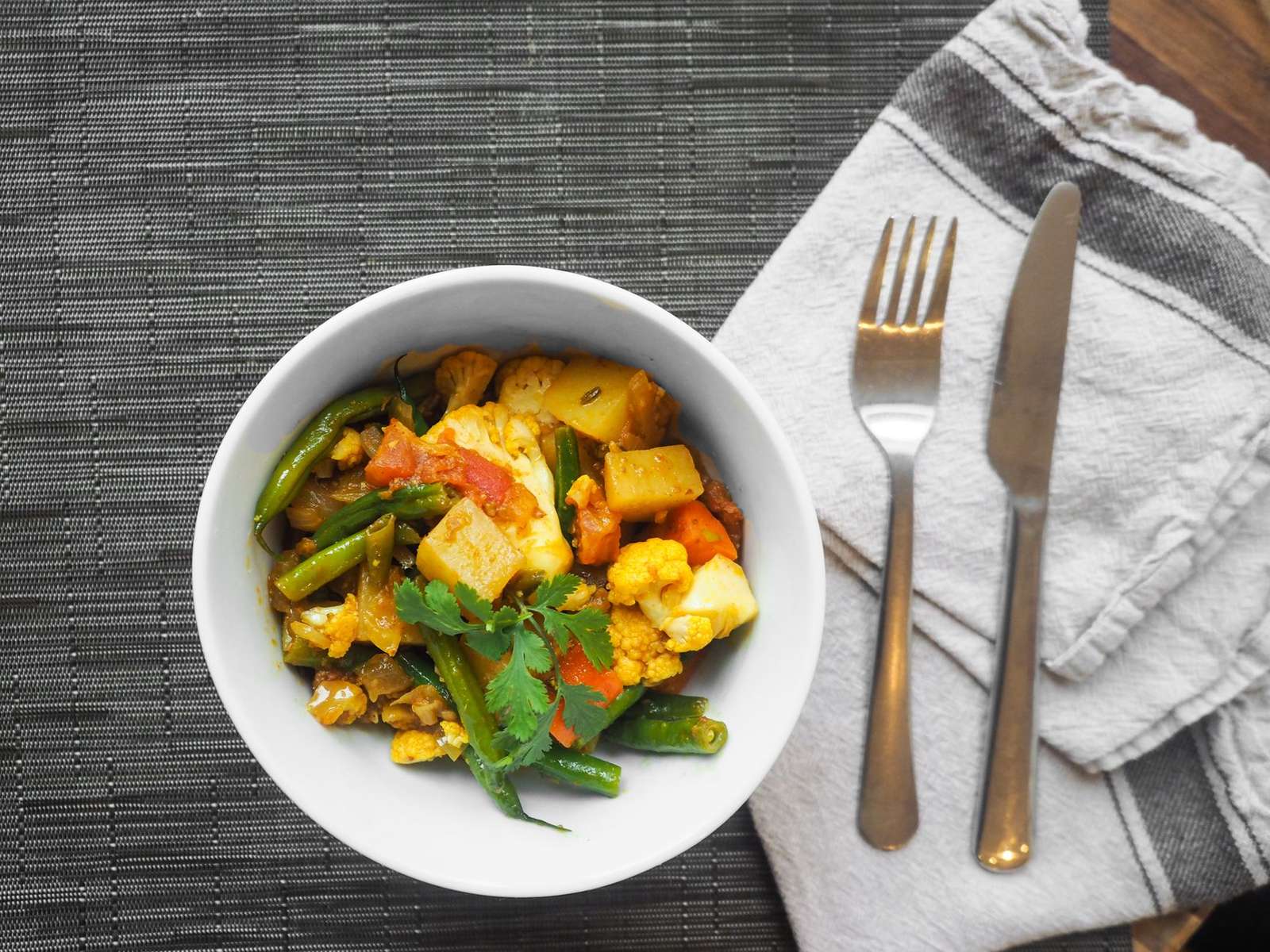
For a thicker sauce, simmer uncovered for a few minutes or mash a few pieces of potato into the liquid. For a looser sauce, add a splash of hot water. A final spoon of ghee or a swirl of coconut milk gives richness.
Adding protein and greens
Protein makes a vegetable curry more filling. Cooked legumes can be stirred in near the end, as described in chickpea recipes, and cubes of fried paneer or tofu hold up well in a thick sauce. The NHS suggests adding pulses like beans, lentils or chickpeas to stews, curries and salads.
Leafy greens suit the same framework. For a dish where the greens take center stage, the method in this saag recipe shows how to cook them down with spices until they turn thick and silky.
Common mistakes and quick fixes
A few habits separate a rich vegetable curry from a thin one. Crowding the pan steams the vegetables instead of letting them absorb the sauce, so use a wide pot and cook in batches if necessary. Adding ground spices to a dry, very hot pan scorches them and turns the sauce bitter, so keep the heat moderate and add a splash of water if the paste catches. Salting only at the end can leave the vegetables bland inside, so season lightly early and adjust again after tasting.
If the finished sauce is too sharp, a spoon of coconut milk or yogurt softens it. If it is flat, a squeeze of lemon or a pinch of salt usually brings it back to life. If it is too hot, extra vegetables or a spoon of yogurt will tone down the chili.
Serving and storing
Vegetable curry is traditionally served with rice or flatbread. The NHS advises including plenty of vegetables with meals, either as a side dish or added to sauces, stews or curries, and a curry makes that straightforward. A spoon of plain yogurt, a wedge of lemon and fresh cilantro round out the plate.
Curries are one of the few dishes that often improve after a night in the refrigerator, once the spices have blended into the sauce. Cool the pot promptly, store in a covered container and reheat until steaming hot all the way through.
Health notes and when to ask a clinician
Ayurveda is a traditional system: the NCCIH describes the ancient Indian medical system, also known as Ayurveda, as being based on ancient writings. This page is about cooking only and makes no health claims for any spice.
The NCCIH warns that the use of turmeric supplements during pregnancy may be unsafe, and that anyone who takes any type of medicine should talk with a health care provider before using any herbal product. Turmeric in cooking is different from concentrated supplements, but people with a health condition, who are pregnant or who take medication should talk to a clinician before changing their diet or adding herbs and supplements.
Frequently asked questions
Is curry powder the same as garam masala?
No. Curry powder is a commercially prepared spice mix, while garam masala is a blend of ground spices that is often added at the end of cooking.
Does curry contain curry leaves?
Some do. The word curry is not derived from the curry tree, but some curries include curry leaves among many other spices.
Which vegetables work best in a curry?
Potatoes, cauliflower, carrots, peas, spinach and eggplant all work well. Add the firm ones first and the soft ones last.
Can a vegetable curry be made with coconut milk?
Yes. Coconut milk is a common liquid in Southeast Asian curries and is also used in some Indian ones.