
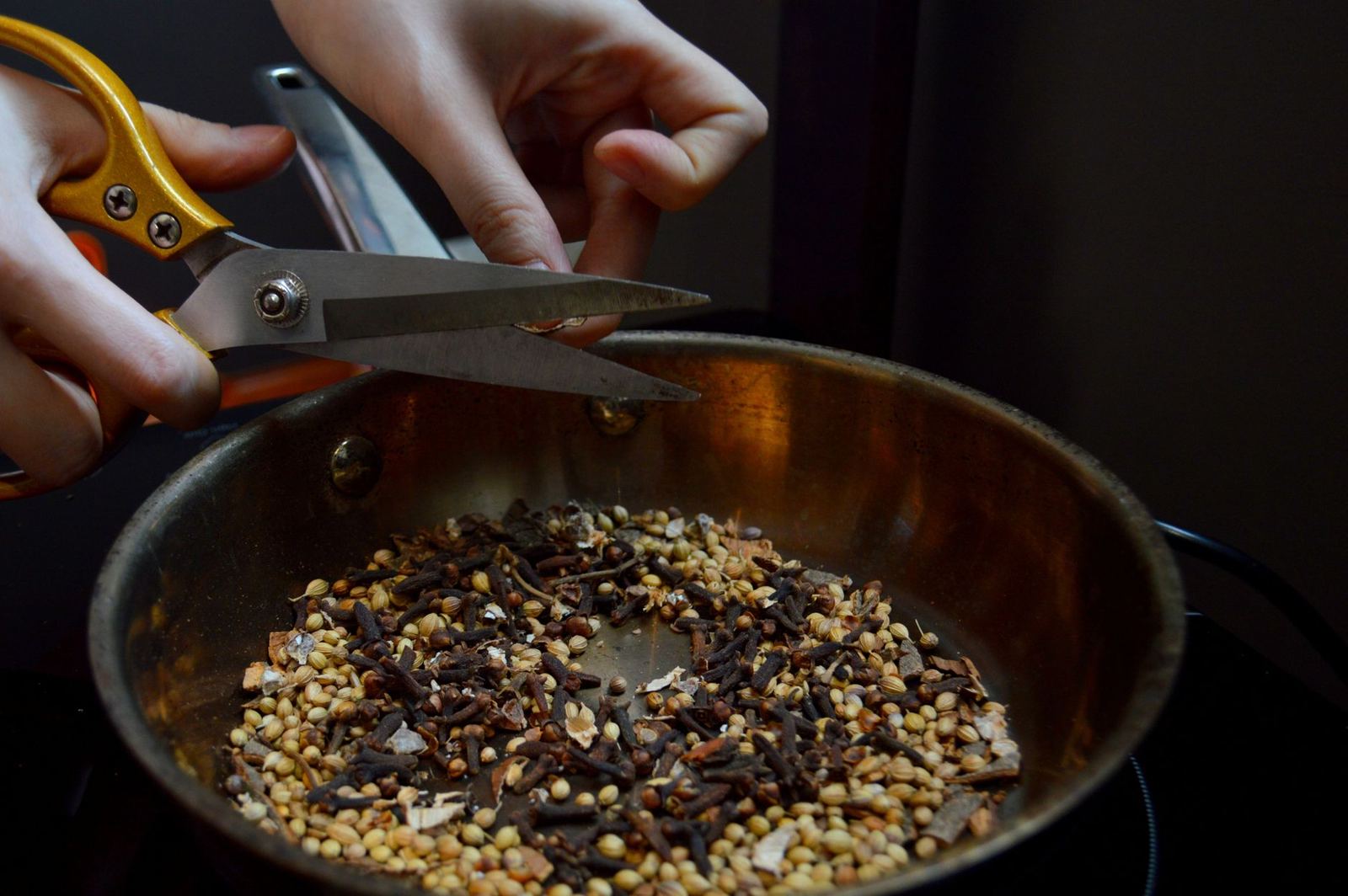
Tadka is a South Asian cooking technique in which whole spices are cooked briefly in hot oil or ghee, then poured with the fat into a dish, so the fat carries their flavour through the food.
It is one of the most useful skills in everyday vegetarian cooking, because a few spoonfuls of seasoned fat can lift lentils, vegetables and grains.
What tadka is and what it does
Wikipedia’s entry on tempering describes it as a technique used in India, Bangladesh, Nepal, Pakistan, Sri Lanka and the Caribbean in which whole spices are cooked briefly in oil or ghee to liberate essential oils from cells and thus enhance their flavours. Sometimes other ingredients such as dried chillies, minced ginger root or sugar are included, and the oil is poured, together with the spices, into the dish.
The same page notes that tempering is also practised by dry-roasting whole spices in a pan before grinding them. That is a related technique, but the one most people mean by tadka uses fat as the medium.
Rasam, an Indian restaurant, gives a plain definition on its spice page: tadka means frying whole seeds in hot oil so that the oil incorporates the flavours of the spices.
The result is a dish in which the seasoning is bright and distinct rather than muddy. A pot of plain cooked lentils, a bowl of rice or a steamed vegetable can be turned into something finished in the time it takes to heat a small pan.
Names, timing and variations across regions
The word has many forms. According to Wikipedia, some Indo-Aryan and Dravidian languages use a form inherited from a Sanskrit root meaning “sprinkling over”, as in baghar in Hindi. Another root means “crackles, splits, fizzes”, which gives tarka in Hindi and other languages, and chaunk is another Hindi term.
Those root meanings describe the sound and sight of the technique well. The spices crackle as they meet the hot fat, and the fat is sprinkled or poured over the dish at the end.
Timing varies. Wikipedia says tempering is typically done at the beginning of cooking, before adding the other ingredients for a curry or similar dish, or it may be done at the end for adding to a dish just before serving, as with a dal, sambar or stew. A tadka at the start builds a base for onions, tomatoes and vegetables to cook in. A tadka at the end is poured over the finished dish so the aroma is at its strongest when it reaches the table.
Some regional traditions use spice blends instead of a single seed. In Oriya cuisine and Bengali cuisine, mixtures of whole spices called pancha phutana and panch phoron are used for this purpose. Rasam describes panch phoron as a five-seed blend, made of equal parts cumin, fennel, nigella, fenugreek and mustard seeds, which is nearly synonymous with Bengali cooking, and says it is almost always fried in ghee or cooking oil before use.
Similar ideas exist elsewhere. Wikipedia notes that in parts of the Arab world, techniques such as adha or qadha in Palestinian Arabic and tasha in Egyptian Arabic involve frying garlic and sometimes spices, typically coriander, in samneh or olive oil before adding them to dishes, most often stews.
Spices and ingredients used in a tadka
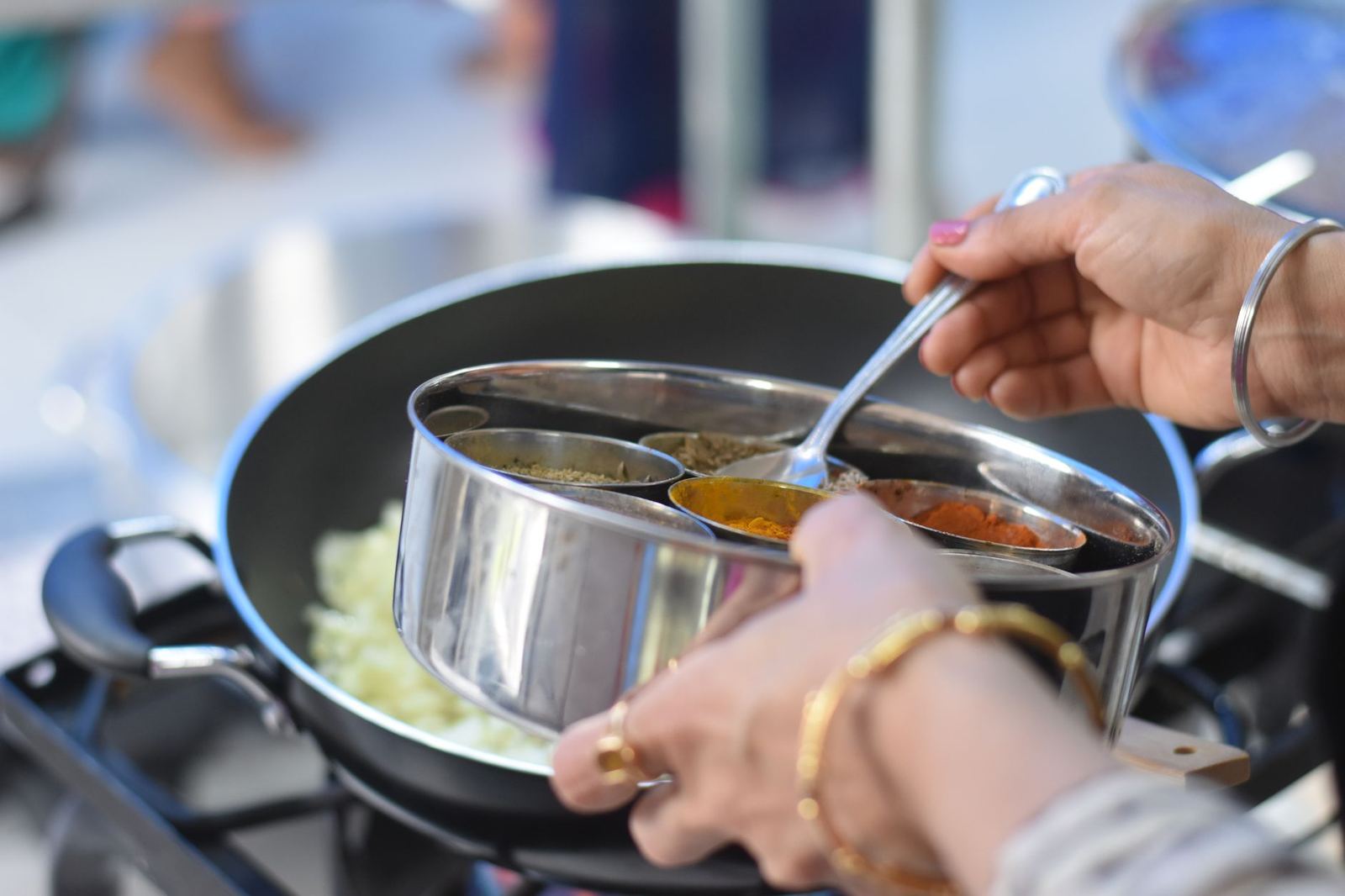
Wikipedia lists the ingredients typically used in tempering: cumin seeds, black mustard seeds, fennel seeds, kalonji (nigella seeds), fresh green chilis, dried red chilis, fenugreek seeds, asafoetida, cassia, cloves, urad dal, curry leaves, chopped onion, garlic and tejpat leaves. No single tadka uses all of them. Most use a small handful chosen to suit the dish.
| Ingredient | Role described in the sources |
|---|---|
| Mustard seed | Imparts a nutty, sharp note, often cooked in oil at the beginning of a recipe |
| Fenugreek seed | Can be incredibly bitter raw, but transforms into sweetness and depth when cooked |
| Carom seed | Added during the tadka process |
| Asafoetida | Added when the oil is hot, before onions, garlic or ginger |
The table draws on the spice notes published by Rasam restaurant, whose page also describes mustard seeds as an essential component in Indian cooking and notes that the smaller and darker the seed, the hotter.
Fenugreek is a good example of why cooking matters. Rasam describes fenugreek seed as having a sweet, nutty flavour reminiscent of maple syrup and burnt sugar, yet incredibly bitter when eaten raw. Its page says that when cooked and combined with aromatics and spices it gives a sweetness and depth of flavour to saucy dishes. That is the logic of the tadka in miniature: heat in fat changes what a seed tastes like.
Asafoetida is described by Rasam as one of the most powerful aromatic spices in the world. The page says it should be added to the pan when the oil or butter is hot, and that a pinch of it can supercharge every other spice in the pan, in a funkier way than salt and without any sodium.
A basic tadka, step by step
The order matters more than the quantities. Wikipedia says that when several ingredients are used, they are often added in succession, with those requiring longer cooking added earlier and those requiring less cooking added later. Quantities and timings here are described in words, because they depend on the pan, the heat and the size of the dish.
A simple tadka needs these ingredients:
- Oil or ghee, enough to coat the base of a small pan
- Whole cumin seeds
- Whole black mustard seeds
- A dried red chili, broken into pieces
- A few curry leaves
- A small pinch of asafoetida
The method follows the order described above:
- Warm the oil or ghee in a small pan over medium heat until it is hot.
- Add the whole seeds that need the longest cooking first, such as the mustard and cumin, and let them crackle briefly.
- Add the ingredients that need less time, such as the dried chili, the curry leaves and the asafoetida.
- Pour the seasoned fat straight into the dish, scraping in the spices, then stir or cover the dish for a moment.
The pan, the heat and the size of the dish all change how quickly each ingredient is ready, so the sequence above is a guide, with the cook judging by sight and aroma.
The same approach works at the start of a dish. Cook the tadka first, then add chopped onion, garlic or ginger to the same fat. Wikipedia lists chopped onion and garlic among the ingredients typically used in tempering, so they follow the whole spices in the same pan.
Where tadka fits in a week of cooking
Tadka is a finishing step as much as a cooking method, which makes it easy to fit around batch cooking. A plain pot of lentils or a tray of roasted vegetables can be prepared in advance and given a fresh tadka only when it is reheated. The guide to vegetarian meal prep covers how to organise that kind of weekly cooking.
It also pairs well with simple grains. The method in how to cook quinoa produces separate, fluffy grains, and a tadka of cumin and mustard seeds poured over them gives a plain pot of seeds a savoury finish without adding heavy ingredients.
The National Center for Complementary and Integrative Health describes the ancient Indian medical system, also known as Ayurveda, as based on ancient writings that rely on a natural and holistic approach to physical and mental health, and says there is little scientific evidence on Ayurveda’s value for other health issues. This site therefore describes tadka as a cooking method only, and makes no claim that any spice or technique treats, cures or prevents a condition.
People with a health condition, who are pregnant, or who take medication should speak with a clinician or registered dietitian before making large changes to their diet or adding concentrated herbs or supplements. Anyone with a food allergy or sensitivity to a spice should leave it out.
This site is an independent informational resource and is not affiliated with any brand, restaurant, author, school or practitioner.
Frequently asked questions
Is tadka the same as tempering?
Yes. Wikipedia lists tadka as one name for the technique, which it calls tempering, and notes that other Indian languages use related words such as baghar and chaunk.
Should a tadka go in at the start or the end of cooking?
Either. Wikipedia says it is typically done at the beginning of cooking, or it may be done at the end for adding to a dish just before serving, as with a dal, sambar or stew.
Which fat is used?
Oil or ghee. Both appear in the Wikipedia definition, and Rasam describes spice blends such as panch phoron as almost always fried in ghee or cooking oil.
In what order are the spices added?
Wikipedia says that when several ingredients are used, those requiring longer cooking are added earlier and those requiring less cooking are added later.
Does a tadka have health benefits?
This page treats it as a cooking technique for flavour. For any health question, a clinician or registered dietitian is the right source.