
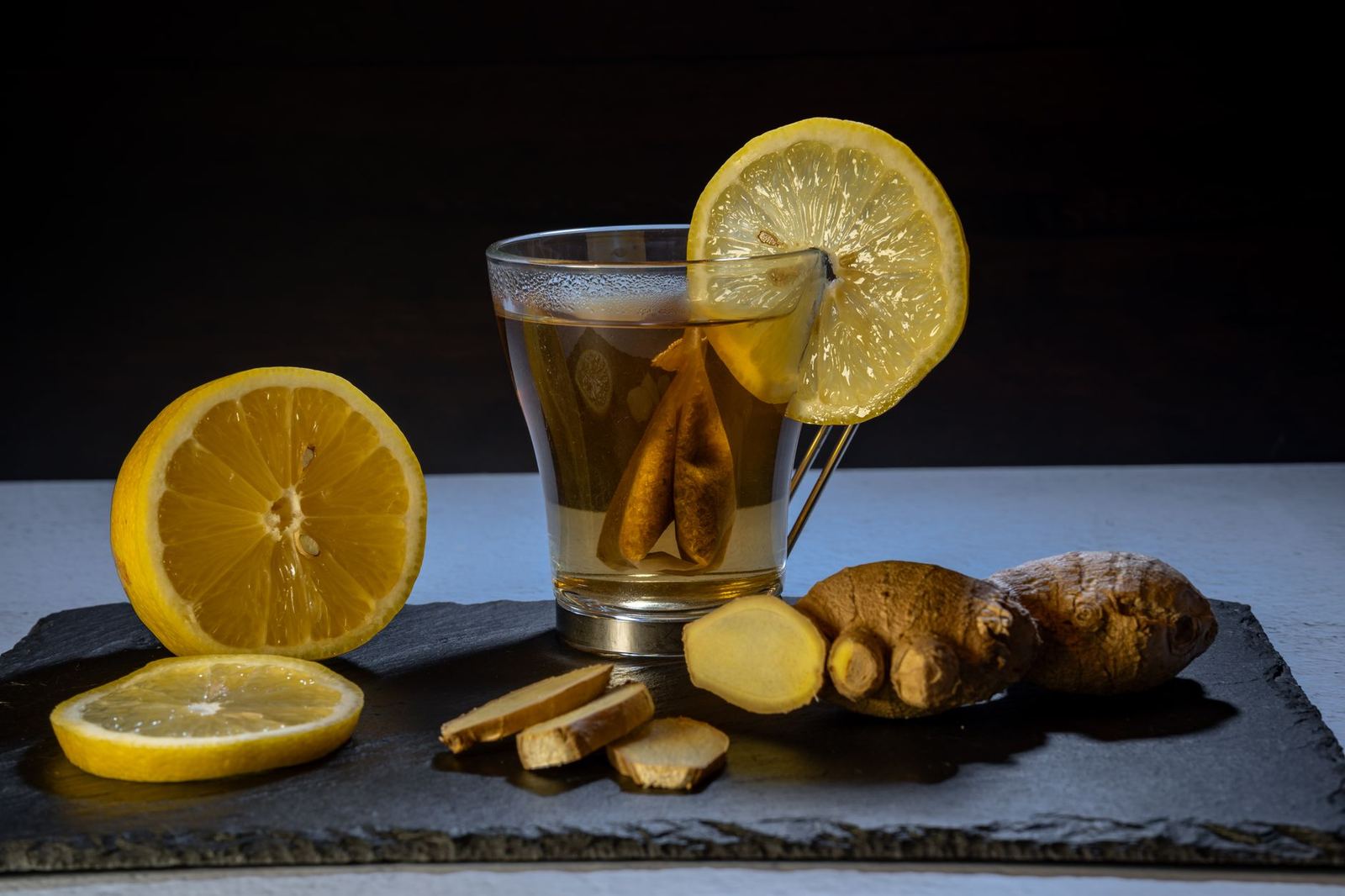
Turmeric lemonade is a bright, tangy drink made by stirring ground turmeric, fresh ginger, lemon juice and a pinch of black pepper into water and sweetening it lightly. It can be served warm or poured over ice.
It belongs to the cooling, refreshing side of the ayurvedic recipes gathered on this site, and the steps below show how to build a balanced glass without a blender or any special tools.
What goes into a turmeric lemonade
Four flavors do most of the work: sour lemon, earthy turmeric, peppery ginger and a touch of sweetness. Turmeric is the rhizome of a plant in the ginger family, grown commercially in Southeast Asia and India, and it is the curcumin in the rhizome that gives the spice its yellow color. In a glass of lemonade that color turns a cheerful, almost neon gold.
The recipe is a modern drink in the spirit of traditional spiced beverages. It makes no claim to be a classical Ayurvedic preparation, and it should be read as a recipe for a refreshing drink.
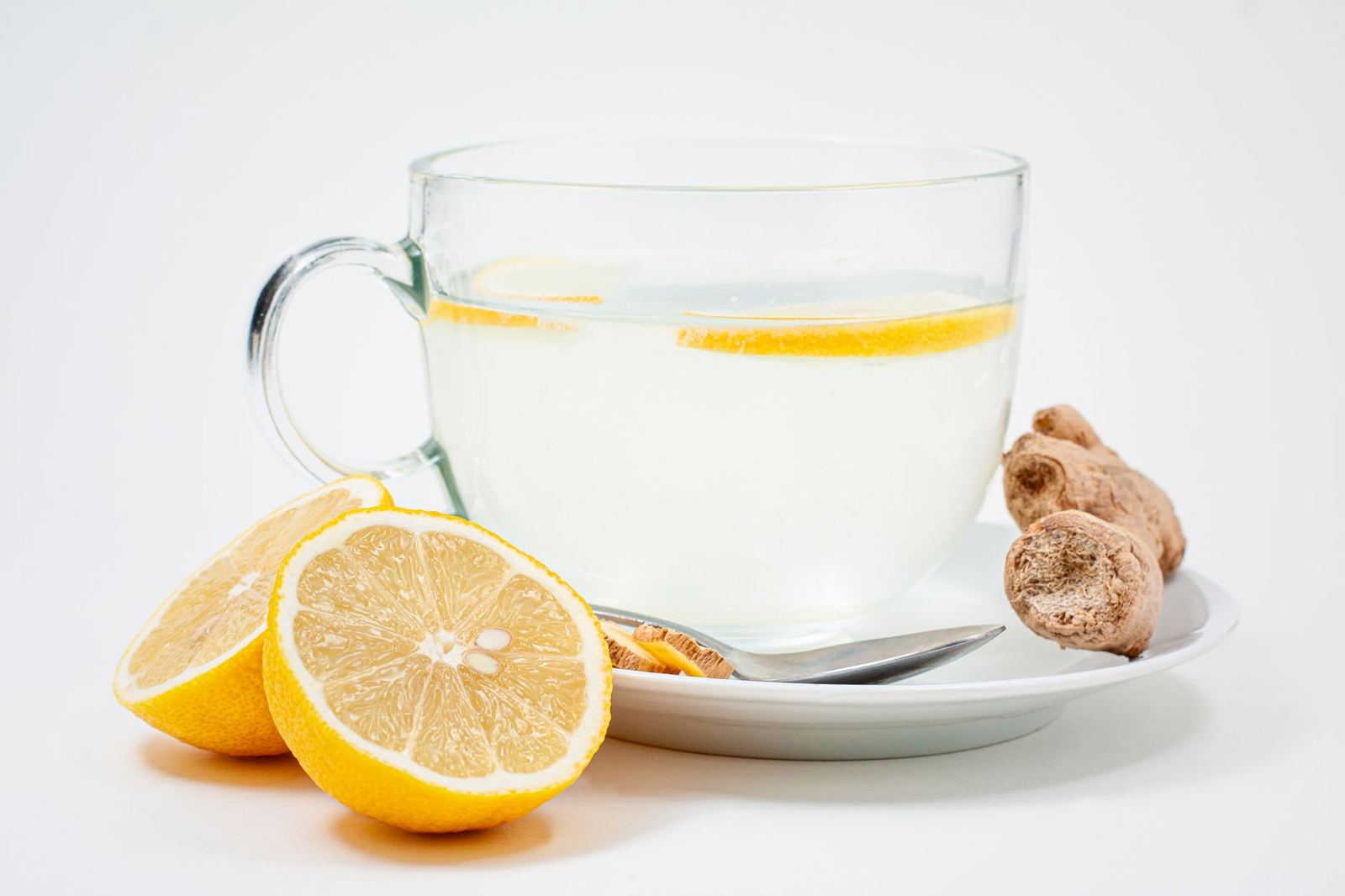
Ingredients for a pitcher
This recipe fills a small pitcher. Quantities are described in words, so adjust to taste, and start with less turmeric and ginger than seems necessary since both are strong.
- Cold water, enough to fill a small pitcher most of the way, plus a little extra hot water for the first step.
- Juice of several lemons, strained of seeds.
- A level spoonful of ground turmeric.
- A generous knob of fresh ginger, peeled and finely grated.
- A small pinch of freshly ground black pepper.
- Honey, jaggery or maple syrup, to taste.
- Ice cubes and thin lemon slices for serving.
- Fresh mint leaves (optional).
How to make the lemonade
- Heat a small amount of water until hot but not boiling. Pour it into a heatproof jug.
- Whisk in the turmeric, grated ginger and black pepper until no dry clumps remain. Hot water helps the turmeric dissolve.
- Stir in the sweetener while the mixture is still hot so that it dissolves completely. Let the mixture steep for a short time, then strain through a fine sieve to remove the ginger fibers.
- Add the lemon juice and top up with cold water. Taste, and adjust the sweetness or sourness.
- Chill in the refrigerator, or pour directly over plenty of ice.
- Stir again before serving, since turmeric settles to the bottom. Garnish with lemon slices and mint.
Adding the lemon juice last keeps its flavor fresh and sharp. Heating lemon juice for a long time can dull its aroma.
Warm or cold: two ways to serve it
The same base can be served in two ways. For a warm version, skip the cold water and ice, add the lemon juice to the strained hot spiced water and sip it slowly. For a cold version, chill the pitcher well and serve over ice. The cold drink is a good summer companion to a light bowl of fennel soup, while the warm version has more in common with a cup of homemade yogi tea.
Sparkling water in place of still water makes a livelier drink. Add it at the last moment so it keeps its fizz.
Turmeric, pepper and ginger: what NIH says
The three spices in this drink all have traditional reputations, and NCCIH, part of the US National Institutes of Health, offers measured summaries of each.
For turmeric, NCCIH says there is not enough knowledge to conclude definitively if turmeric or curcumin is beneficial for any health purposes. It adds that oral curcumin products vary in how much curcumin they contain and often contain substances from other plants, such as piperine from black pepper, and that combining curcumin with piperine is one way to improve the bioavailability of curcumin. The pinch of pepper in the lemonade follows that kitchen tradition, though its purpose here is flavor.
For ginger, NCCIH reports that research shows it may be helpful for nausea and vomiting associated with pregnancy, but most of the studies tested dietary supplements rather than foods. It also lists side effects of oral ginger: abdominal discomfort, heartburn, diarrhea, and mouth and throat irritation. Lemon juice is acidic, so people prone to heartburn may prefer a milder, more diluted glass.
Staying safe with turmeric drinks
NCCIH lists nausea, acid reflux, stomach upset, diarrhea and constipation as possible adverse effects of oral turmeric, and states that turmeric supplements may be unsafe during pregnancy. It also advises that anyone taking medicine should talk with a health care provider before using any herbal product, since some herbs and medicines interact in harmful ways.
In practice, a spice-flavored drink made with a little ground turmeric is a food, not a supplement. Even so, anyone with a health condition, who is pregnant or who takes medicine should check with a clinician before making herbs a regular part of the diet.
Choosing the lemons and the sweetener
Lemons that feel heavy for their size and have thin, smooth skins usually give the most juice. Rolling each lemon firmly on the counter before cutting loosens the pulp and makes juicing easier. Always strain out seeds, which taste bitter.
The sweetener changes the character of the drink. Honey adds floral depth but is best stirred into warm, not boiling, water. Jaggery brings a caramel-like, almost smoky sweetness that suits the warming spices. Maple syrup dissolves easily into cold liquid, which makes it convenient for iced versions. Sugar-free options work too, though a small amount of sweetener helps balance the acidity and the slight bitterness of turmeric.
Fresh ginger varies a great deal in heat. Young ginger is mild and juicy, while older roots with thick skin are fibrous and fiery. Grating on the fine side of a box grater and pressing the pulp through the sieve extracts the most flavor and leaves the fibers behind.
Storage, scaling and troubleshooting
The finished lemonade keeps in a covered jar in the refrigerator for a short time. Turmeric sinks, so shake or stir before pouring. Over time the lemon flavor fades, so many cooks keep a concentrate of spiced water, sweetener and turmeric and add fresh lemon juice and cold water to each glass.
If the drink tastes bitter or chalky, too much turmeric is the usual cause. Add more water and lemon, or dilute with a splash of apple juice. If it tastes flat, a pinch of salt and more lemon juice usually brightens it. If it is too sharp, a little more sweetener balances the acid.
For parties, the recipe scales easily: multiply the spices and lemon juice in step with the water, and taste again after diluting, because a larger volume can mute both sourness and spice. Serve from a glass dispenser with a long spoon nearby for stirring.
Turmeric stains cloth, plastic and some countertops. Use glass or stainless steel jugs when possible, and rinse spoons and sieves straight after use.
Frequently asked questions
Does the lemonade need black pepper?
No. It is a traditional pairing and adds a gentle warmth, but the drink works well without it. Use only a small pinch so the pepper does not overpower the lemon.
Can fresh turmeric root replace ground turmeric?
Yes. Grate fresh root finely and strain the drink well. The flavor is brighter and slightly more peppery than the ground spice.
Why does the turmeric sink to the bottom?
Ground turmeric does not fully dissolve in water. Stirring before every pour or straining out coarse pieces helps keep the color even.
Is turmeric lemonade a health drink?
It is a refreshing, spiced drink. Research on turmeric has not shown definitive benefits for health conditions, so it is best treated as a recipe and not as a treatment.